THE ADVENTURE COLLECTIVE® · Independent discovery and booking for outdoor travel

Make the roundtrip from Delhi in a single day to see the Taj Mahal, Agra Fort and Itimad‑ud‑Daulah with a private car and guide. This practical guide explains timing, what to expect on site and how to prepare for a long but manageable day.
Make the roundtrip from Delhi in a single day to see the Taj Mahal, Agra Fort and Itimad‑ud‑Daulah with a private car and guide. This practical guide explains timing, what to expect on site and how to prepare for a long but manageable day.
Morning light slices across the Yamuna as a private car hums west along the Yamuna Expressway, pushing the city's noise behind you. By midmorning the Taj Mahal's white marble appears over low trees—its reflections waver in canals while pilgrims, photographers and guides move with ritual certainty around the complex.
Verified experiences and guided adventures in the surrounding area.
Operated by Taj Adventure World · Agra, Uttar Pradesh
Morning light slices across the Yamuna as a private car hums west along the Yamuna Expressway, pushing the city's noise behind you. By midmorning the Taj Mahal's white marble appears over low trees—its reflections waver in canals while pilgrims, photographers and guides move with ritual certainty around the complex.
Constructed after 1631 at the command of Shah Jahan, the Taj Mahal is the high point of Mughal funerary architecture; nearby Agra Fort and the smaller Itimad‑ud‑Daulah (the “Baby Taj”) trace the dynasty’s shifting tastes and power centers. Geologically, the marble’s luminosity comes from freshwater sedimentary deposits quarried and transported from Rajasthan and beyond; the adjacent Yamuna has shaped Agra’s floodplain for millennia and still influences access and views.
Culturally, visits follow strict sequences—gates, gardens, mausoleum—so a guide’s timing matters. That structure makes a same‑day roundtrip from Delhi feasible: the ride is 3–4 hours each way depending on traffic, with 3–4 hours of on‑site time to explore key monuments.
Practical guidance: aim for first light to avoid heat and crowds, carry bottled water and sun protection, and wear comfortable shoes for uneven marble platforms and cobbled paths. Photography is allowed in most areas but inside the main tomb it’s restricted; respectful clothing is recommended. Expect brief security queues even with skip‑the‑line access. The payoff is immediate—marble that changes color with the sky and a sense of scale that rewards patient planning.
easy.
8–12 hours.
Suitable for travelers of average fitness; requires extended periods of standing and short walks on uneven surfaces.
Expect roughly 3–4 hours each way via the Yamuna Expressway depending on traffic; plan for a full 8–12 hour day including site time.
Options often include entrance tickets and skip‑the‑line service—confirm at booking; some packages require you to choose the ‘all inclusive’ ticket option for admissions.
Major grounds and some routes are accessible, but there are steps and uneven surfaces; assistance can usually be arranged—check with the operator ahead of time.
Cooler months (October–March) offer milder weather and clearer skies; early mornings reduce heat and crowds year‑round.
The Taj Mahal was commissioned by Shah Jahan in 1632 as a mausoleum for Mumtaz Mahal; Agra Fort served as the Mughal imperial residence until the capital moved to Delhi.
Timed entries, restrictions on nearby vehicle emissions and ongoing marble conservation work aim to reduce pollution and visitor impact; follow site rules and avoid littering.
Taj Adventure World operates guided outdoor trips and adventures with an emphasis on safety, stewardship, and memorable experiences.
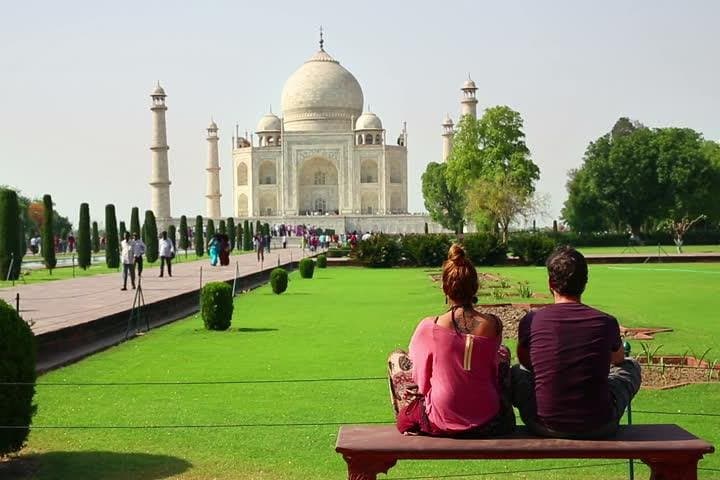
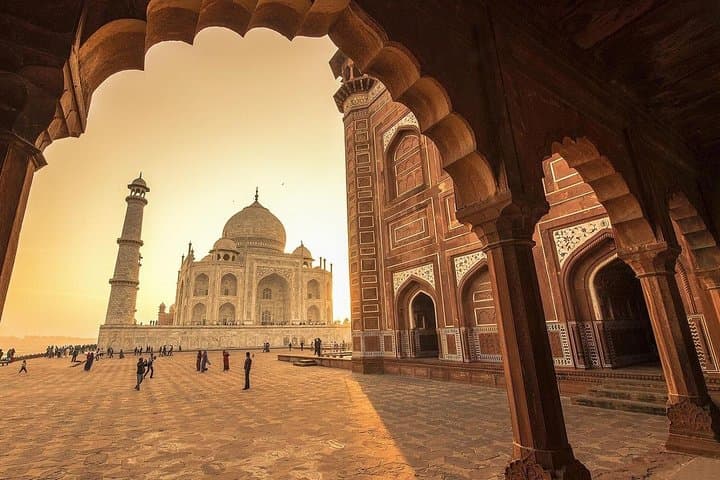
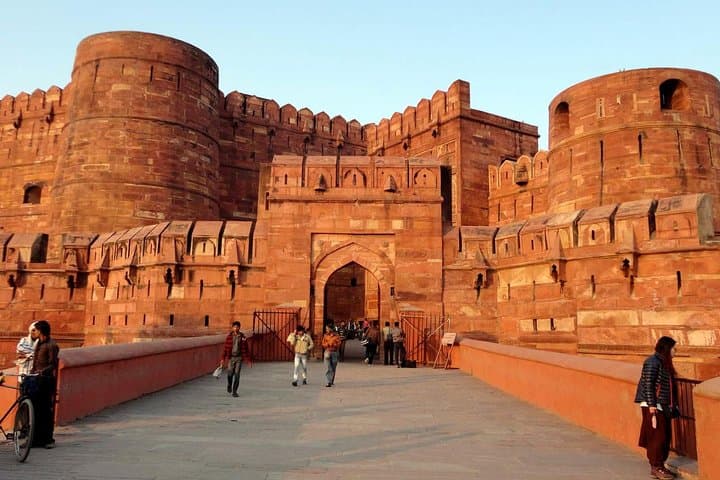
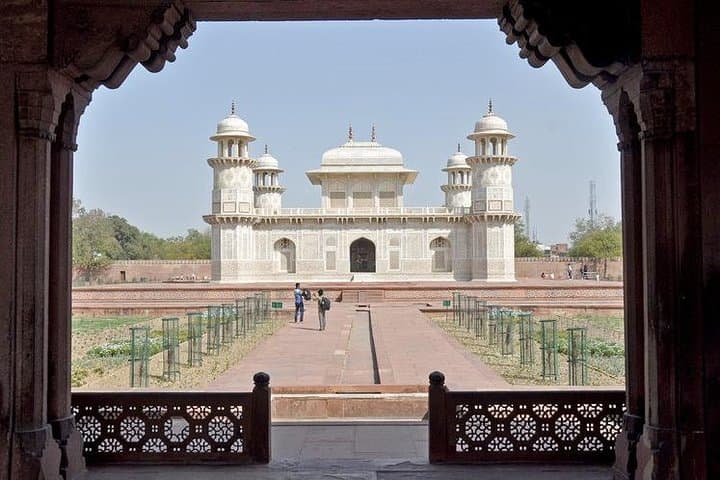
Morning light slices across the Yamuna as a private car hums west along the Yamuna Expressway, pushing the city's noise behind you. By midmorning the Taj Mahal's white marble appears over low trees—its reflections waver in canals while pilgrims, photographers and guides move with ritual certainty around the complex.
Morning light slices across the Yamuna as a private car hums west along the Yamuna Expressway, pushing the city's noise behind you. By midmorning the Taj Mahal's white marble appears over low trees—its reflections waver in canals while pilgrims, photographers and guides move with ritual certainty around the complex.
Constructed after 1631 at the command of Shah Jahan, the Taj Mahal is the high point of Mughal funerary architecture; nearby Agra Fort and the smaller Itimad‑ud‑Daulah (the “Baby Taj”) trace the dynasty’s shifting tastes and power centers. Geologically, the marble’s luminosity comes from freshwater sedimentary deposits quarried and transported from Rajasthan and beyond; the adjacent Yamuna has shaped Agra’s floodplain for millennia and still influences access and views.
Culturally, visits follow strict sequences—gates, gardens, mausoleum—so a guide’s timing matters. That structure makes a same‑day roundtrip from Delhi feasible: the ride is 3–4 hours each way depending on traffic, with 3–4 hours of on‑site time to explore key monuments.
Practical guidance: aim for first light to avoid heat and crowds, carry bottled water and sun protection, and wear comfortable shoes for uneven marble platforms and cobbled paths. Photography is allowed in most areas but inside the main tomb it’s restricted; respectful clothing is recommended. Expect brief security queues even with skip‑the‑line access. The payoff is immediate—marble that changes color with the sky and a sense of scale that rewards patient planning.