THE ADVENTURE COLLECTIVE® · Independent discovery and booking for outdoor travel

Make the most of a one-day window to see the Taj Mahal and Agra Fort with a private driver from Delhi. This guide outlines the route, what to expect on-site, and practical tips for timing, tickets, and comfort.
Make the most of a one-day window to see the Taj Mahal and Agra Fort with a private driver from Delhi. This guide outlines the route, what to expect on-site, and practical tips for timing, tickets, and comfort.
You arrive before the crowd thins: a pale sun will test the marble’s warmth as the Taj Mahal reads its color back to the sky. The drive from Delhi slides across highways and fields, the Yamuna River appearing like a low, deliberate ribbon as you approach Agra. The monument’s crisp domes and minarets dominate the final approach, and the Charbagh garden draws you forward along reflective pools that frame the mausoleum.
Verified experiences and guided adventures in the surrounding area.
Operated by Rajasthan Cabs · Agra, Uttar Pradesh
You arrive before the crowd thins: a pale sun will test the marble’s warmth as the Taj Mahal reads its color back to the sky. The drive from Delhi slides across highways and fields, the Yamuna River appearing like a low, deliberate ribbon as you approach Agra. The monument’s crisp domes and minarets dominate the final approach, and the Charbagh garden draws you forward along reflective pools that frame the mausoleum.
Built in the 17th century by Shah Jahan, the Taj is Mughal architecture distilled—white marble, pietra dura inlay, and symmetrical gardens that blend Persian design with Indian craftsmanship. Nearby Agra Fort offers a contrasting sandstone palette and a layered political history: courts, pavilions, and river-facing balconies that once watched the same river traffic you now pass.
Geologically, the marble’s luminosity is a product of Makrana quarries; culturally, the city still hums with craftsmen, street bazaars, and kitchens serving rich Mughlai dishes. The tour’s rhythm—three to four hours at the Taj, then a visit to Agra Fort—lets you absorb both monuments without rushing the road back to Delhi.
Practical guidance: plan for an 8–10 hour day, bring sun protection and comfortable shoes for walking on stone and gardens, and anticipate security checks and separate entry tickets (not included in many private drives). Carry water, small change for local stops, and a lightweight layer for early-morning or late-evening wind off the Yamuna. Time your visit for early morning or late afternoon light to avoid harsh midday glare and the largest crowds.
easy.
8–10 hours.
Suitable for travelers of all fitness levels; requires moderate walking on paved and stone surfaces
Not always—many private driver tours exclude monument admission. Check the booking and be prepared to purchase tickets online or at the gate.
Drive time typically ranges 3–4 hours one-way depending on traffic and route (Yamuna Expressway is the faster option). This tour is commonly done as an 8–10 hour round trip.
Cameras are permitted; tripods and large equipment may be restricted—verify on-site rules and arrive with minimal gear to ease security checks.
Yes—this private-driver format is adaptable and rated easy; however, plan for walking, steps, and security procedures when traveling with infants or seniors.
Agra rose to prominence under the Mughal Empire; the Taj Mahal was commissioned by Shah Jahan in memory of Mumtaz Mahal and completed in the mid-17th century.
Visitor pressure and pollution are managed through timed entry and restrictions; travelers should avoid littering and respect barriers to help preserve the marble and gardens.
Rajasthan Cabs operates guided outdoor trips and adventures with an emphasis on safety, stewardship, and memorable experiences.
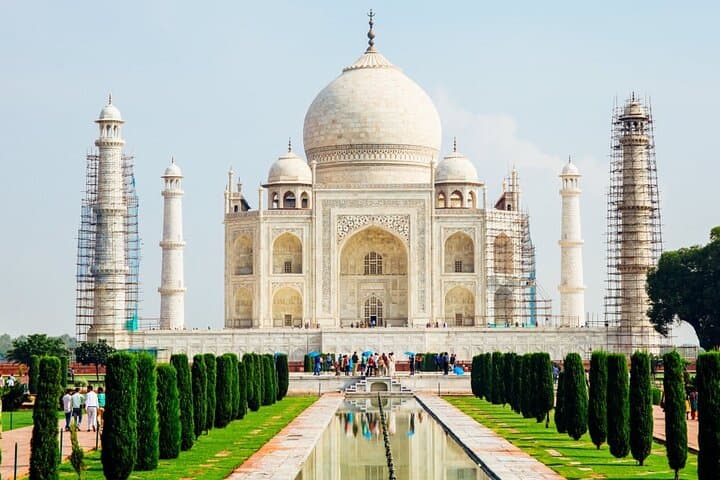

You arrive before the crowd thins: a pale sun will test the marble’s warmth as the Taj Mahal reads its color back to the sky. The drive from Delhi slides across highways and fields, the Yamuna River appearing like a low, deliberate ribbon as you approach Agra. The monument’s crisp domes and minarets dominate the final approach, and the Charbagh garden draws you forward along reflective pools that frame the mausoleum.
You arrive before the crowd thins: a pale sun will test the marble’s warmth as the Taj Mahal reads its color back to the sky. The drive from Delhi slides across highways and fields, the Yamuna River appearing like a low, deliberate ribbon as you approach Agra. The monument’s crisp domes and minarets dominate the final approach, and the Charbagh garden draws you forward along reflective pools that frame the mausoleum.
Built in the 17th century by Shah Jahan, the Taj is Mughal architecture distilled—white marble, pietra dura inlay, and symmetrical gardens that blend Persian design with Indian craftsmanship. Nearby Agra Fort offers a contrasting sandstone palette and a layered political history: courts, pavilions, and river-facing balconies that once watched the same river traffic you now pass.
Geologically, the marble’s luminosity is a product of Makrana quarries; culturally, the city still hums with craftsmen, street bazaars, and kitchens serving rich Mughlai dishes. The tour’s rhythm—three to four hours at the Taj, then a visit to Agra Fort—lets you absorb both monuments without rushing the road back to Delhi.
Practical guidance: plan for an 8–10 hour day, bring sun protection and comfortable shoes for walking on stone and gardens, and anticipate security checks and separate entry tickets (not included in many private drives). Carry water, small change for local stops, and a lightweight layer for early-morning or late-evening wind off the Yamuna. Time your visit for early morning or late afternoon light to avoid harsh midday glare and the largest crowds.