THE ADVENTURE COLLECTIVE® · Independent discovery and booking for outdoor travel

A long but rewarding day from Delhi, this tour pairs the luminous Taj Mahal with the rugged red walls of Agra Fort. Arrive early, plan for security checks and ticket purchases, and expect a full 10–14 hour excursion packed with history and photo opportunities.
A long but rewarding day from Delhi, this tour pairs the luminous Taj Mahal with the rugged red walls of Agra Fort. Arrive early, plan for security checks and ticket purchases, and expect a full 10–14 hour excursion packed with history and photo opportunities.
The day begins before sunlight softens the marble: a low-slung highway, the air cooling as the city thins and the dome of the Taj appears on the horizon like a pale promise. Early light picks out the white marble against the blue; across the river the red ramparts of Agra Fort stand solid and watchful.
Verified experiences and guided adventures in the surrounding area.
Operated by WFC HOLIDAYS · Agra, Uttar Pradesh
The day begins before sunlight softens the marble: a low-slung highway, the air cooling as the city thins and the dome of the Taj appears on the horizon like a pale promise. Early light picks out the white marble against the blue; across the river the red ramparts of Agra Fort stand solid and watchful.
Built between 1631 and 1648 by Emperor Shah Jahan, the Taj Mahal is an imperial mausoleum carved from Makrana marble that reflects changing light across the day. Agra Fort, a neighboring Mughal citadel of red sandstone, was the seat of emperors until the capital moved to Delhi in 1638. Geologically, the contrast between the white Makrana marble and the local red sandstone underpins the two monuments’ differing presences: one bright and reflective, the other massive and carved with defensive intent.
Culturally this is a place of layered stories — Mughal court life, later British cataloging, and contemporary vendors selling petha and handicrafts. The Yamuna, bordering the Taj, threads past and defines sightlines; riverside gardens such as Mehtab Bagh offer quieter views.
Practical guidance: expect a 10–14 hour day with roughly 3–4 hours driving each way depending on traffic. Taj Mahal is closed Fridays for general visits; arrive at first light for softer light and fewer crowds. Admission is typically purchased separately; carry ID, modest clothing for mosque areas, and comfortable shoes for walking on stone and steps. Security is strict — limit bags and avoid tripods unless preapproved. Bring water, sunscreen, and a charged phone for photos and navigation. With planning this day pairs monumental history with straightforward logistics: long, full, and richly readable in stone.
moderate.
10–14 hours.
Suitable for travelers who can handle a long day with several hours of walking and steps; basic mobility required.
Most same-day tours do not include monument admission — plan to purchase entry tickets separately online or at the gate before entering.
Expect about 3–4 hours each way depending on traffic and route (Yamuna Expressway is the fastest option), making for a long but manageable day trip.
The Taj Mahal is closed to general visitors every Friday for congregational prayers; plan your trip for other days of the week.
Photography is allowed across most exterior areas; some interior sections and mosque areas may have restrictions — follow onsite signage and guide instructions.
Taj Mahal was commissioned by Shah Jahan (1631–1648) as a mausoleum for Mumtaz Mahal; Agra Fort served as the Mughal imperial residence until 1638.
Both sites are UNESCO-recognized and managed with visitor limits and pollution controls; tourists can help by minimizing plastic, sticking to paths, and using designated viewing areas.
WFC HOLIDAYS operates guided outdoor trips and adventures with an emphasis on safety, stewardship, and memorable experiences.
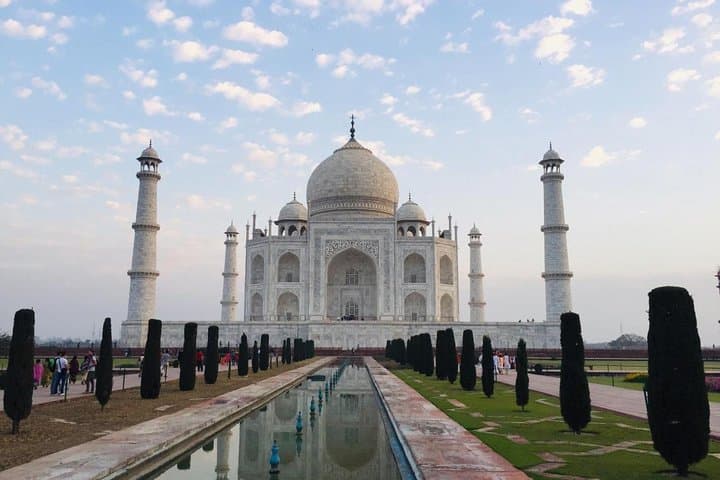
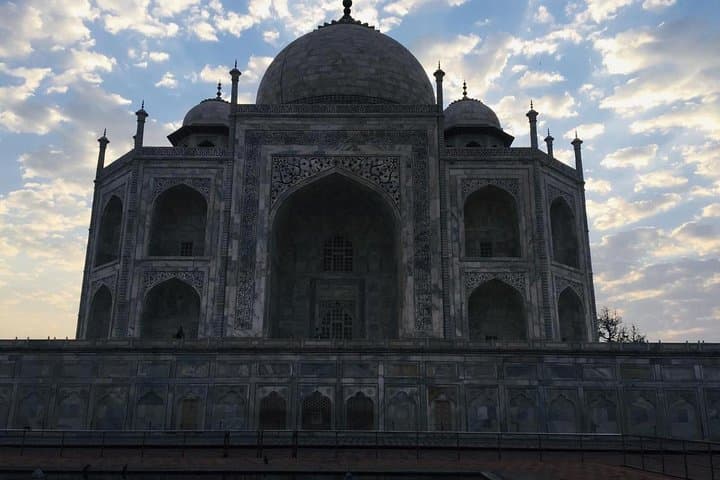
The day begins before sunlight softens the marble: a low-slung highway, the air cooling as the city thins and the dome of the Taj appears on the horizon like a pale promise. Early light picks out the white marble against the blue; across the river the red ramparts of Agra Fort stand solid and watchful.
The day begins before sunlight softens the marble: a low-slung highway, the air cooling as the city thins and the dome of the Taj appears on the horizon like a pale promise. Early light picks out the white marble against the blue; across the river the red ramparts of Agra Fort stand solid and watchful.
Built between 1631 and 1648 by Emperor Shah Jahan, the Taj Mahal is an imperial mausoleum carved from Makrana marble that reflects changing light across the day. Agra Fort, a neighboring Mughal citadel of red sandstone, was the seat of emperors until the capital moved to Delhi in 1638. Geologically, the contrast between the white Makrana marble and the local red sandstone underpins the two monuments’ differing presences: one bright and reflective, the other massive and carved with defensive intent.
Culturally this is a place of layered stories — Mughal court life, later British cataloging, and contemporary vendors selling petha and handicrafts. The Yamuna, bordering the Taj, threads past and defines sightlines; riverside gardens such as Mehtab Bagh offer quieter views.
Practical guidance: expect a 10–14 hour day with roughly 3–4 hours driving each way depending on traffic. Taj Mahal is closed Fridays for general visits; arrive at first light for softer light and fewer crowds. Admission is typically purchased separately; carry ID, modest clothing for mosque areas, and comfortable shoes for walking on stone and steps. Security is strict — limit bags and avoid tripods unless preapproved. Bring water, sunscreen, and a charged phone for photos and navigation. With planning this day pairs monumental history with straightforward logistics: long, full, and richly readable in stone.