THE ADVENTURE COLLECTIVE® · Independent discovery and booking for outdoor travel

Experience the Taj Mahal and Agra’s major Mughal monuments in a single day with a private guide and air‑conditioned transport. This practical route balances architectural insight with time for local crafts and garden views.
Experience the Taj Mahal and Agra’s major Mughal monuments in a single day with a private guide and air‑conditioned transport. This practical route balances architectural insight with time for local crafts and garden views.
You step out of an air‑cooled car onto a broad, sunlit esplanade; the Taj Mahal rises across a lawn like carved light, its white marble catching the soft heat of the morning. A local guide meets you and the city’s pulse — the Yamuna threading past the complex, vendors arranging rose-scented wares — becomes part of the visit.
Verified experiences and guided adventures in the surrounding area.
Operated by The Great Indian Adventure · Agra, Uttar Pradesh
You step out of an air‑cooled car onto a broad, sunlit esplanade; the Taj Mahal rises across a lawn like carved light, its white marble catching the soft heat of the morning. A local guide meets you and the city’s pulse — the Yamuna threading past the complex, vendors arranging rose-scented wares — becomes part of the visit.
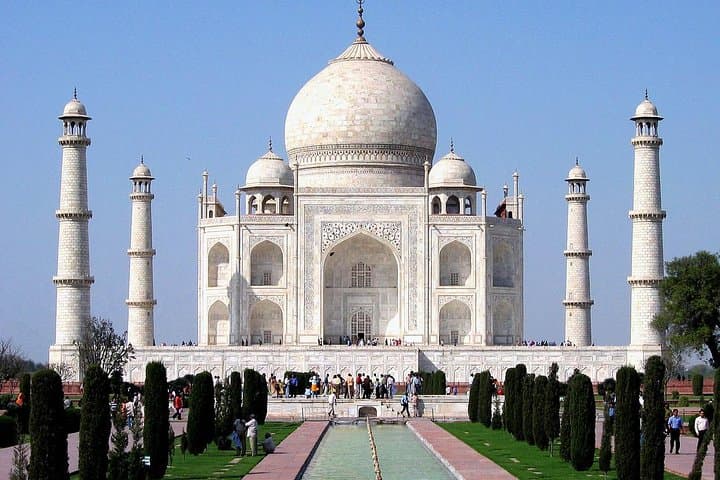
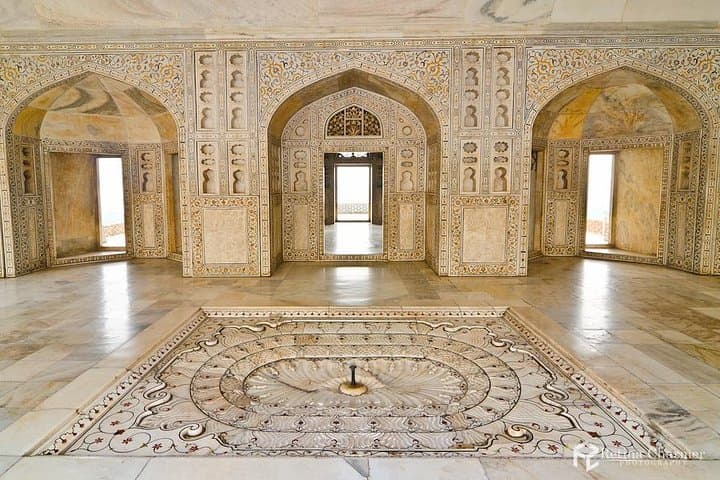
The mausoleum was commissioned by Shah Jahan in 1632 for Mumtaz Mahal and completed over two decades later. Built on a raised plinth, its marble faces carry pietra dura inlays of semiprecious stones and calligraphic bands that grow slightly larger with height to correct perspective. Agra’s soils and the nearby river historically shaped the site’s layout; gardens and water channels frame the monument, reflecting Mughal ideals of paradise on earth.
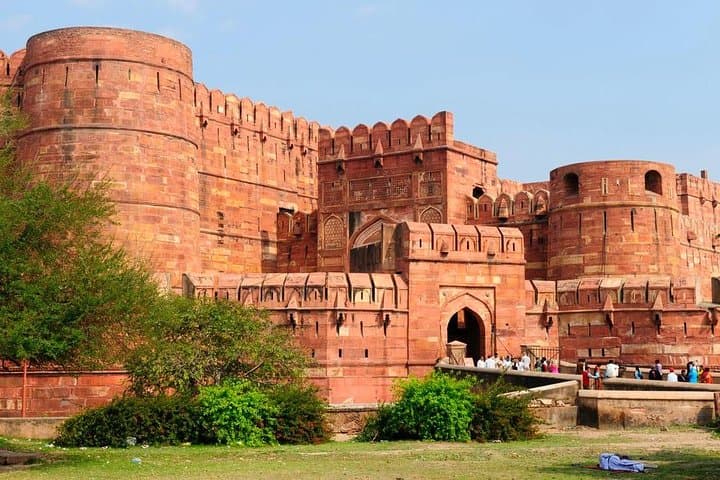
Culturally, the Taj sits inside a dense urban fabric — Agra Fort, the tomb of Itmad-ud-Daulah (the “Baby Taj”), and local marble workshops nearby provide context to the skill and economy that produced the mausoleum.
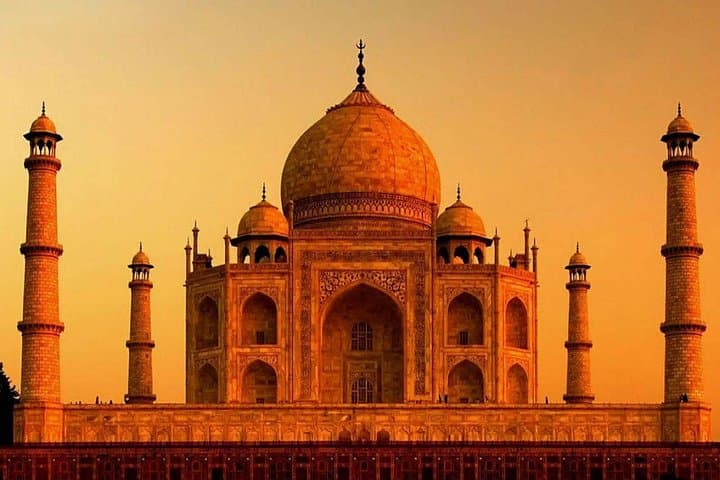
Practical guidance: tickets are single‑entry and the site is closed on Fridays; expect security checks and no food past the gates. Morning visits give cooler temperatures and softer light; late afternoon brings warmer tones but heavier crowds. Wear sturdy, comfortable shoes for walking paved paths and carry a refillable water bottle. Keep the guide’s commentary focused on architecture and conservation — touching the marble accelerates wear and photography rules vary by area.
easy.
5–6 hours.
Suitable for all fitness levels; requires walking on paved paths and short standing periods
The Taj Mahal is closed on Fridays; plan visits for other days and buy tickets in advance to secure your preferred time slot.
This private sightseeing itinerary runs about 5–6 hours, covering the Taj, Agra Fort, and Itmad‑ud‑Daulah with transport and a guide.
This tour includes monument entry fees and a private guide according to the itinerary—confirm inclusions when booking.
Food is not allowed past security checkpoints and large bags may be restricted; travel light and use the provided transport for luggage storage.
Commissioned by Shah Jahan in 1632 for Mumtaz Mahal, the Taj is a culminating work of Mughal architecture combining Persian and Indian craftsmen and techniques.
Air pollution and visitor impact threaten marble surfaces; follow site rules, avoid touching inlay work, and support local conservation initiatives when possible.
The Great Indian Adventure operates guided outdoor trips and adventures with an emphasis on safety, stewardship, and memorable experiences.
You step out of an air‑cooled car onto a broad, sunlit esplanade; the Taj Mahal rises across a lawn like carved light, its white marble catching the soft heat of the morning. A local guide meets you and the city’s pulse — the Yamuna threading past the complex, vendors arranging rose-scented wares — becomes part of the visit.
You step out of an air‑cooled car onto a broad, sunlit esplanade; the Taj Mahal rises across a lawn like carved light, its white marble catching the soft heat of the morning. A local guide meets you and the city’s pulse — the Yamuna threading past the complex, vendors arranging rose-scented wares — becomes part of the visit.
The mausoleum was commissioned by Shah Jahan in 1632 for Mumtaz Mahal and completed over two decades later. Built on a raised plinth, its marble faces carry pietra dura inlays of semiprecious stones and calligraphic bands that grow slightly larger with height to correct perspective. Agra’s soils and the nearby river historically shaped the site’s layout; gardens and water channels frame the monument, reflecting Mughal ideals of paradise on earth.
Culturally, the Taj sits inside a dense urban fabric — Agra Fort, the tomb of Itmad-ud-Daulah (the “Baby Taj”), and local marble workshops nearby provide context to the skill and economy that produced the mausoleum.
Practical guidance: tickets are single‑entry and the site is closed on Fridays; expect security checks and no food past the gates. Morning visits give cooler temperatures and softer light; late afternoon brings warmer tones but heavier crowds. Wear sturdy, comfortable shoes for walking paved paths and carry a refillable water bottle. Keep the guide’s commentary focused on architecture and conservation — touching the marble accelerates wear and photography rules vary by area.