THE ADVENTURE COLLECTIVE® · Independent discovery and booking for outdoor travel

A long day that folds Mughal history into sunrise light: drive from New Delhi to Agra, visit the Taj Mahal and Agra Fort, then return the same evening. This guide covers what to expect, logistics, and smart tips to make the most of the 12–14 hour trip.
A long day that folds Mughal history into sunrise light: drive from New Delhi to Agra, visit the Taj Mahal and Agra Fort, then return the same evening. This guide covers what to expect, logistics, and smart tips to make the most of the 12–14 hour trip.
You step out before dawn and the van slips across the Yamuna Expressway as the city lights peel away. By the time the silhouette of the Taj Mahal appears, the marble is changing colors with the morning — an architectural heart that still reads as a private poem in stone.
Verified experiences and guided adventures in the surrounding area.
Operated by Taj India journey · Agra, Uttar Pradesh
You step out before dawn and the van slips across the Yamuna Expressway as the city lights peel away. By the time the silhouette of the Taj Mahal appears, the marble is changing colors with the morning — an architectural heart that still reads as a private poem in stone.
The Taj Mahal was built in the 17th century by Mughal emperor Shah Jahan for Mumtaz Mahal; a short drive away, the red-sandstone Agra Fort—begun by Akbar—maps the empire’s military and domestic life. Geologically, the Taj’s white Makrana marble catches sunlight and urban haze differently through the seasons; the nearby Yamuna River has long shaped Agra’s floodplain and trade routes, quietly bearing silt and history downstream.
Culturally, this route moves from imperial mausoleum to bustling bazaars where marble inlay workshops and brass artisans still practice centuries-old trades. Expect spirited haggling in Kinari Bazaar and the quieter vantage at Mehtab Bagh across the river for reflection shots.
Practical guidance: tours typically start early in Delhi and return the same day (expect a 12–14 hour round trip). Tickets to the Taj are usually purchased on arrival—carry a printed or mobile booking, valid photo ID, and cash for market buys. The site enforces a formal dress code in parts and restricts big bags and food inside; Fridays close the main mausoleum to non-Muslims. Wear comfortable shoes for uneven pathways and plan for long stretches standing or walking—shade is limited, so sun protection and a refillable water bottle matter.
This itinerary compresses three centuries of Mughal history into a single, intense day: efficient, sensory, and best planned around light and logistics.
easy.
12–14 hours.
Basic fitness for walking on uneven surfaces and standing for extended periods; not strenuous but long.
No—this tour’s price does not include Taj Mahal or Agra Fort admission; buy tickets online or at the site and bring ID.
Expect roughly 3–3.5 hours each way via the Yamuna Expressway, depending on traffic; the full tour is typically 12–14 hours.
Parts of the tour and vehicle transport are wheelchair accessible, but some monument areas have steps and uneven paths—check specific access needs with the operator.
Large backpacks, tripods, food, and certain electronics are restricted; check the monument’s current banned items list before arrival.
The Taj Mahal (mid-1600s) commemorates Shah Jahan’s wife; Agra Fort predates it as a Mughal administrative and military complex commissioned by Akbar.
High visitor numbers and urban pollution put pressure on the Taj’s marble; follow site rules, avoid littering, and support local conservation fees where applicable.
Taj India journey operates guided outdoor trips and adventures with an emphasis on safety, stewardship, and memorable experiences.


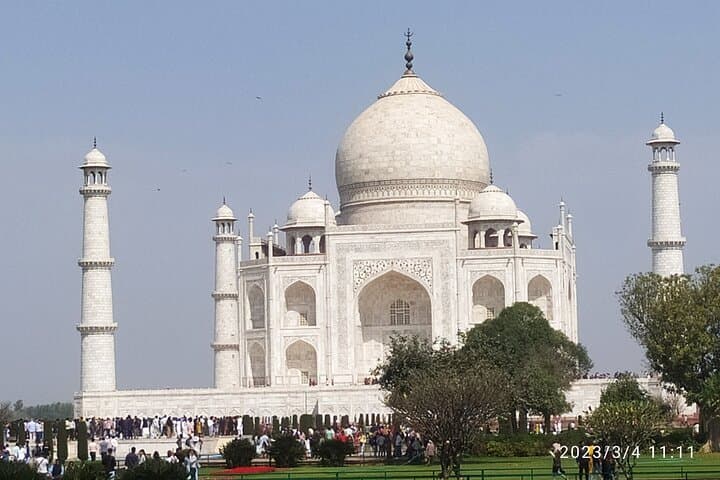

You step out before dawn and the van slips across the Yamuna Expressway as the city lights peel away. By the time the silhouette of the Taj Mahal appears, the marble is changing colors with the morning — an architectural heart that still reads as a private poem in stone.
You step out before dawn and the van slips across the Yamuna Expressway as the city lights peel away. By the time the silhouette of the Taj Mahal appears, the marble is changing colors with the morning — an architectural heart that still reads as a private poem in stone.
The Taj Mahal was built in the 17th century by Mughal emperor Shah Jahan for Mumtaz Mahal; a short drive away, the red-sandstone Agra Fort—begun by Akbar—maps the empire’s military and domestic life. Geologically, the Taj’s white Makrana marble catches sunlight and urban haze differently through the seasons; the nearby Yamuna River has long shaped Agra’s floodplain and trade routes, quietly bearing silt and history downstream.
Culturally, this route moves from imperial mausoleum to bustling bazaars where marble inlay workshops and brass artisans still practice centuries-old trades. Expect spirited haggling in Kinari Bazaar and the quieter vantage at Mehtab Bagh across the river for reflection shots.
Practical guidance: tours typically start early in Delhi and return the same day (expect a 12–14 hour round trip). Tickets to the Taj are usually purchased on arrival—carry a printed or mobile booking, valid photo ID, and cash for market buys. The site enforces a formal dress code in parts and restricts big bags and food inside; Fridays close the main mausoleum to non-Muslims. Wear comfortable shoes for uneven pathways and plan for long stretches standing or walking—shade is limited, so sun protection and a refillable water bottle matter.
This itinerary compresses three centuries of Mughal history into a single, intense day: efficient, sensory, and best planned around light and logistics.