THE ADVENTURE COLLECTIVE® · Independent discovery and booking for outdoor travel

See the Taj Mahal and Agra Fort in one long, carefully planned day from Mumbai. This full-day itinerary combines flights, private transfers and a local guide to maximize time at two UNESCO World Heritage Sites.
See the Taj Mahal and Agra Fort in one long, carefully planned day from Mumbai. This full-day itinerary combines flights, private transfers and a local guide to maximize time at two UNESCO World Heritage Sites.
You step off an early morning flight into Delhi's low light and trade airport bustle for the open highway toward Agra—the Yamuna river running like a pale ribbon that seems to push you forward toward the white sheen of the Taj.
Verified experiences and guided adventures in the surrounding area.
Operated by Padma Holidays · Agra, Uttar Pradesh
You step off an early morning flight into Delhi's low light and trade airport bustle for the open highway toward Agra—the Yamuna river running like a pale ribbon that seems to push you forward toward the white sheen of the Taj.
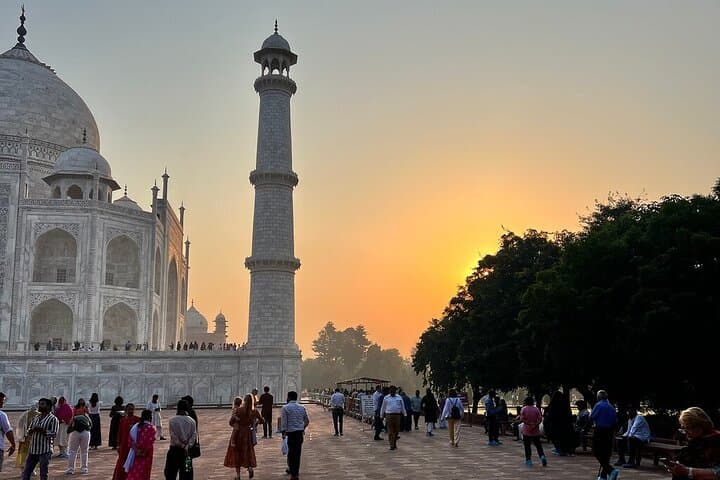
The Taj Mahal and Agra Fort sit on layered histories: 17th-century Mughal ambition carved in white marble and red sandstone, architects working within seismic plains and alluvial deposits that shaped the city's siting. The monuments reflect Persian, Islamic and Indian crafts—delicate pietra dura inlay, bulbous domes and defensive bastions—each surface a page of lived history.
Local culture is present in the market stalls near the monuments: petha sweets, hand-block printed textiles, and guides who read the monuments’ stories with exacting pride. Expect the Taj's symmetry to flatten distances visually; the Yamuna’s slow current frames views and occasionally swallows early-morning mist.
Practicalities matter on a same-day trip: flights to Delhi then a two- to three-hour drive to Agra make for a long but manageable day. Security at both sites is strict—light bags only, no tripods or drones, and the Taj is closed on Fridays. Bring a sun hat, comfortable shoes for uneven stone floors, and allow staggered time for queuing and passport checks. A local guide speeds navigation and skips lines, but allot time for photography and a relaxed lunch. If you value cooler light and fewer crowds, request the earliest entry available. This itinerary is logistical—air travel, road transfer and guided access—designed to maximize time at two of India’s most visited monuments while returning you to your point of origin before nightfall.
easy.
16 hours (full day).
Suitable for most fitness levels; expect moderate walking on uneven stone surfaces and several staircases.
Entrance fees are usually included when purchased as a tour option; confirm at booking that monument entry is covered with your tour package.
The drive is typically 2–3 hours one way depending on traffic; factor this into your full-day timing and flight schedules.
Tripods and drones are generally prohibited at the Taj and Agra Fort; small cameras and phones are fine but check local rules on flash and interior photography.
This tour lists lunch and airport pick-up/drop-off as inclusions; verify which transfer points and meal options are confirmed at booking.
Agra rose to prominence under the Mughals in the 16th–17th centuries; Shah Jahan’s Taj Mahal was completed in 1653 as a mausoleum for his wife Mumtaz Mahal.
Heavy visitor numbers stress fragile inlay work and marble surfaces; conservation efforts include pollution control zones and regular maintenance by the Archaeological Survey of India.
Padma Holidays operates guided outdoor trips and adventures with an emphasis on safety, stewardship, and memorable experiences.


You step off an early morning flight into Delhi's low light and trade airport bustle for the open highway toward Agra—the Yamuna river running like a pale ribbon that seems to push you forward toward the white sheen of the Taj.
You step off an early morning flight into Delhi's low light and trade airport bustle for the open highway toward Agra—the Yamuna river running like a pale ribbon that seems to push you forward toward the white sheen of the Taj.
The Taj Mahal and Agra Fort sit on layered histories: 17th-century Mughal ambition carved in white marble and red sandstone, architects working within seismic plains and alluvial deposits that shaped the city's siting. The monuments reflect Persian, Islamic and Indian crafts—delicate pietra dura inlay, bulbous domes and defensive bastions—each surface a page of lived history.
Local culture is present in the market stalls near the monuments: petha sweets, hand-block printed textiles, and guides who read the monuments’ stories with exacting pride. Expect the Taj's symmetry to flatten distances visually; the Yamuna’s slow current frames views and occasionally swallows early-morning mist.
Practicalities matter on a same-day trip: flights to Delhi then a two- to three-hour drive to Agra make for a long but manageable day. Security at both sites is strict—light bags only, no tripods or drones, and the Taj is closed on Fridays. Bring a sun hat, comfortable shoes for uneven stone floors, and allow staggered time for queuing and passport checks. A local guide speeds navigation and skips lines, but allot time for photography and a relaxed lunch. If you value cooler light and fewer crowds, request the earliest entry available. This itinerary is logistical—air travel, road transfer and guided access—designed to maximize time at two of India’s most visited monuments while returning you to your point of origin before nightfall.