THE ADVENTURE COLLECTIVE® · Independent discovery and booking for outdoor travel

See Jaipur’s signature sites in one long day: Amber Fort’s ramparts, the reflective Jal Mahal, the royal rooms of City Palace and the stone instruments of Jantar Mantar. This private car tour from Delhi compresses history, architecture and bold Rajasthan light into a single, practical itinerary.
See Jaipur’s signature sites in one long day: Amber Fort’s ramparts, the reflective Jal Mahal, the royal rooms of City Palace and the stone instruments of Jantar Mantar. This private car tour from Delhi compresses history, architecture and bold Rajasthan light into a single, practical itinerary.
You arrive on the broad highway as the city’s stonework unfurls—sandy walls catching the low sun, lanes beginning to hum. By midmorning you’re walking up to Amber Fort, its sandstone terraces leaning out over the valley, and the climb to the palace feels like stepping into a century of courtly rhythm. Later, the water at Jal Mahal stares back cool and still, while Hawa Mahal’s latticed face watches the street below.
Verified experiences and guided adventures in the surrounding area.
Operated by Yoganshi Travel · Jaipur, Rajasthan
You arrive on the broad highway as the city’s stonework unfurls—sandy walls catching the low sun, lanes beginning to hum. By midmorning you’re walking up to Amber Fort, its sandstone terraces leaning out over the valley, and the climb to the palace feels like stepping into a century of courtly rhythm. Later, the water at Jal Mahal stares back cool and still, while Hawa Mahal’s latticed face watches the street below.
Jaipur was laid out in 1727 by Maharaja Sawai Jai Singh II as one of India’s first planned cities; much of what you see—broad avenues, the ochre-pink façades—reflects that rational design and the Rajput court culture that followed. Geologically the forts and palaces are local sandstone and marble; the observatory at Jantar Mantar uses stone instruments to measure the sky with remarkable accuracy. Culture here is performative and public: processions, temple bells, and markets shape the day.
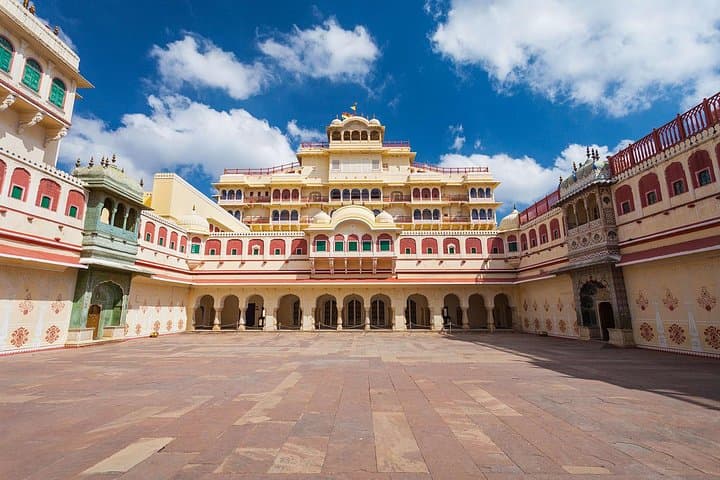
Practically, this is a full-day automotive loop from Delhi (roughly 4–5 hours each way depending on traffic) with walking at multiple stops—expect uneven stone steps at Amber and paved courtyards at City Palace. Admissions may not be included, so carry cash or card. Dress smart-casual and modestly for palace interiors; sunscreen, a hat, and comfortable walking shoes make long surfaces easier. The guide-driven format means tight scheduling—plan for early pickup, short photo stops like Jal Mahal, a sit-down lunch, and a steady drive back to Delhi at dusk. For a single day, the tour compresses Jaipur’s architectural highs into an efficient, sensory-rich introduction.
easy.
14 hours (full day).
Suitable for most travelers with basic mobility; expect short to moderate walks and stair climbs at sites.
Most Viator tours list whether admission is included; this itinerary notes admissions are not included, so budget for entrance fees at Amber Fort, City Palace and Jantar Mantar.
Pickup is offered from Delhi/Gurgaon hotels or Indira Gandhi International Airport; drop-off returns to the same point in Delhi on conclusion.
Expect moderate walking at each stop—climbs up to Amber Fort, courtyard walks in City Palace, and standing while viewing instruments at Jantar Mantar; not strenuous but involves stairs and uneven ground.
This is a private tour so guides can often accommodate reasonable requests, but schedule is tight due to drive times—discuss priorities with your guide at pickup.
Jaipur was founded in 1727 by Maharaja Sawai Jai Singh II as a planned city; its pink facades were painted in 1876 to welcome the Prince of Wales.
Many sites are under conservation programs to protect frescoes and stonework; visitors should avoid touching ornate surfaces and limit plastic waste to help preservation.
Yoganshi Travel operates guided outdoor trips and adventures with an emphasis on safety, stewardship, and memorable experiences.
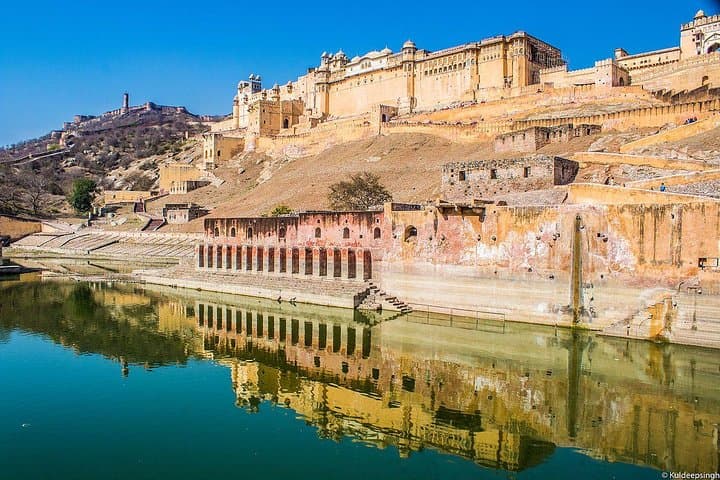
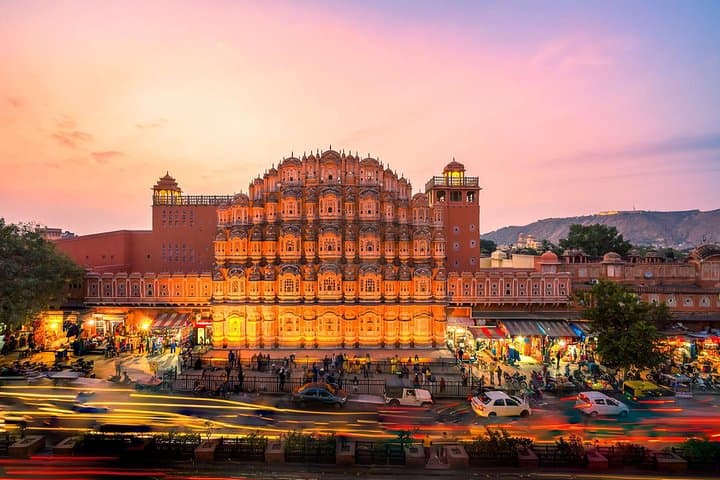
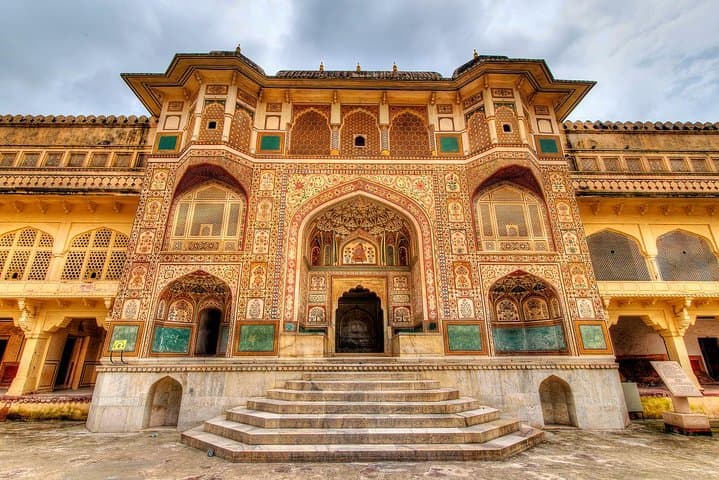
You arrive on the broad highway as the city’s stonework unfurls—sandy walls catching the low sun, lanes beginning to hum. By midmorning you’re walking up to Amber Fort, its sandstone terraces leaning out over the valley, and the climb to the palace feels like stepping into a century of courtly rhythm. Later, the water at Jal Mahal stares back cool and still, while Hawa Mahal’s latticed face watches the street below.
You arrive on the broad highway as the city’s stonework unfurls—sandy walls catching the low sun, lanes beginning to hum. By midmorning you’re walking up to Amber Fort, its sandstone terraces leaning out over the valley, and the climb to the palace feels like stepping into a century of courtly rhythm. Later, the water at Jal Mahal stares back cool and still, while Hawa Mahal’s latticed face watches the street below.
Jaipur was laid out in 1727 by Maharaja Sawai Jai Singh II as one of India’s first planned cities; much of what you see—broad avenues, the ochre-pink façades—reflects that rational design and the Rajput court culture that followed. Geologically the forts and palaces are local sandstone and marble; the observatory at Jantar Mantar uses stone instruments to measure the sky with remarkable accuracy. Culture here is performative and public: processions, temple bells, and markets shape the day.
Practically, this is a full-day automotive loop from Delhi (roughly 4–5 hours each way depending on traffic) with walking at multiple stops—expect uneven stone steps at Amber and paved courtyards at City Palace. Admissions may not be included, so carry cash or card. Dress smart-casual and modestly for palace interiors; sunscreen, a hat, and comfortable walking shoes make long surfaces easier. The guide-driven format means tight scheduling—plan for early pickup, short photo stops like Jal Mahal, a sit-down lunch, and a steady drive back to Delhi at dusk. For a single day, the tour compresses Jaipur’s architectural highs into an efficient, sensory-rich introduction.