THE ADVENTURE COLLECTIVE® · Independent discovery and booking for outdoor travel

Spend a single, carefully planned day exploring two UNESCO cave complexes by flying from Mumbai to Aurangabad. This intensive tour covers Ellora’s Kailasa monolith and Ajanta’s painted Buddhist caves with guided transfers and minimal downtime.
Spend a single, carefully planned day exploring two UNESCO cave complexes by flying from Mumbai to Aurangabad. This intensive tour covers Ellora’s Kailasa monolith and Ajanta’s painted Buddhist caves with guided transfers and minimal downtime.
You step off the morning flight into Aurangabad and the dry Deccan wind seems to usher you toward stone: caves carved into cliffs, corridors that have held centuries of incense and footsteps. The day moves fast — Ellora first, where the Kailasa temple rises like a defiant block of rock shaped by human hands, then a two-hour drive across the plain to Ajanta, where painted panels still catch light as if waiting to tell another story.
Verified experiences and guided adventures in the surrounding area.
Operated by Jee Tours · Aurangabad, Maharashtra
You step off the morning flight into Aurangabad and the dry Deccan wind seems to usher you toward stone: caves carved into cliffs, corridors that have held centuries of incense and footsteps. The day moves fast — Ellora first, where the Kailasa temple rises like a defiant block of rock shaped by human hands, then a two-hour drive across the plain to Ajanta, where painted panels still catch light as if waiting to tell another story.
Ellora and Ajanta are UNESCO World Heritage sites that span different eras and faiths. Ellora (6th–10th century) houses Hindu, Buddhist, and Jain rock-cut temples, including the single-monolith Kailasa that illustrates ambitious medieval engineering. Ajanta (2nd century BCE–6th century CE) preserves frescoes and carved narrative panels of the Buddha and Jataka tales — pigments suspended on cave walls in fragile balance.
Geology is the stage: basalt cliffs and volcanic flows the craftsmen hacked into, passages hewing out temples and monasteries. Local culture still orients around pilgrimage and market trade in Aurangabad; nearby forts and tombs speak to later medieval histories.
Practical guidance: this is a long, active day — expect 10 hours door-to-door, uneven stone steps, and multiple shoe-removal points at temple thresholds. Carry water, sun protection, and a small torch for darker niches. Photography rules vary — avoid flash at Ajanta and follow signage. If you choose the flight option from Mumbai, plan for early pickup times and minimal buffer for flight delays. Move deliberately through the caves: watch your step, respect fragile art, and let the carved rock set the pace.
moderate.
10 hours (approx.).
Moderate fitness: able to climb stairs and walk on uneven terrain for several hours.
Yes with the included round‑trip flight to Aurangabad and an early schedule; expect long days and limited time at each site.
Some tour options include admissions and a private guide—confirm your booking selection as those items are optional in some packages.
Both sites have many steps and uneven surfaces; they are not well suited for visitors with significant mobility restrictions.
Photography rules differ by cave: flash is typically prohibited at Ajanta to protect murals; follow onsite signage and guide instructions.
Ajanta and Ellora reflect centuries of religious and artistic development on the Deccan plateau; Kailasa at Ellora is a single‑rock excavation illustrating medieval temple ambition.
The painted murals and carved surfaces are fragile—follow no‑touch rules, avoid flash photography, and stay on marked paths to limit erosion and human impact.
Jee Tours operates guided outdoor trips and adventures with an emphasis on safety, stewardship, and memorable experiences.
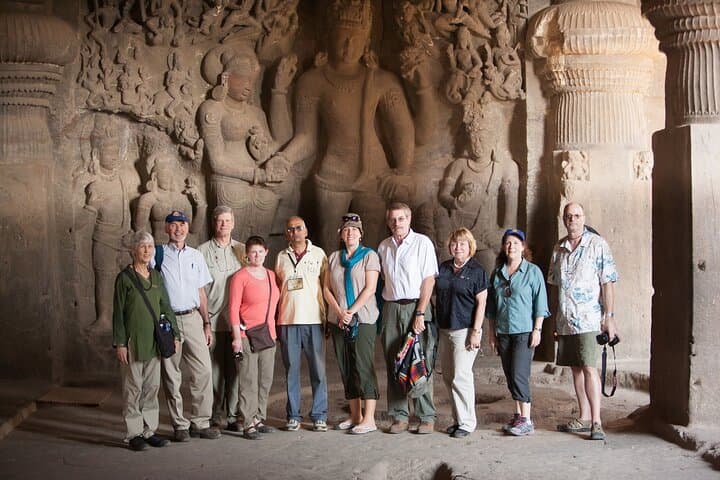


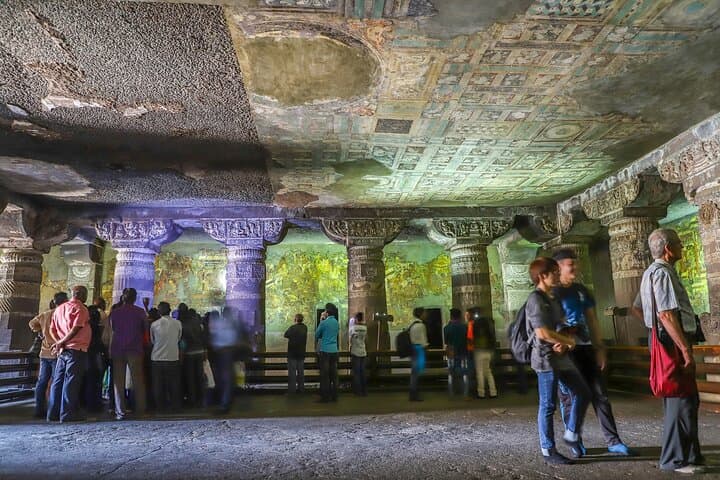
You step off the morning flight into Aurangabad and the dry Deccan wind seems to usher you toward stone: caves carved into cliffs, corridors that have held centuries of incense and footsteps. The day moves fast — Ellora first, where the Kailasa temple rises like a defiant block of rock shaped by human hands, then a two-hour drive across the plain to Ajanta, where painted panels still catch light as if waiting to tell another story.
You step off the morning flight into Aurangabad and the dry Deccan wind seems to usher you toward stone: caves carved into cliffs, corridors that have held centuries of incense and footsteps. The day moves fast — Ellora first, where the Kailasa temple rises like a defiant block of rock shaped by human hands, then a two-hour drive across the plain to Ajanta, where painted panels still catch light as if waiting to tell another story.
Ellora and Ajanta are UNESCO World Heritage sites that span different eras and faiths. Ellora (6th–10th century) houses Hindu, Buddhist, and Jain rock-cut temples, including the single-monolith Kailasa that illustrates ambitious medieval engineering. Ajanta (2nd century BCE–6th century CE) preserves frescoes and carved narrative panels of the Buddha and Jataka tales — pigments suspended on cave walls in fragile balance.
Geology is the stage: basalt cliffs and volcanic flows the craftsmen hacked into, passages hewing out temples and monasteries. Local culture still orients around pilgrimage and market trade in Aurangabad; nearby forts and tombs speak to later medieval histories.
Practical guidance: this is a long, active day — expect 10 hours door-to-door, uneven stone steps, and multiple shoe-removal points at temple thresholds. Carry water, sun protection, and a small torch for darker niches. Photography rules vary — avoid flash at Ajanta and follow signage. If you choose the flight option from Mumbai, plan for early pickup times and minimal buffer for flight delays. Move deliberately through the caves: watch your step, respect fragile art, and let the carved rock set the pace.