THE ADVENTURE COLLECTIVE® · Independent discovery and booking for outdoor travel

Skip Angkor’s crowds and head to Sambor Prei Kuk for quiet pre-Angkorian brick temples set in open forest and farmland. This full-day road trip reveals early Khmer architecture, riverside villages, and hands-on history away from the tour buses.
Skip Angkor’s crowds and head to Sambor Prei Kuk for quiet pre-Angkorian brick temples set in open forest and farmland. This full-day road trip reveals early Khmer architecture, riverside villages, and hands-on history away from the tour buses.
You arrive after a long road that slides through rice paddies and roadside markets, the engine’s hum falling away as the forest reclaims the air. Brick towers rise through palms and lianas—low, squat temples whose surfaces carry the fingerprints of seven centuries. The trees here move with purpose, their roots probing the ancient foundations as if urging visitors to slow and read the stones.
Verified experiences and guided adventures in the surrounding area.
Operated by ANGKOR CAB-OFF BEATEN TRUCK · Kompong Thom, Kompong Thom Province
You arrive after a long road that slides through rice paddies and roadside markets, the engine’s hum falling away as the forest reclaims the air. Brick towers rise through palms and lianas—low, squat temples whose surfaces carry the fingerprints of seven centuries. The trees here move with purpose, their roots probing the ancient foundations as if urging visitors to slow and read the stones.
Sambor Prei Kuk, once Isanapura, served as an early Khmer capital under King Isanavarman I (7th century). Its sculpted lintels and square-plan sanctuaries are among Cambodia’s earliest brick-built monuments, set on sandy alluvium near the Tonle Sap’s eastern bank and the Steung Saen River.
The site divides into three core groups—East, Central and West—each with a slightly different mood: the East’s walled squares feel ordered; the Central group spreads like a forgotten neighborhood; the West hides in thicker canopy. Local villages still farm and fish the surrounding plains, and roadside fruit stalls offer a quick portrait of contemporary rural life.
Practicalities: expect a full-day outing (roughly 8–9 hours) from Siem Reap with several hours driving each way. Paths are uneven and shaded; bring water, sturdy shoes, and sun protection. Photography is rewarding—early morning or late afternoon light brings out the ochre and rust of the bricks. Respect the ruins: use designated paths, avoid climbing fragile masonry, and carry out litter. For travelers seeking quieter archaeological context outside Angkor, Sambor Prei Kuk offers spacious ruins, clear historical layers, and a tangible link to the early Khmer world.
moderate.
8–9 hours.
Moderate fitness recommended—long drives plus 2–3 hours walking over uneven ground.
It’s about 160 km and roughly a 3–3.5 hour drive one way, depending on traffic and stops.
There is an entrance fee managed by local authorities; hiring a licensed guide is recommended to interpret inscriptions and layout, though not mandatory.
Many areas have uneven ground, steps and soft sand; access is limited—travelers with mobility issues should plan carefully or contact the operator about vehicle drop-off points.
Dry season (November–April) offers easier travel and firmer paths; early morning or late afternoon light is best for photography and cooler walking.
Sambor Prei Kuk was the capital Isanapura during King Isanavarman I’s reign (early 7th century) and showcases early Khmer brick architecture and sculpted lintels.
The site benefits from UNESCO recognition and local conservation efforts; visitors should avoid touching carvings and stick to designated paths to reduce erosion.
ANGKOR CAB-OFF BEATEN TRUCK operates guided outdoor trips and adventures with an emphasis on safety, stewardship, and memorable experiences.
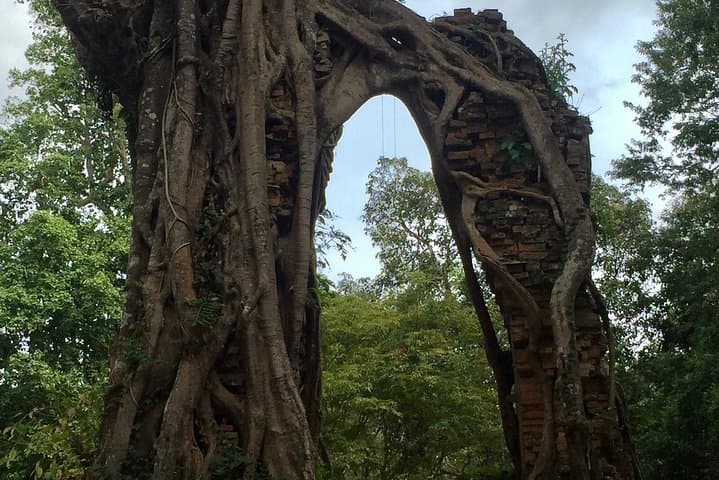
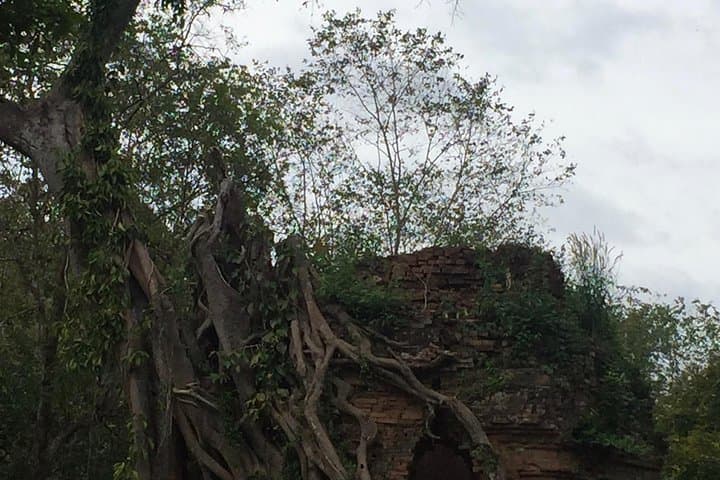
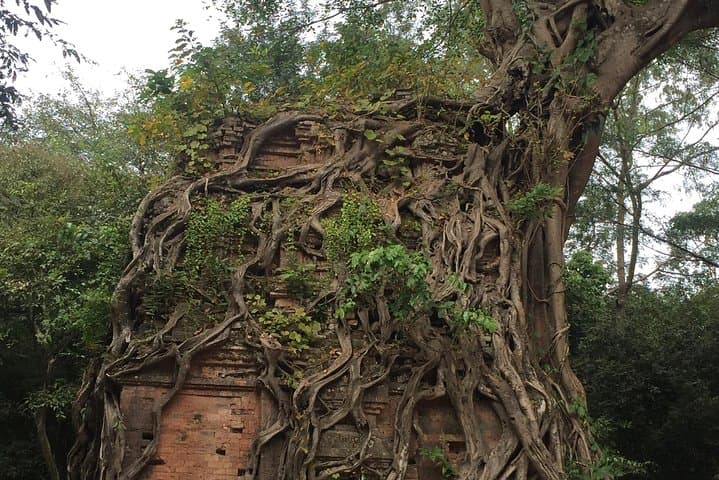
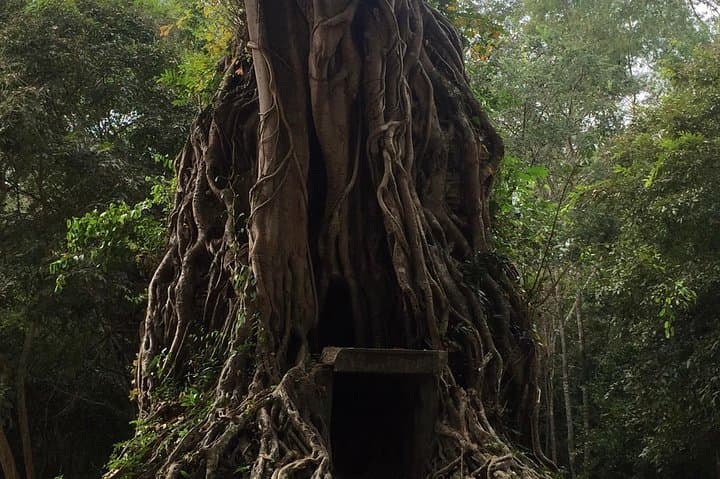
You arrive after a long road that slides through rice paddies and roadside markets, the engine’s hum falling away as the forest reclaims the air. Brick towers rise through palms and lianas—low, squat temples whose surfaces carry the fingerprints of seven centuries. The trees here move with purpose, their roots probing the ancient foundations as if urging visitors to slow and read the stones.
You arrive after a long road that slides through rice paddies and roadside markets, the engine’s hum falling away as the forest reclaims the air. Brick towers rise through palms and lianas—low, squat temples whose surfaces carry the fingerprints of seven centuries. The trees here move with purpose, their roots probing the ancient foundations as if urging visitors to slow and read the stones.
Sambor Prei Kuk, once Isanapura, served as an early Khmer capital under King Isanavarman I (7th century). Its sculpted lintels and square-plan sanctuaries are among Cambodia’s earliest brick-built monuments, set on sandy alluvium near the Tonle Sap’s eastern bank and the Steung Saen River.
The site divides into three core groups—East, Central and West—each with a slightly different mood: the East’s walled squares feel ordered; the Central group spreads like a forgotten neighborhood; the West hides in thicker canopy. Local villages still farm and fish the surrounding plains, and roadside fruit stalls offer a quick portrait of contemporary rural life.
Practicalities: expect a full-day outing (roughly 8–9 hours) from Siem Reap with several hours driving each way. Paths are uneven and shaded; bring water, sturdy shoes, and sun protection. Photography is rewarding—early morning or late afternoon light brings out the ochre and rust of the bricks. Respect the ruins: use designated paths, avoid climbing fragile masonry, and carry out litter. For travelers seeking quieter archaeological context outside Angkor, Sambor Prei Kuk offers spacious ruins, clear historical layers, and a tangible link to the early Khmer world.