THE ADVENTURE COLLECTIVE® · Independent discovery and booking for outdoor travel

Spend a full day moving between Samarkand’s turquoise domes, bustling bazaars and historic observatories. This guided loop balances architectural highlights with local culinary stops and hands-on craft demonstrations.
Spend a full day moving between Samarkand’s turquoise domes, bustling bazaars and historic observatories. This guided loop balances architectural highlights with local culinary stops and hands-on craft demonstrations.
You step from an air-conditioned minivan into a square where turquoise domes throw back the sun and stone steps remember empires. The day moves at a steady, purposeful rhythm: a mausoleum’s silence, a market’s call, an observatory that once read the sky. This is Samarkand—where the road from China met Persian, Turkic and Mongol hands—and the tour stitches those eras into a single, walkable loop.
Verified experiences and guided adventures in the surrounding area.
Operated by Tourmania · Samarkand, Samarkand Region
You step from an air-conditioned minivan into a square where turquoise domes throw back the sun and stone steps remember empires. The day moves at a steady, purposeful rhythm: a mausoleum’s silence, a market’s call, an observatory that once read the sky. This is Samarkand—where the road from China met Persian, Turkic and Mongol hands—and the tour stitches those eras into a single, walkable loop.
Begun by Timur in the 14th century and expanded by astronomers and artisans, Samarkand’s monuments—Registan, Gur-e-Amir, Bibi-Khanym, Shah-i-Zinda—showcase Timurid tilework, geometric vaulting and a city shaped by Silk Road commerce. Geologically the city sits on a broad Zeravshan plain; its clay and brick traditions influenced local crafts like paper-making that survived for centuries. Cultural life here centers on bazaars and teahouses where Uzbek pilaf, samsa and strong tea anchor daily routines.
Practically: expect 6–8 hours of mixed walking and short drives with multiple stops and guided interpretation. Surfaces range from cobbled courtyards and packed earth to museum floors; bring comfortable, grippy shoes and sun protection. Midday light is harsh—schedule Registan for early morning or late afternoon if possible. Cash (som, small bills) is useful for market purchases and tea; dress modestly when entering religious sites and follow signage—do not touch tilework.
The tour offers a dense, accessible introduction to Samarkand’s layered history and living culture: an efficient route for travelers who want both sweeping vistas and close-up craft demonstrations without deep trekking or technical skills.
easy.
8 hours.
Light fitness; able to walk 3–6 miles (5–10 km) across uneven surfaces with frequent stops.
The tour is about 8 hours and typically includes Registan, Gur-e-Amir, Shah-i-Zinda, Bibi-Khanym, Ulugh Beg Observatory, Siab Bazaar and a paper-making workshop, with hotel pickup and drop-off.
Yes—this is low-impact with short walks and vehicle transfers between sites; however infants should sit on laps and travelers with serious heart conditions are advised to consult their doctor.
Entrance policies vary by site; the tour description notes admissions are generally not included, so bring cash for any site tickets unless confirmed otherwise by the operator.
Yes—Siab Bazaar and local workshops allow purchases; carry small bills and expect vendors to accept som rather than cards.
Samarkand rose to prominence on the Silk Road and was transformed by Timur in the 14th century into a capital of Timurid architecture and scholarship.
Many monuments are UNESCO-protected; visitors should avoid touching tiles, stick to marked paths and support local conservation through respectful behavior and purchasing from licensed artisans.
Tourmania operates guided outdoor trips and adventures with an emphasis on safety, stewardship, and memorable experiences.
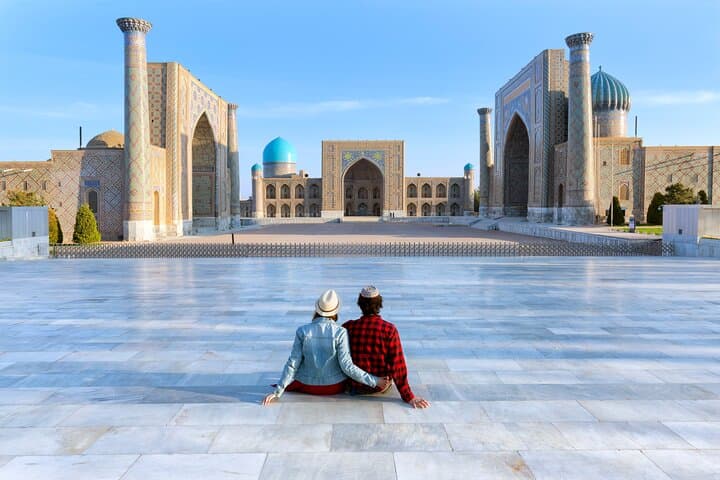
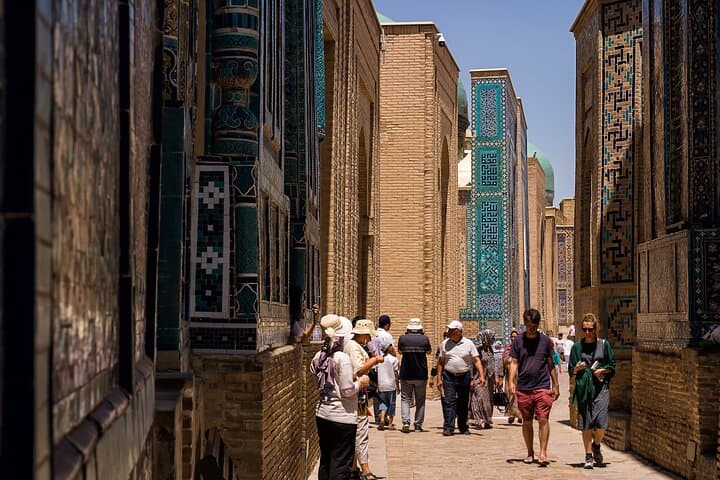
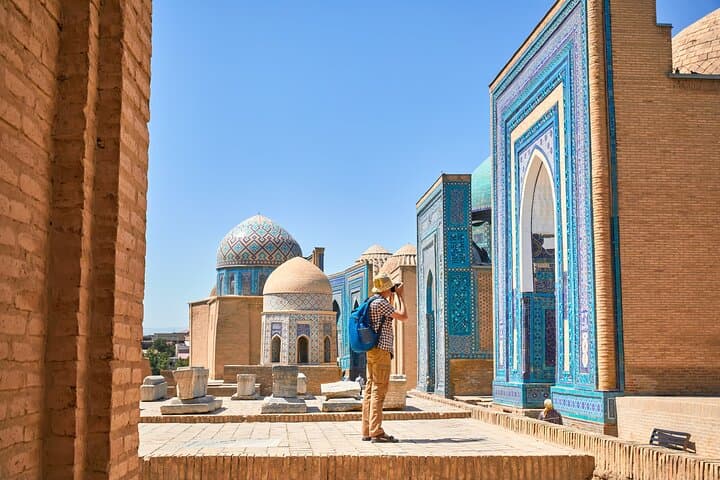
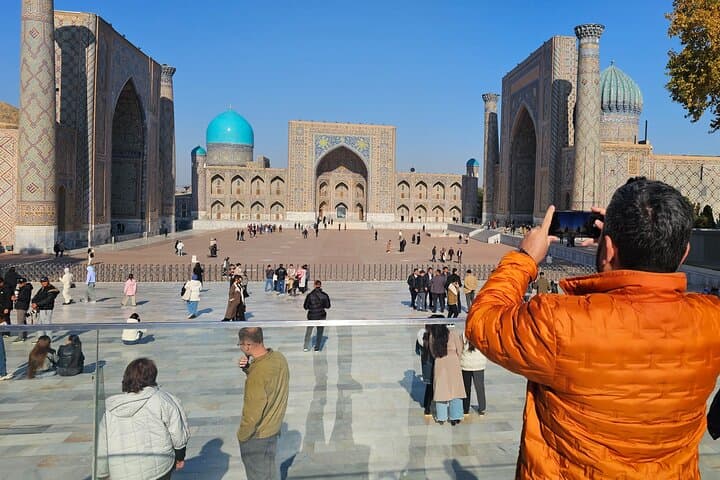
You step from an air-conditioned minivan into a square where turquoise domes throw back the sun and stone steps remember empires. The day moves at a steady, purposeful rhythm: a mausoleum’s silence, a market’s call, an observatory that once read the sky. This is Samarkand—where the road from China met Persian, Turkic and Mongol hands—and the tour stitches those eras into a single, walkable loop.
You step from an air-conditioned minivan into a square where turquoise domes throw back the sun and stone steps remember empires. The day moves at a steady, purposeful rhythm: a mausoleum’s silence, a market’s call, an observatory that once read the sky. This is Samarkand—where the road from China met Persian, Turkic and Mongol hands—and the tour stitches those eras into a single, walkable loop.
Begun by Timur in the 14th century and expanded by astronomers and artisans, Samarkand’s monuments—Registan, Gur-e-Amir, Bibi-Khanym, Shah-i-Zinda—showcase Timurid tilework, geometric vaulting and a city shaped by Silk Road commerce. Geologically the city sits on a broad Zeravshan plain; its clay and brick traditions influenced local crafts like paper-making that survived for centuries. Cultural life here centers on bazaars and teahouses where Uzbek pilaf, samsa and strong tea anchor daily routines.
Practically: expect 6–8 hours of mixed walking and short drives with multiple stops and guided interpretation. Surfaces range from cobbled courtyards and packed earth to museum floors; bring comfortable, grippy shoes and sun protection. Midday light is harsh—schedule Registan for early morning or late afternoon if possible. Cash (som, small bills) is useful for market purchases and tea; dress modestly when entering religious sites and follow signage—do not touch tilework.
The tour offers a dense, accessible introduction to Samarkand’s layered history and living culture: an efficient route for travelers who want both sweeping vistas and close-up craft demonstrations without deep trekking or technical skills.