THE ADVENTURE COLLECTIVE® · Independent discovery and booking for outdoor travel

See Samarkand’s blue-tiled landmarks in a single private day tour — from Amir Timur’s mausoleum to Registan’s madrassas and the colors of Siab Bazaar. A guide, private transport and curated stops make it an efficient introduction to the city’s history and markets.
See Samarkand’s blue-tiled landmarks in a single private day tour — from Amir Timur’s mausoleum to Registan’s madrassas and the colors of Siab Bazaar. A guide, private transport and curated stops make it an efficient introduction to the city’s history and markets.
You step from the van into a square of blue tiles and the air smells of frying flatbread and spices — Registan’s façades rise like a chapter from history, their mosaics catching the sunlight.
Verified experiences and guided adventures in the surrounding area.
Operated by Fayoziddin · Samarkand, Samarkand Region
You step from the van into a square of blue tiles and the air smells of frying flatbread and spices — Registan’s façades rise like a chapter from history, their mosaics catching the sunlight.
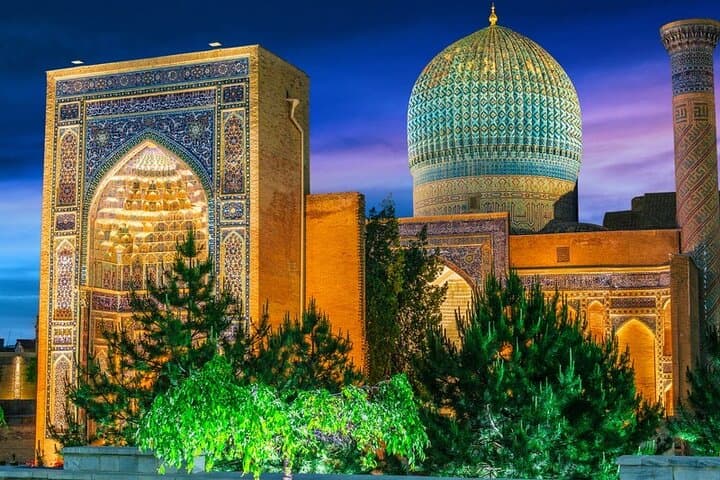
This private, full-day tour threads Samarkand’s essentials into a tidy 6–7 hour loop: Timur’s mausoleum at Gur-e-Amir, the triple madrassas of Registan, the vast courtyard of the Bibikhanum Mosque, the jewel-box tombs of Shahi-Zinda and the bustle of Siab Bazaar. The itinerary follows the arc of Timurid power in the 14th–15th centuries and touches later layers: Ulugbek’s observatory and 19th-century mosque restorations built over earlier sites.
Geologically, Samarkand sits on the fertile Zeravshan valley where riverine plain meets loess soils — the city’s clay and tile traditions grew from that earth and available minerals. Culturally the city is a Silk Road crossroads: Uzbek, Persian, Mongol and Islamic influences are visible in language, food and craft.
Practical details: expect light walking on cobbles and stairs; many monuments have uneven surfaces and steps but this tour lists wheelchair-accessible transport and stops. The private guide handles admissions and photo stops; bottled water is included but bring a refillable bottle. Start early to avoid midday heat and catch the tiles at their most photogenic. Carry local som for small purchases, dress modestly for mosque visits, and allow time at Siab Bazaar for tea and dried-fruit tasting. With a compact route and private transport, this is an efficient way to see Samarkand’s monumental core in a single day without rushing.
easy.
6–7 hours.
Suitable for most fitness levels; involves several hours of walking on uneven surfaces and some stairs.
The guide assists with entry but tickets are generally not listed as included; confirm when booking if admissions are covered.
The tour notes wheelchair-accessible transportation and surfaces; some historic sites have steps — contact the operator to plan accessible stops.
Yes — the itinerary includes a market stop for about 30 minutes, enough for browsing and sampling local snacks.
Visa requirements depend on your nationality; check Uzbekistan’s official entry rules well before travel and allow time for any e-visa processing.
Samarkand rose to prominence under Amir Timur (Tamerlane) in the 14th century, who commissioned many of the grand monuments that define the city today.
Restoration projects keep monuments vibrant but visitor numbers put pressure on fragile tilework; stick to pathways, avoid touching mosaics and support local guides and craftspeople.
Fayoziddin operates guided outdoor trips and adventures with an emphasis on safety, stewardship, and memorable experiences.
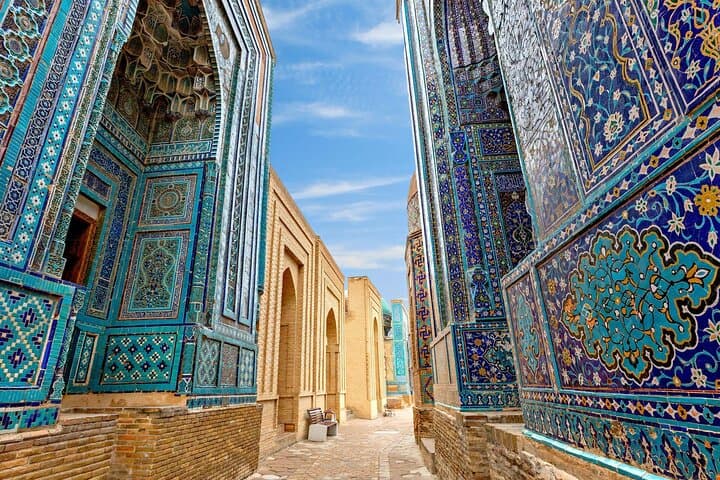


You step from the van into a square of blue tiles and the air smells of frying flatbread and spices — Registan’s façades rise like a chapter from history, their mosaics catching the sunlight.
You step from the van into a square of blue tiles and the air smells of frying flatbread and spices — Registan’s façades rise like a chapter from history, their mosaics catching the sunlight.
This private, full-day tour threads Samarkand’s essentials into a tidy 6–7 hour loop: Timur’s mausoleum at Gur-e-Amir, the triple madrassas of Registan, the vast courtyard of the Bibikhanum Mosque, the jewel-box tombs of Shahi-Zinda and the bustle of Siab Bazaar. The itinerary follows the arc of Timurid power in the 14th–15th centuries and touches later layers: Ulugbek’s observatory and 19th-century mosque restorations built over earlier sites.
Geologically, Samarkand sits on the fertile Zeravshan valley where riverine plain meets loess soils — the city’s clay and tile traditions grew from that earth and available minerals. Culturally the city is a Silk Road crossroads: Uzbek, Persian, Mongol and Islamic influences are visible in language, food and craft.
Practical details: expect light walking on cobbles and stairs; many monuments have uneven surfaces and steps but this tour lists wheelchair-accessible transport and stops. The private guide handles admissions and photo stops; bottled water is included but bring a refillable bottle. Start early to avoid midday heat and catch the tiles at their most photogenic. Carry local som for small purchases, dress modestly for mosque visits, and allow time at Siab Bazaar for tea and dried-fruit tasting. With a compact route and private transport, this is an efficient way to see Samarkand’s monumental core in a single day without rushing.