THE ADVENTURE COLLECTIVE® · Independent discovery and booking for outdoor travel

A full‑day transfer from Chania puts you at the start of Samaria Gorge by sunrise, giving access to the classic 16 km descent to Agia Roumeli. Read on for what to expect, logistics, and essential gear for this demanding Crete hike.
A full‑day transfer from Chania puts you at the start of Samaria Gorge by sunrise, giving access to the classic 16 km descent to Agia Roumeli. Read on for what to expect, logistics, and essential gear for this demanding Crete hike.
You step out of the minivan at the Omalos plateau while the morning light slides down the limestone walls; the air smells of pine and distant sea.
Verified experiences and guided adventures in the surrounding area.
Operated by Niriis Tours · Chania, Crete
You step out of the minivan at the Omalos plateau while the morning light slides down the limestone walls; the air smells of pine and distant sea.
Samaria Gorge opens beneath sheer cliffs and a ribbon of river that dares you forward. The route drops roughly 16 km from Xyloskalo to Agia Roumeli and commonly takes 4–6 hours to cross depending on pace and breaks. Established as a national park in 1962 to protect the rare kri‑kri (Cretan wild goat), the gorge channels mountain geology—sharpened limestone, scree fields, and narrow black rock funnels—into a single, demanding corridor.
Culturally, this is rural Crete: shepherd huts on the Omalos plateau, small chapels on the trail, and the tiny fishing village of Agia Roumeli where salty sea and cold mountain water meet. Practicalities matter: the scheduled transfer from Chania leaves early (around 7:00), returns late (about 21:00), and serves groups up to six in an air‑conditioned vehicle. Entrance to the park has a small fee (about €5) and the boat from Agia Roumeli to Sougia is commonly €13; the boat leg is about 45 minutes.
Expect uneven, rocky footing, sections of steep descent, and warm midday sun on exposed ledges. Bring sturdy footwear, 2–3 L of water, sun protection, and a light wind layer for coastal finish. If you want a narrated experience, a private guide is available for an additional fee; otherwise the gorge is well marked and impossible to get lost. Timing, hydration, and steady pace make this classic Cretan traverse rewarding rather than punishing.
challenging.
14 hours (full day).
High level of cardiovascular fitness and leg endurance; comfortable with long downhill walking on uneven terrain
Transfers cover private transportation only; the park entrance (~€5) and the Agia Roumeli boat (~€13) are paid on-site.
The gorge is about 16 km from Xyloskalo to Agia Roumeli and typically takes 4–6 hours; expect steep, rocky downhill terrain requiring good fitness.
Not recommended for those with serious back, heart, or pregnancy concerns; children can do it if used to long hikes and supervised closely.
The trail is well marked, but a private guide (extra fee) adds local history, wildlife spotting, and pacing tailored to your group.
Samaria became a protected national park in 1962 largely to conserve endemic species like the kri‑kri and preserve unique mountain-slope ecosystems.
Visitors should stay on designated trails, pack out all waste, and avoid disturbing wildlife; the park limits open season (May–October) to reduce impact.
Niriis Tours operates guided outdoor trips and adventures with an emphasis on safety, stewardship, and memorable experiences.

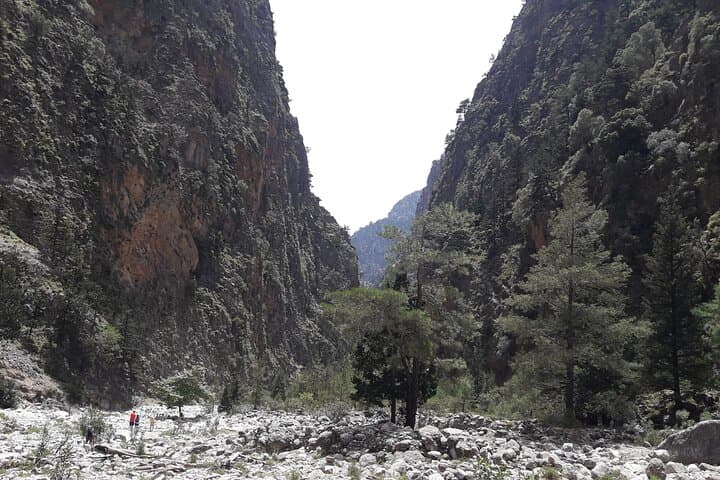


You step out of the minivan at the Omalos plateau while the morning light slides down the limestone walls; the air smells of pine and distant sea.
You step out of the minivan at the Omalos plateau while the morning light slides down the limestone walls; the air smells of pine and distant sea.
Samaria Gorge opens beneath sheer cliffs and a ribbon of river that dares you forward. The route drops roughly 16 km from Xyloskalo to Agia Roumeli and commonly takes 4–6 hours to cross depending on pace and breaks. Established as a national park in 1962 to protect the rare kri‑kri (Cretan wild goat), the gorge channels mountain geology—sharpened limestone, scree fields, and narrow black rock funnels—into a single, demanding corridor.
Culturally, this is rural Crete: shepherd huts on the Omalos plateau, small chapels on the trail, and the tiny fishing village of Agia Roumeli where salty sea and cold mountain water meet. Practicalities matter: the scheduled transfer from Chania leaves early (around 7:00), returns late (about 21:00), and serves groups up to six in an air‑conditioned vehicle. Entrance to the park has a small fee (about €5) and the boat from Agia Roumeli to Sougia is commonly €13; the boat leg is about 45 minutes.
Expect uneven, rocky footing, sections of steep descent, and warm midday sun on exposed ledges. Bring sturdy footwear, 2–3 L of water, sun protection, and a light wind layer for coastal finish. If you want a narrated experience, a private guide is available for an additional fee; otherwise the gorge is well marked and impossible to get lost. Timing, hydration, and steady pace make this classic Cretan traverse rewarding rather than punishing.