THE ADVENTURE COLLECTIVE® · Independent discovery and booking for outdoor travel

Crossing Samaria Gorge is a full-day, hands-on hike through one of Crete’s deepest canyons — 18 km of steep cliffs, gurgling streams and the narrow Iron Gates before a seaside finish in Agia Roumeli. Prepare for a long descent, uneven terrain and a rewarding swim at the end.
Crossing Samaria Gorge is a full-day, hands-on hike through one of Crete’s deepest canyons — 18 km of steep cliffs, gurgling streams and the narrow Iron Gates before a seaside finish in Agia Roumeli. Prepare for a long descent, uneven terrain and a rewarding swim at the end.
Dawn finds the bus curving up to Omalos plateau. Cold air bites, boots hit the packed dirt at Xiloskalo and the gorge immediately gulps the light — cliffs folding sky into shadow. The trail drops under a forest of plane and juniper, following the clear taras stream as it chatters over rounded stones, guiding hikers deeper into a canyon that narrows to a sliver at the Iron Gates.
Verified experiences and guided adventures in the surrounding area.
Operated by ANY DESTINATION · Omalos, Crete
Dawn finds the bus curving up to Omalos plateau. Cold air bites, boots hit the packed dirt at Xiloskalo and the gorge immediately gulps the light — cliffs folding sky into shadow. The trail drops under a forest of plane and juniper, following the clear taras stream as it chatters over rounded stones, guiding hikers deeper into a canyon that narrows to a sliver at the Iron Gates.
The route crosses roughly 18 km of limestone and schist carved over millennia; walls rise between 250–600 meters in places. Samaria’s geology records tectonic uplift and marine deposition; its isolation fostered endemic plants and the kri-kri, the small wild goat often seen on ledges. Human history threads the route too: caves used as wartime shelters, and the abandoned village of Samaria (Santa Maria), whose last residents left in 1962. The gorge is part of the UNESCO World Network of Biosphere Reserves, protected for its unique mix of geology, flora and fauna.
Practically, expect 6–7 hours on foot, with an overall outing of about 12–14 hours including transfers and the return ferry from Agia Roumeli to Sfakia. The trail is predominantly downhill but uneven and rocky; the Iron Gates section narrows to only a few meters across with sheer faces above. Bring sturdy hiking shoes, 2–3 liters of water, sun protection and a light jacket for sea breezes after the swim. Start early, pace downhill to protect knees, and plan for a post-hike ferry and bus connection. For experienced day-hikers, Samaria delivers raw scale, clear water, and a final swim that feels earned.
challenging.
12–14 hours.
Good cardiovascular fitness and strong legs for a long downhill day; able to hike 18 km on uneven terrain.
The classic crossing is about 18 km from Xiloskalo on Omalos plateau down to Agia Roumeli; the walking portion typically takes 6–7 hours for fit hikers.
The National Park charges an entrance fee collected at the trailhead (varies by season); check current rates before you go.
Yes — Agia Roumeli has a small beach and clear water; many hikers cool off there before taking the scheduled ferry to Sfakia.
Possibly — kri-kri inhabit the gorge’s cliffs and ledges; sightings are common but never guaranteed, and animals should be observed from a distance.
Samaria Gorge has been a refuge and corridor for people and wildlife for millennia and was designated a UNESCO Biosphere Reserve for its intact Mediterranean ecosystems.
Visitor limits and seasonal closures help protect endemic species and fragile vegetation; stick to the marked path and pack out all waste.
ANY DESTINATION operates guided outdoor trips and adventures with an emphasis on safety, stewardship, and memorable experiences.
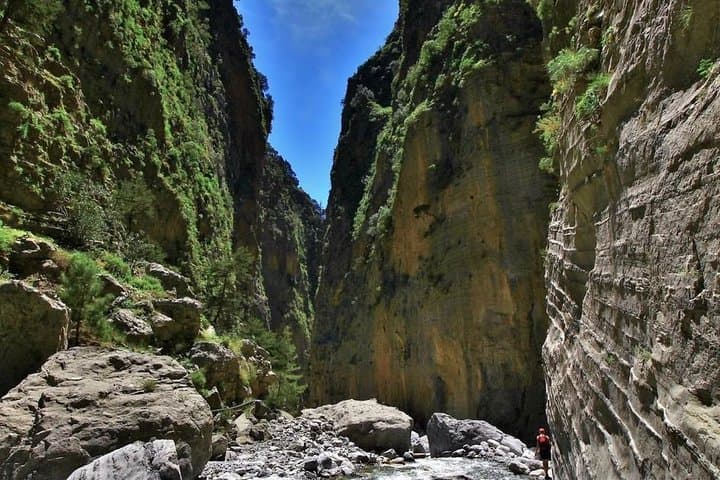

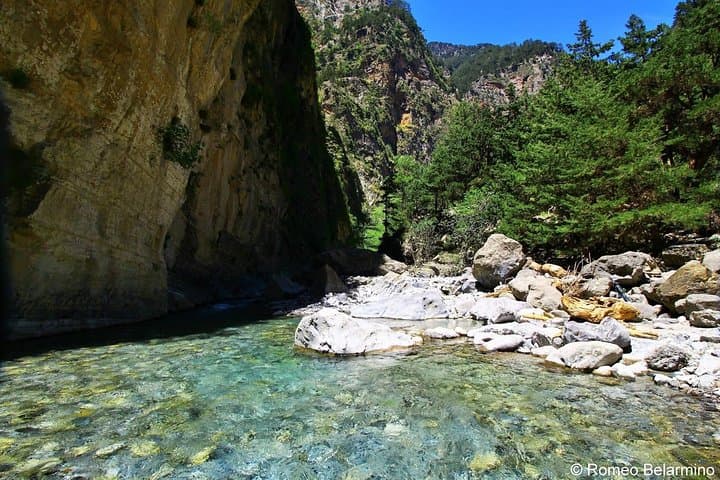

Dawn finds the bus curving up to Omalos plateau. Cold air bites, boots hit the packed dirt at Xiloskalo and the gorge immediately gulps the light — cliffs folding sky into shadow. The trail drops under a forest of plane and juniper, following the clear taras stream as it chatters over rounded stones, guiding hikers deeper into a canyon that narrows to a sliver at the Iron Gates.
Dawn finds the bus curving up to Omalos plateau. Cold air bites, boots hit the packed dirt at Xiloskalo and the gorge immediately gulps the light — cliffs folding sky into shadow. The trail drops under a forest of plane and juniper, following the clear taras stream as it chatters over rounded stones, guiding hikers deeper into a canyon that narrows to a sliver at the Iron Gates.
The route crosses roughly 18 km of limestone and schist carved over millennia; walls rise between 250–600 meters in places. Samaria’s geology records tectonic uplift and marine deposition; its isolation fostered endemic plants and the kri-kri, the small wild goat often seen on ledges. Human history threads the route too: caves used as wartime shelters, and the abandoned village of Samaria (Santa Maria), whose last residents left in 1962. The gorge is part of the UNESCO World Network of Biosphere Reserves, protected for its unique mix of geology, flora and fauna.
Practically, expect 6–7 hours on foot, with an overall outing of about 12–14 hours including transfers and the return ferry from Agia Roumeli to Sfakia. The trail is predominantly downhill but uneven and rocky; the Iron Gates section narrows to only a few meters across with sheer faces above. Bring sturdy hiking shoes, 2–3 liters of water, sun protection and a light jacket for sea breezes after the swim. Start early, pace downhill to protect knees, and plan for a post-hike ferry and bus connection. For experienced day-hikers, Samaria delivers raw scale, clear water, and a final swim that feels earned.