THE ADVENTURE COLLECTIVE® · Independent discovery and booking for outdoor travel

Board a regional bus from Salzburg and climb into the Bavarian Alps to Kehlsteinhaus, the Eagle's Nest. This six‑hour public-transport excursion combines raw alpine scenery with a sobering look at wartime history — ideal for travelers who want context with their viewpoints.
Board a regional bus from Salzburg and climb into the Bavarian Alps to Kehlsteinhaus, the Eagle's Nest. This six‑hour public-transport excursion combines raw alpine scenery with a sobering look at wartime history — ideal for travelers who want context with their viewpoints.
The train platform hums under a cool Austrian morning as your group boards a regional bus toward the Bavarian Alps. Roads curve into a landscape of vertical rock faces and green meadows; the air sharpens and the valley opens to reveal Berchtesgaden. From Obersalzberg you ascend toward the Kehlsteinhaus — the Eagle's Nest — a mountaintop house that perches like a lookout above fir-lined ridges and glacial valleys.
Verified experiences and guided adventures in the surrounding area.
Operated by Global Guide Services · Berchtesgaden, Bavaria
The train platform hums under a cool Austrian morning as your group boards a regional bus toward the Bavarian Alps. Roads curve into a landscape of vertical rock faces and green meadows; the air sharpens and the valley opens to reveal Berchtesgaden. From Obersalzberg you ascend toward the Kehlsteinhaus — the Eagle's Nest — a mountaintop house that perches like a lookout above fir-lined ridges and glacial valleys.
The site is inseparable from 20th-century history: built as a summit retreat and propaganda symbol during the Nazi era, it now hosts a museum-quality Documentation Center nearby that confronts that past with sober displays. Geologically, the Berchtesgaden Alps are composed largely of Dachstein limestone and Triassic sediments, scarping into sheer cliffs and cirques carved by ancient glaciers. Culturally, the region blends Bavarian small-town life — timber façades, rural bakeries — with mountain tourism centered on Königssee and trails toward Watzmann.
Practical guidance: the full loop from Salzburg takes roughly six hours by regional bus and local transfers (allow €10–20 for local transport). Expect paved switchback roads, a short tunnel and elevator to the summit platform, and exposed viewpoints — bring a windproof layer. The Documentation Center has a small admission fee and is best visited either first or last to contextualize the site. Aim for early departures to catch clearer air and steadier light for photos; mid-summer afternoons bring the largest crowds. Respect signage around historical exhibits, stick to trails at the ridge, and pack water — mountain sun and elevation can dehydrate quickly. This trip pairs history with alpine panoramas: the landscape will press at your senses while the site's history holds a quiet, difficult gravity.
moderate.
6 hours.
Moderate fitness: comfortable standing, short uphill walks, and light stair or elevator use; not technically demanding.
Plan for about six hours door-to-door, including regional bus travel, transfers, and time at key sites like Kehlsteinhaus and Obersalzberg.
Admission to the Kehlsteinhaus observation deck/restaurant and the Documentation Center are typically not included; expect a small fee (~€3) for the center.
Kehlsteinhaus is usually seasonal and can close in winter due to road access and weather—check local opening dates before booking.
Yes — the tour uses regional buses and local transfers; costs for local transport are typically €10–20 per person and require basic scheduling coordination.
Kehlsteinhaus was built as a 1930s summit retreat and later became a Nazi-era site of propaganda; postwar management converted it into a memorial and restaurant focused on historical education.
Berchtesgaden National Park protects fragile alpine habitats; visitors are asked to stay on marked paths and limit noise to protect high‑alpine flora and fauna.
Global Guide Services operates guided outdoor trips and adventures with an emphasis on safety, stewardship, and memorable experiences.
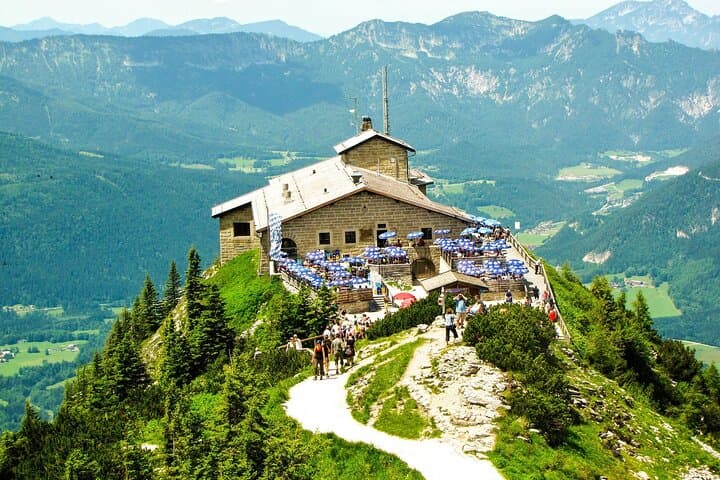
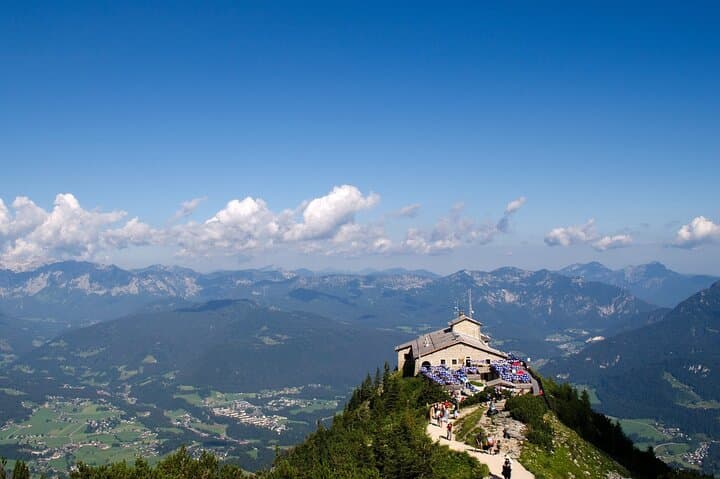
The train platform hums under a cool Austrian morning as your group boards a regional bus toward the Bavarian Alps. Roads curve into a landscape of vertical rock faces and green meadows; the air sharpens and the valley opens to reveal Berchtesgaden. From Obersalzberg you ascend toward the Kehlsteinhaus — the Eagle's Nest — a mountaintop house that perches like a lookout above fir-lined ridges and glacial valleys.
The train platform hums under a cool Austrian morning as your group boards a regional bus toward the Bavarian Alps. Roads curve into a landscape of vertical rock faces and green meadows; the air sharpens and the valley opens to reveal Berchtesgaden. From Obersalzberg you ascend toward the Kehlsteinhaus — the Eagle's Nest — a mountaintop house that perches like a lookout above fir-lined ridges and glacial valleys.
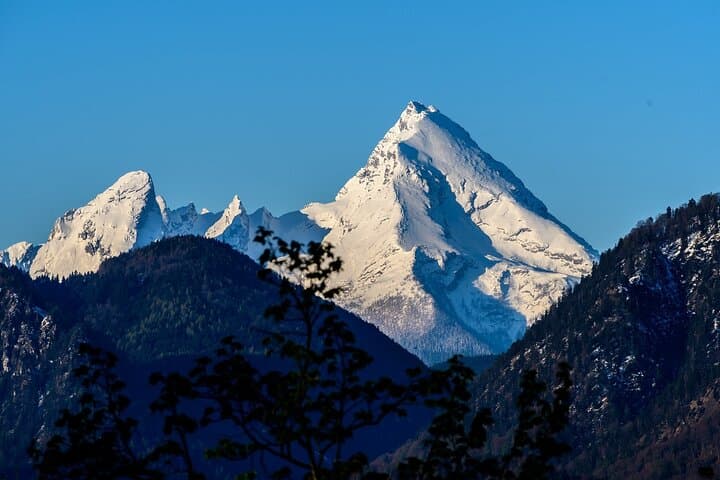
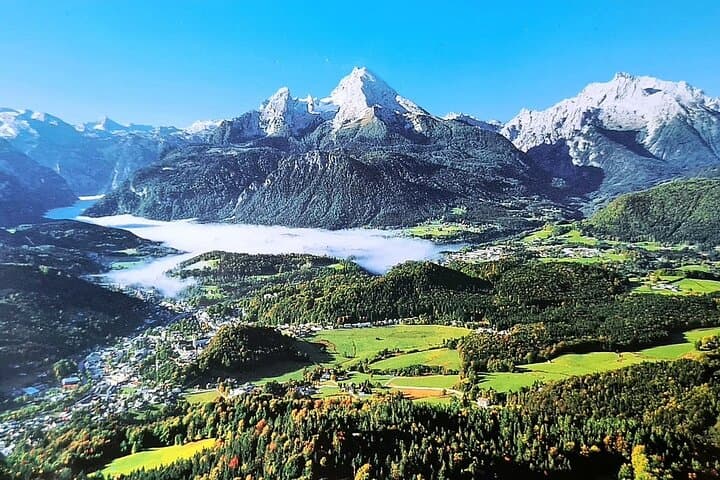
The site is inseparable from 20th-century history: built as a summit retreat and propaganda symbol during the Nazi era, it now hosts a museum-quality Documentation Center nearby that confronts that past with sober displays. Geologically, the Berchtesgaden Alps are composed largely of Dachstein limestone and Triassic sediments, scarping into sheer cliffs and cirques carved by ancient glaciers. Culturally, the region blends Bavarian small-town life — timber façades, rural bakeries — with mountain tourism centered on Königssee and trails toward Watzmann.
Practical guidance: the full loop from Salzburg takes roughly six hours by regional bus and local transfers (allow €10–20 for local transport). Expect paved switchback roads, a short tunnel and elevator to the summit platform, and exposed viewpoints — bring a windproof layer. The Documentation Center has a small admission fee and is best visited either first or last to contextualize the site. Aim for early departures to catch clearer air and steadier light for photos; mid-summer afternoons bring the largest crowds. Respect signage around historical exhibits, stick to trails at the ridge, and pack water — mountain sun and elevation can dehydrate quickly. This trip pairs history with alpine panoramas: the landscape will press at your senses while the site's history holds a quiet, difficult gravity.