THE ADVENTURE COLLECTIVE® · Independent discovery and booking for outdoor travel

See Salvador’s highlights in one efficient loop—from the Fonte Nova stadium and Dique do Tororó’s orixás to Mercado Modelo’s crafts, Senhor do Bonfim’s ribbons, and the famed Ribeira ice cream. Ideal for first-time visitors who want cultural context and practical logistics in one half-day.
See Salvador’s highlights in one efficient loop—from the Fonte Nova stadium and Dique do Tororó’s orixás to Mercado Modelo’s crafts, Senhor do Bonfim’s ribbons, and the famed Ribeira ice cream. Ideal for first-time visitors who want cultural context and practical logistics in one half-day.
The tour begins with the city unfolding outside the minivan window: modern stadium concrete slides past plazas ringed by colonial façades, and the Bay of All Saints presses a bright, restless horizon against the skyline.
Verified experiences and guided adventures in the surrounding area.
Operated by TCH Receptivo · Salvador, Bahia
The tour begins with the city unfolding outside the minivan window: modern stadium concrete slides past plazas ringed by colonial façades, and the Bay of All Saints presses a bright, restless horizon against the skyline.
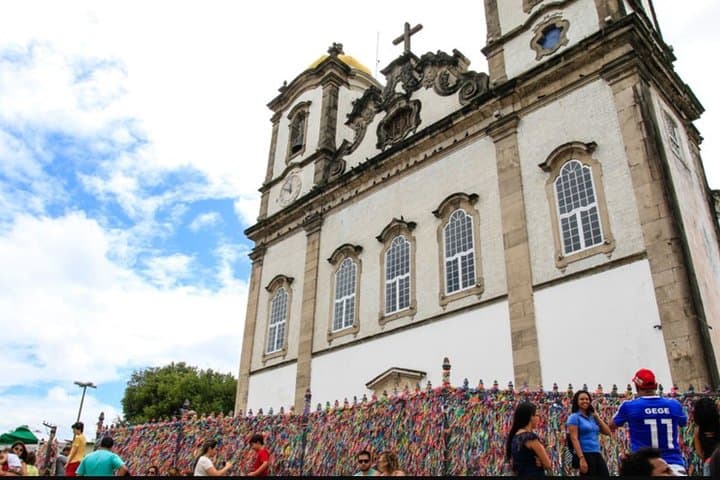
On a four- to five-hour loop you hit Salvador’s essentials—Fonte Nova Arena and the sculpted orixás at Dique do Tororó—before stepping down into Mercado Modelo, where wood stalls and woven baskets crowd narrow aisles and vendors call out over the hum. At Senhor do Bonfim Church you’ll encounter a street-level ritual: colored ribbons tied to iron gates and whispered petitions—an enduring Afro-Brazilian Catholic fusion.
Salvador’s history as Brazil’s first capital and a major Atlantic slave port shapes the streets: baroque churches, Portuguese tiles, and the rhythms of Bahian cuisine and Candomblé practice are visible at every turn. Geologically, the city perches on a low coastal plateau above the bay; coastal breezes keep the air humid but fresh.
Practical details are straightforward. Expect a mix of short walks and vehicle transfers; the tour is rated easy but includes stairs and cobbled streets. Bring cash for market bargaining and small offerings, carry sun protection and a light rain layer—the microclimate can shift quickly.
Timing matters: morning departures avoid the hottest sun and give better market energy; late afternoon captures softer light over the bay. This panoramic route is efficient for first-time visitors who want cultural context and a compact orientation to Salvador’s most photographed and lived-in places.
easy.
4–5 hours.
Suitable for most fitness levels; comfortable walking for short, frequent intervals and boarding a vehicle between stops.
The operator lists wheelchair accessibility, but some market aisles and church approaches use cobblestones and steps—confirm specific mobility needs when booking.
A bilingual guide is included; confirm language preference at booking to ensure the right interpreter.
This panoramic route includes transportation and guide time but generally does not include paid admissions or optional tastings—bring cash for purchases and snacks.
Book in advance during high season; the tour offers free cancellation up to 24 hours before departure for a full refund.
Salvador was Brazil’s first colonial capital and a major Atlantic slave port; Afro-Brazilian culture and Catholic brotherhoods shape the city’s rituals, music, and cuisine.
Historic Pelourinho and coastal zones face wear from tourism and erosion; visitors help by staying on marked paths, avoiding damage to tiles and murals, and supporting local guides and artisans.
TCH Receptivo operates guided outdoor trips and adventures with an emphasis on safety, stewardship, and memorable experiences.
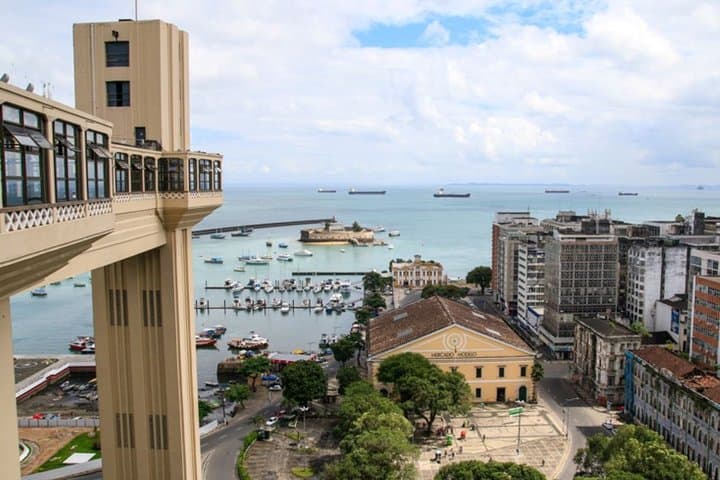
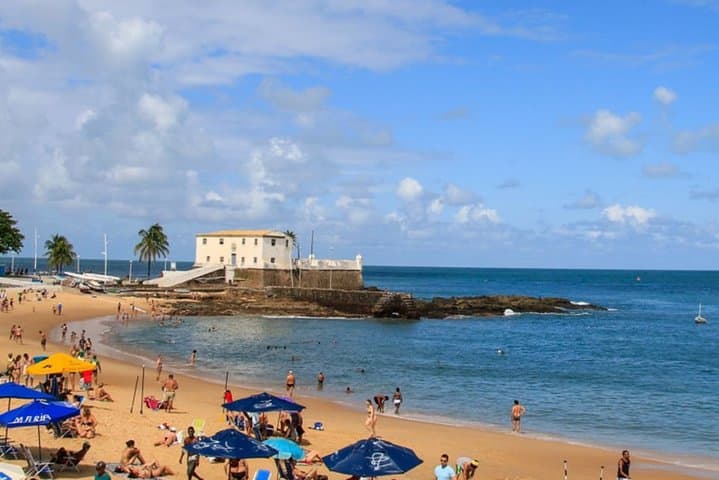
The tour begins with the city unfolding outside the minivan window: modern stadium concrete slides past plazas ringed by colonial façades, and the Bay of All Saints presses a bright, restless horizon against the skyline.
The tour begins with the city unfolding outside the minivan window: modern stadium concrete slides past plazas ringed by colonial façades, and the Bay of All Saints presses a bright, restless horizon against the skyline.
On a four- to five-hour loop you hit Salvador’s essentials—Fonte Nova Arena and the sculpted orixás at Dique do Tororó—before stepping down into Mercado Modelo, where wood stalls and woven baskets crowd narrow aisles and vendors call out over the hum. At Senhor do Bonfim Church you’ll encounter a street-level ritual: colored ribbons tied to iron gates and whispered petitions—an enduring Afro-Brazilian Catholic fusion.
Salvador’s history as Brazil’s first capital and a major Atlantic slave port shapes the streets: baroque churches, Portuguese tiles, and the rhythms of Bahian cuisine and Candomblé practice are visible at every turn. Geologically, the city perches on a low coastal plateau above the bay; coastal breezes keep the air humid but fresh.
Practical details are straightforward. Expect a mix of short walks and vehicle transfers; the tour is rated easy but includes stairs and cobbled streets. Bring cash for market bargaining and small offerings, carry sun protection and a light rain layer—the microclimate can shift quickly.
Timing matters: morning departures avoid the hottest sun and give better market energy; late afternoon captures softer light over the bay. This panoramic route is efficient for first-time visitors who want cultural context and a compact orientation to Salvador’s most photographed and lived-in places.