THE ADVENTURE COLLECTIVE® · Independent discovery and booking for outdoor travel

Descend into a subterranean salt cathedral and then climb to the rim of Guatavita, where Muisca gold offerings sparked the El Dorado myth. This private day tour from Bogotá pairs monumental underground architecture with highland lake views and local history.
Descend into a subterranean salt cathedral and then climb to the rim of Guatavita, where Muisca gold offerings sparked the El Dorado myth. This private day tour from Bogotá pairs monumental underground architecture with highland lake views and local history.
You step off the vehicle and the air changes—cool, mineral-scented, and dim—before a staircut tunnel pulls you down toward the Salt Cathedral of Zipaquirá. Lights carve the dark into steps and arches; carved stations of the cross emerge from white salt walls and the cavern’s scale hushes conversation.
Verified experiences and guided adventures in the surrounding area.
Operated by Nómadas Colombia Travel · Zipaquirá, Cundinamarca
You step off the vehicle and the air changes—cool, mineral-scented, and dim—before a staircut tunnel pulls you down toward the Salt Cathedral of Zipaquirá. Lights carve the dark into steps and arches; carved stations of the cross emerge from white salt walls and the cavern’s scale hushes conversation.
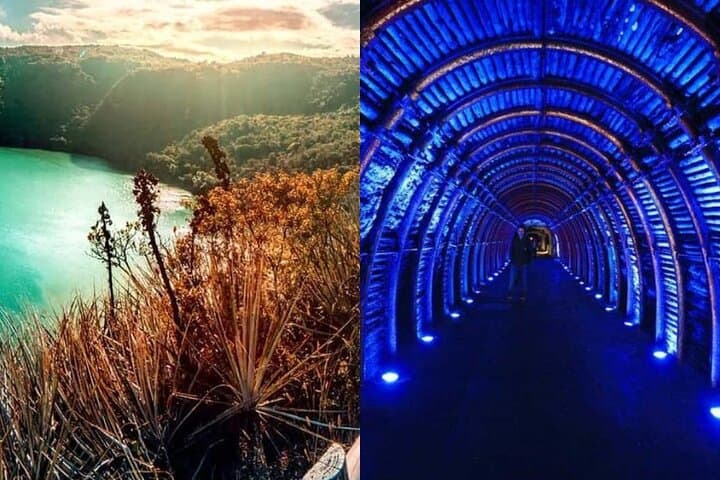
The cathedral sits within a worked salt mine about 180 meters below the surface, a modern reinterpretation of mining space turned sacred architecture. Aboveground, the Bogotá savannah opens into rolling páramo ridges where the Muisca once performed ceremonies at Laguna de Guatavita. That small, high-altitude lake became the seed of the El Dorado legend—offerings of gold and ritual that drew colonial chroniclers and later treasure hunters.
On route you’ll pass Zipaquirá’s colonial streets and Sesquilé’s rustic facades, and finish with a lookout over the Tominé reservoir. Geologically, the corridor traces evaporite deposits that formed the vast salt beds north of Bogotá; ecologically, the rim of Guatavita supports highland shrubs and waterfowl adapted to thin air.
Practical guide: the full private excursion runs roughly six hours with hotel pickup in Bogotá. Expect many steps in the Salt Cathedral and uneven trails around Guatavita—good footwear is essential. The itinerary is gentle on fitness but the elevation (roughly 2,600–3,000 m) can cause breathlessness; hydrate and move deliberately. Cameras are fine but follow guide directions at ritual sites. Lunch is typically in Guatavita or Zipaquirá; bring a light jacket for wind on the lake rim and sunscreen for exposed mid-day sections.
easy.
5–6 hours.
Suitable for most fitness levels; be prepared for stairs and short uphill walks at altitude
The private tour is about six hours and usually includes private transport, a bilingual guide, and lunch; specific admissions may or may not be included—confirm at booking.
The cathedral has many stairs and changes in elevation; it is not fully wheelchair-accessible and may be difficult for people with major mobility restrictions.
No—Guatavita is a protected lake with cultural significance; visitors view it from designated paths and viewpoints only.
Some visitors feel mild symptoms due to the 2,600–3,000 m elevation; rest, hydrate, and avoid heavy exertion if you feel unwell.
The region was inhabited by the Muisca people whose gold-offering rites at Guatavita inspired the El Dorado legend; later salt mining shaped settlement and the unique underground cathedral.
Guatavita and surrounding páramo are environmentally sensitive—stay on paths, pack out waste, and respect local conservation rules to protect water sources and archaeological sites.
Nómadas Colombia Travel operates guided outdoor trips and adventures with an emphasis on safety, stewardship, and memorable experiences.
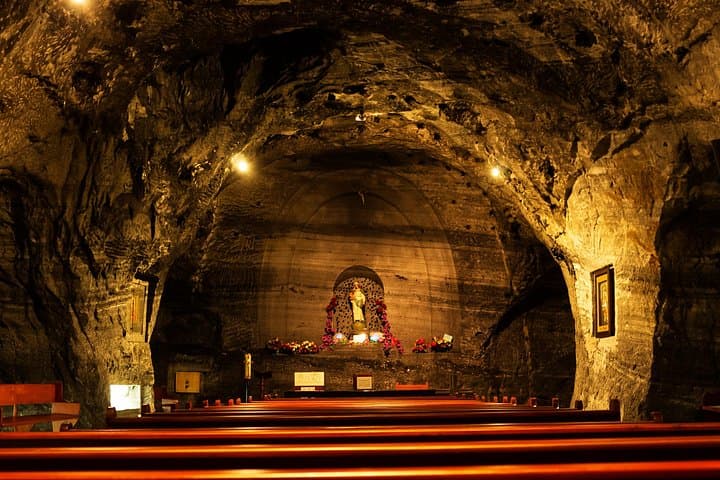
You step off the vehicle and the air changes—cool, mineral-scented, and dim—before a staircut tunnel pulls you down toward the Salt Cathedral of Zipaquirá. Lights carve the dark into steps and arches; carved stations of the cross emerge from white salt walls and the cavern’s scale hushes conversation.
You step off the vehicle and the air changes—cool, mineral-scented, and dim—before a staircut tunnel pulls you down toward the Salt Cathedral of Zipaquirá. Lights carve the dark into steps and arches; carved stations of the cross emerge from white salt walls and the cavern’s scale hushes conversation.
The cathedral sits within a worked salt mine about 180 meters below the surface, a modern reinterpretation of mining space turned sacred architecture. Aboveground, the Bogotá savannah opens into rolling páramo ridges where the Muisca once performed ceremonies at Laguna de Guatavita. That small, high-altitude lake became the seed of the El Dorado legend—offerings of gold and ritual that drew colonial chroniclers and later treasure hunters.
On route you’ll pass Zipaquirá’s colonial streets and Sesquilé’s rustic facades, and finish with a lookout over the Tominé reservoir. Geologically, the corridor traces evaporite deposits that formed the vast salt beds north of Bogotá; ecologically, the rim of Guatavita supports highland shrubs and waterfowl adapted to thin air.
Practical guide: the full private excursion runs roughly six hours with hotel pickup in Bogotá. Expect many steps in the Salt Cathedral and uneven trails around Guatavita—good footwear is essential. The itinerary is gentle on fitness but the elevation (roughly 2,600–3,000 m) can cause breathlessness; hydrate and move deliberately. Cameras are fine but follow guide directions at ritual sites. Lunch is typically in Guatavita or Zipaquirá; bring a light jacket for wind on the lake rim and sunscreen for exposed mid-day sections.