THE ADVENTURE COLLECTIVE® · Independent discovery and booking for outdoor travel

Learn salsa and bachata on Tulum’s shore in a one-hour, bilingual class that blends technique with seaside energy. Perfect for beginners and travelers who want a lively, social way to experience local culture.
Learn salsa and bachata on Tulum’s shore in a one-hour, bilingual class that blends technique with seaside energy. Perfect for beginners and travelers who want a lively, social way to experience local culture.
The breeze off the Caribbean keeps time as hips and feet find a new rhythm on Tulum’s sandy edge. You start on a wooden studio floor or an open-air platform with salt-scented air and the surf a few hundred meters away; music pulses, instructors demonstrate, and within minutes the basic salsa break becomes a moving conversation between partners.
Verified experiences and guided adventures in the surrounding area.
Operated by TulumSalsa Academy · Tulum, Quintana Roo
The breeze off the Caribbean keeps time as hips and feet find a new rhythm on Tulum’s sandy edge. You start on a wooden studio floor or an open-air platform with salt-scented air and the surf a few hundred meters away; music pulses, instructors demonstrate, and within minutes the basic salsa break becomes a moving conversation between partners.
Tulum’s shore sits along limestone karst that meets the sea—a coastline carved by cenotes and underground rivers long before modern tourism. The town grew from a Mayan port and today blends beach shacks, boutique hotels, and studios that borrow the coast’s relaxed clarity. Dance here feels cultural as much as physical: salsa and bachata are living expressions of Afro-Caribbean and Latin American rhythms that travelers encounter across Mexico’s eastern shores.
Expect an approachable, social class aimed at beginners and early intermediates. Sessions run about an hour and cover solo footwork, partner connection, and a short combo to practice. The floor can be sandy; instructors often teach in pairs and bilingual cues help non-Spanish speakers follow along.
Practical guidance: arrive 10–15 minutes early to warm up and claim a front-row spot, wear supportive, flexible shoes that slide (avoid sticky rubber soles), and bring a water bottle. Midday sun can be strong—book morning or sunset slots for cooler temps. Respect beach rules and turtle nesting signs; leave flash photography off the sand at night. With a little practice, you’ll walk away with moves you can use that evening at a local bar or on the shore.
easy.
1 hour.
Should have a moderate level of fitness — able to stand and move for an hour with short breaks.
No — classes are designed for beginners and early intermediates; instructors teach basic steps, partnerwork, and an easy combo.
Comfortable clothing that allows hip and leg movement plus shoes with a smooth sole for turning—avoid heavy beach sandals.
Yes — instructors typically teach in Spanish and English to accommodate international guests.
Solo travelers are welcome; instructors rotate partners and teach leader/follower roles so everyone participates.
Tulum began as a Mayan coastal port and later became a waypoint for trade along the eastern Yucatán; the mix of Mayan heritage and Caribbean exchange shapes local culture today.
Tulum’s beaches are sensitive nesting grounds and part of a broader coastal ecosystem—avoid disturbing dune vegetation and use reef-safe sunscreen to protect nearby coral and marine life.
TulumSalsa Academy operates guided outdoor trips and adventures with an emphasis on safety, stewardship, and memorable experiences.

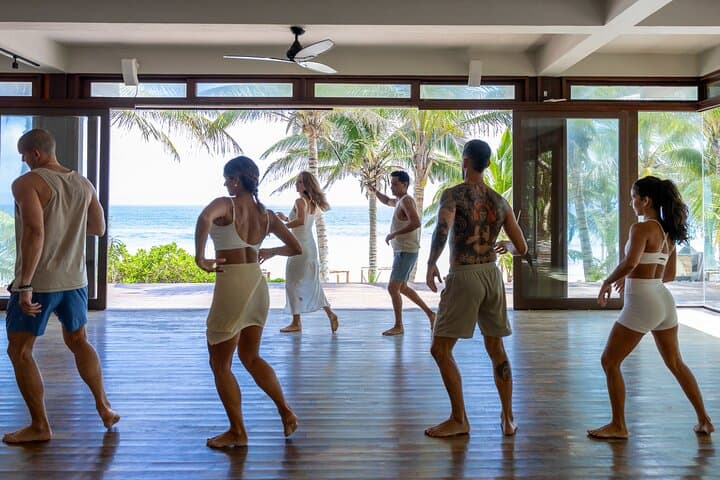
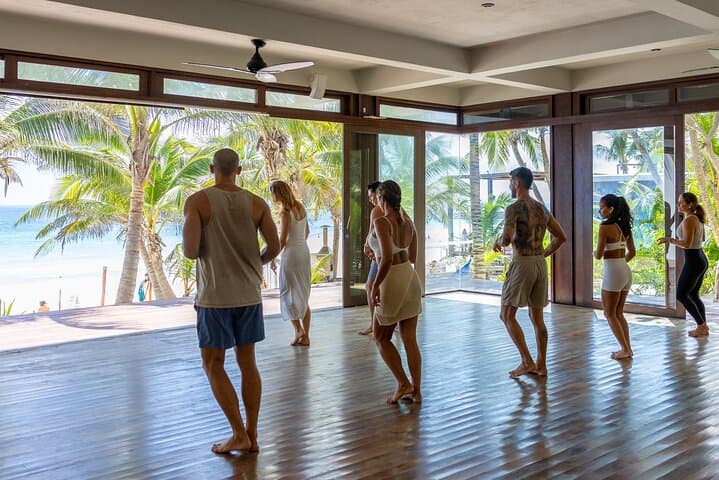
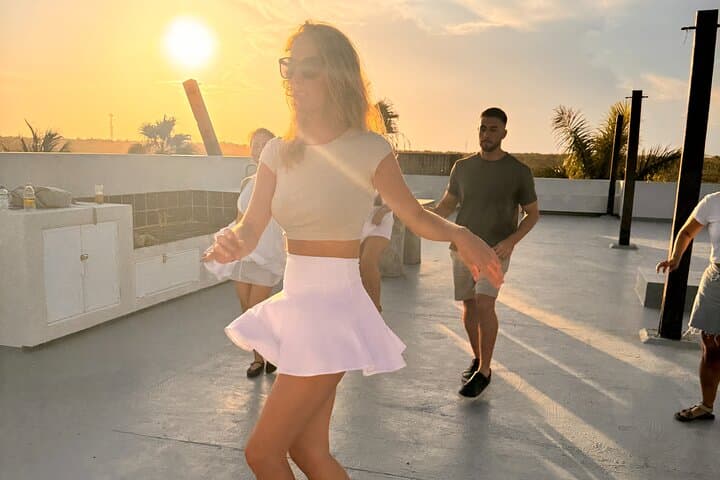
The breeze off the Caribbean keeps time as hips and feet find a new rhythm on Tulum’s sandy edge. You start on a wooden studio floor or an open-air platform with salt-scented air and the surf a few hundred meters away; music pulses, instructors demonstrate, and within minutes the basic salsa break becomes a moving conversation between partners.
The breeze off the Caribbean keeps time as hips and feet find a new rhythm on Tulum’s sandy edge. You start on a wooden studio floor or an open-air platform with salt-scented air and the surf a few hundred meters away; music pulses, instructors demonstrate, and within minutes the basic salsa break becomes a moving conversation between partners.
Tulum’s shore sits along limestone karst that meets the sea—a coastline carved by cenotes and underground rivers long before modern tourism. The town grew from a Mayan port and today blends beach shacks, boutique hotels, and studios that borrow the coast’s relaxed clarity. Dance here feels cultural as much as physical: salsa and bachata are living expressions of Afro-Caribbean and Latin American rhythms that travelers encounter across Mexico’s eastern shores.
Expect an approachable, social class aimed at beginners and early intermediates. Sessions run about an hour and cover solo footwork, partner connection, and a short combo to practice. The floor can be sandy; instructors often teach in pairs and bilingual cues help non-Spanish speakers follow along.
Practical guidance: arrive 10–15 minutes early to warm up and claim a front-row spot, wear supportive, flexible shoes that slide (avoid sticky rubber soles), and bring a water bottle. Midday sun can be strong—book morning or sunset slots for cooler temps. Respect beach rules and turtle nesting signs; leave flash photography off the sand at night. With a little practice, you’ll walk away with moves you can use that evening at a local bar or on the shore.