THE ADVENTURE COLLECTIVE® · Independent discovery and booking for outdoor travel

Cross a 4,600 m pass, descend through cloudforest and coffee plantations, and arrive at Machu Picchu after five days of varied terrain. This Salkantay route balances high‑altitude challenge with quiet trails and cultural encounters.
Cross a 4,600 m pass, descend through cloudforest and coffee plantations, and arrive at Machu Picchu after five days of varied terrain. This Salkantay route balances high‑altitude challenge with quiet trails and cultural encounters.
Dawn breaks on a rim of snow and wind where the Salkantay massif throws a long shadow over the trail. Cold, thin air bites at your lungs as you climb toward the Salkantay Pass (≈4,600 m); behind you, glaciers gleam; ahead, the route drops into a green corridor that the river has carved toward the Amazon. The trek moves fast between extremes: turquoise high‑altitude lakes, sharp moraine, then orchids and coffee plantations under a humid canopy.
Verified experiences and guided adventures in the surrounding area.
Operated by Terres des Incas · Cusco, Cusco Region
Dawn breaks on a rim of snow and wind where the Salkantay massif throws a long shadow over the trail. Cold, thin air bites at your lungs as you climb toward the Salkantay Pass (≈4,600 m); behind you, glaciers gleam; ahead, the route drops into a green corridor that the river has carved toward the Amazon. The trek moves fast between extremes: turquoise high‑altitude lakes, sharp moraine, then orchids and coffee plantations under a humid canopy.
This route threads pre‑Inca and Inca valleys below the 6,264 m Salkantay peak, a granite and metamorphic spine formed by tectonic uplift of the Andes. Local Quechua communities still practice traditional agriculture and maintain festivals tied to the mountain — historically regarded as an apu, or sacred mountain. Along the lower days you encounter working farms, bromeliads, and the slow hum of cloudforest life.
Practical guidance: plan five days with camping and one night in Aguas Calientes; expect total daily hiking of 6–12 km with one steep ascent to 4,600 m and cumulative elevation changes exceeding 1,600 m on some days. Acclimatize in Cusco for 48 hours if possible, carry a 30–40 L daypack, layered clothing for freezing mornings and hot afternoons, and a reliable sleeping system for mountain temps. Hydrate early and often — altitude increases dehydration — and use trekking poles to reduce knee strain on long descents. Start early to avoid afternoon storms in the cloudforest and respect local trails and campsites to protect fragile ecosystems.
challenging.
4–5 days.
Good cardiovascular fitness with prior multi‑day hiking experience; able to carry a 8–12 kg daypack and handle sustained uphill at high altitude.
Typical itineraries run 4–5 days of trekking plus travel days; this version is commonly done over five days with one night in Aguas Calientes.
No technical climbing experience is required, but prior high‑altitude hiking or acclimatization is highly recommended due to the 4,600 m pass.
Yes, but the dry season (May–September) has more stable weather and clearer high‑mountain conditions; rains increase trail slipperiness in the wet season.
Yes — most itineraries end with a dawn visit to Machu Picchu from Aguas Calientes; entrance tickets and optional climbs (Huayna or Machu Picchu mountain) should be booked in advance.
The Salkantay corridor was a traditional high‑route parallel to the Inca Trail and links highland Quechua communities with cloudforest settlements; many terraces and ruins remain along the way.
The route crosses sensitive puna and cloudforest zones; stick to established campsites, minimize campfire use, and support local guides and community‑run lodges to reduce impact.
Terres des Incas operates guided outdoor trips and adventures with an emphasis on safety, stewardship, and memorable experiences.
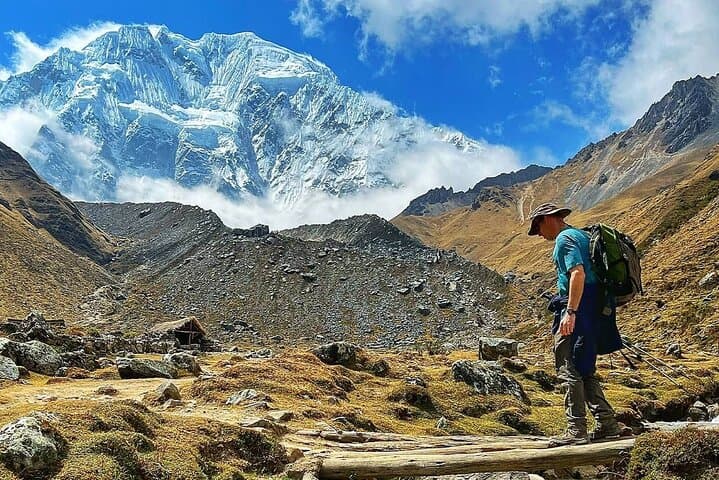
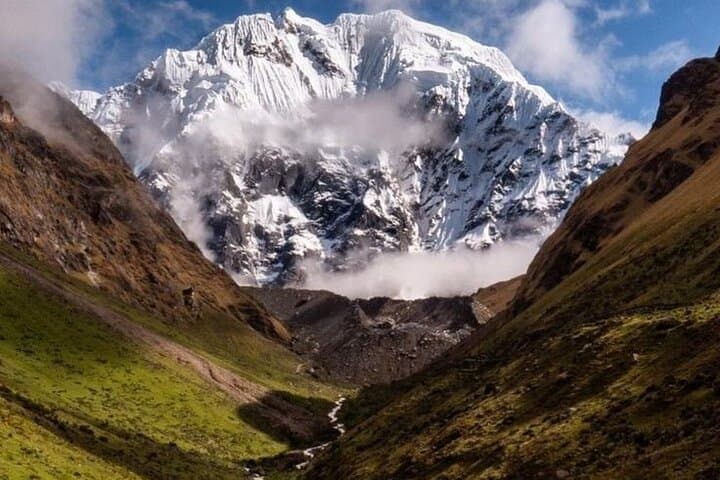
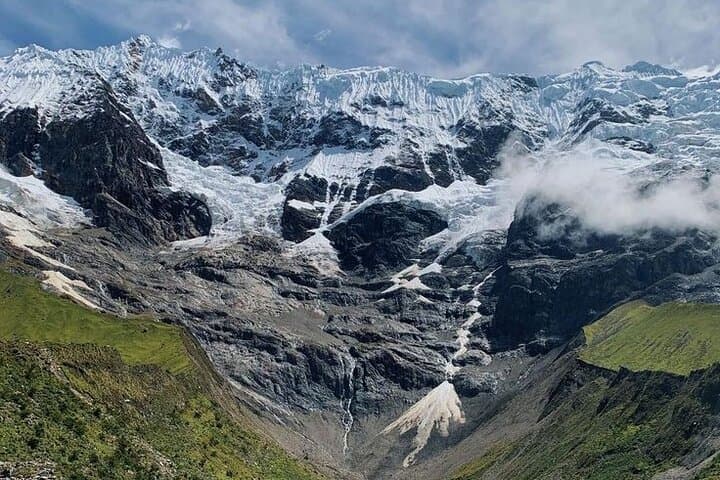
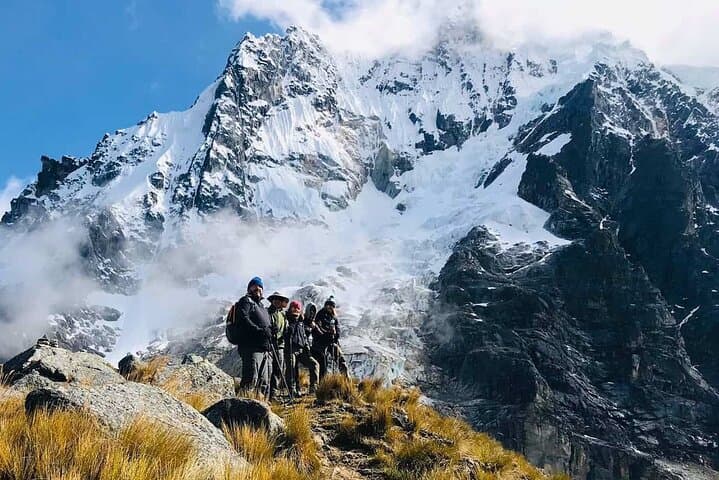
Dawn breaks on a rim of snow and wind where the Salkantay massif throws a long shadow over the trail. Cold, thin air bites at your lungs as you climb toward the Salkantay Pass (≈4,600 m); behind you, glaciers gleam; ahead, the route drops into a green corridor that the river has carved toward the Amazon. The trek moves fast between extremes: turquoise high‑altitude lakes, sharp moraine, then orchids and coffee plantations under a humid canopy.
Dawn breaks on a rim of snow and wind where the Salkantay massif throws a long shadow over the trail. Cold, thin air bites at your lungs as you climb toward the Salkantay Pass (≈4,600 m); behind you, glaciers gleam; ahead, the route drops into a green corridor that the river has carved toward the Amazon. The trek moves fast between extremes: turquoise high‑altitude lakes, sharp moraine, then orchids and coffee plantations under a humid canopy.
This route threads pre‑Inca and Inca valleys below the 6,264 m Salkantay peak, a granite and metamorphic spine formed by tectonic uplift of the Andes. Local Quechua communities still practice traditional agriculture and maintain festivals tied to the mountain — historically regarded as an apu, or sacred mountain. Along the lower days you encounter working farms, bromeliads, and the slow hum of cloudforest life.
Practical guidance: plan five days with camping and one night in Aguas Calientes; expect total daily hiking of 6–12 km with one steep ascent to 4,600 m and cumulative elevation changes exceeding 1,600 m on some days. Acclimatize in Cusco for 48 hours if possible, carry a 30–40 L daypack, layered clothing for freezing mornings and hot afternoons, and a reliable sleeping system for mountain temps. Hydrate early and often — altitude increases dehydration — and use trekking poles to reduce knee strain on long descents. Start early to avoid afternoon storms in the cloudforest and respect local trails and campsites to protect fragile ecosystems.