THE ADVENTURE COLLECTIVE® · Independent discovery and booking for outdoor travel

A private 5-day route from Cusco that swaps the crowded Inca Trail for a high-pass crossing, jungle descent and a sunrise visit to Machu Picchu. Expect snowfields, cloud forest and multi-day camping with a guide and support crew.
A private 5-day route from Cusco that swaps the crowded Inca Trail for a high-pass crossing, jungle descent and a sunrise visit to Machu Picchu. Expect snowfields, cloud forest and multi-day camping with a guide and support crew.
A cold dawn in the high Andes opens the first step of the Salkantay Trek: you climb out of bus windows into a sky that feels impossibly close, Salkantay’s snow shoulder looming above. The trail moves quickly from windswept alpine moraine to dense cloud forest—each day a regime shift in temperature, vegetation and light.
Verified experiences and guided adventures in the surrounding area.
Operated by Conde Travel · Cusco, Cusco
A cold dawn in the high Andes opens the first step of the Salkantay Trek: you climb out of bus windows into a sky that feels impossibly close, Salkantay’s snow shoulder looming above. The trail moves quickly from windswept alpine moraine to dense cloud forest—each day a regime shift in temperature, vegetation and light.
This alternative to the Inca Trail threads a route once used by pre-Columbian travelers and modern muleteers. Geologically the corridor is dramatic: glacial cirques and moraine give way to eroded volcanic slopes and then to the sedimentary, humid valleys that feed the Urubamba. Local Quechua communities still manage coffee plots and medicinal plant gardens; you’ll pass terraces and hear stories of mountain deities while guides point out orchids and bromeliads.
Expect remote campsites, a high pass near 4,600 m (Salkantay Pass), and long descents into jungle villages like Lucmabamba and Santa Teresa. The final approach follows riparian tracks and the train line into Aguas Calientes, finishing with a pre-dawn ascent to Machu Picchu for a guided visit.
Practical edge: acclimatize in Cusco 48–72 hours, pack layered, waterproof clothing and a warm sleeping bag rated for near-freezing nights. Hydrate and pace uphill sections to limit altitude effects. Daily walking ranges from 6–8 hours on mixed terrain—rocky switchbacks, muddy jungle trails and service roads—so sturdy boots and gaiters help. With a private service you get a guide, cook and camp crew, which keeps logistics simple and lets you focus on the landscape and the long slow trade between altitude and heat as you descend to the citadel.
challenging.
4–6 days (typical 5 days).
Good aerobic fitness and regular trekking experience recommended; expect long uphill days and carrying a daypack.
No national permit is required for the Salkantay route itself, but Machu Picchu entry tickets and the train from Aguas Calientes must be booked separately and in advance.
The pass is the trek’s toughest section: steep, thin air and cold; proper acclimatization and a steady pace make it manageable for fit hikers.
On private services like this one, a guide, cook, dining tent and meals are included—expect three meals a day and staff who set up camp each night.
Yes, but the dry season (May–September) offers more stable conditions; the wet season brings more mud, higher river flows and occasional trail closures.
The route skirts Inca-era roads and passes that linked highland communities to jungle resources; some terraces and waystations still show ancient engineering.
Foot traffic and informal camps risk erosion and waste; use established operators who follow leave-no-trace practices and carry out all waste.
Conde Travel operates guided outdoor trips and adventures with an emphasis on safety, stewardship, and memorable experiences.


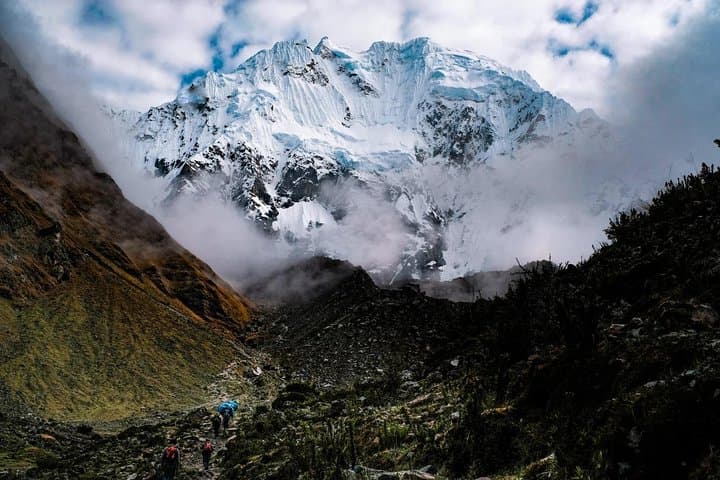

A cold dawn in the high Andes opens the first step of the Salkantay Trek: you climb out of bus windows into a sky that feels impossibly close, Salkantay’s snow shoulder looming above. The trail moves quickly from windswept alpine moraine to dense cloud forest—each day a regime shift in temperature, vegetation and light.
A cold dawn in the high Andes opens the first step of the Salkantay Trek: you climb out of bus windows into a sky that feels impossibly close, Salkantay’s snow shoulder looming above. The trail moves quickly from windswept alpine moraine to dense cloud forest—each day a regime shift in temperature, vegetation and light.
This alternative to the Inca Trail threads a route once used by pre-Columbian travelers and modern muleteers. Geologically the corridor is dramatic: glacial cirques and moraine give way to eroded volcanic slopes and then to the sedimentary, humid valleys that feed the Urubamba. Local Quechua communities still manage coffee plots and medicinal plant gardens; you’ll pass terraces and hear stories of mountain deities while guides point out orchids and bromeliads.
Expect remote campsites, a high pass near 4,600 m (Salkantay Pass), and long descents into jungle villages like Lucmabamba and Santa Teresa. The final approach follows riparian tracks and the train line into Aguas Calientes, finishing with a pre-dawn ascent to Machu Picchu for a guided visit.
Practical edge: acclimatize in Cusco 48–72 hours, pack layered, waterproof clothing and a warm sleeping bag rated for near-freezing nights. Hydrate and pace uphill sections to limit altitude effects. Daily walking ranges from 6–8 hours on mixed terrain—rocky switchbacks, muddy jungle trails and service roads—so sturdy boots and gaiters help. With a private service you get a guide, cook and camp crew, which keeps logistics simple and lets you focus on the landscape and the long slow trade between altitude and heat as you descend to the citadel.