THE ADVENTURE COLLECTIVE® · Independent discovery and booking for outdoor travel

A classic high-altitude trek that moves from glaciated peaks to subtropical jungle, the Salkantay route offers solitude, dramatic views and a memorable approach to Machu Picchu. This 5-day, 4-night itinerary mixes challenging passes with warm jungle descents and cultural villages—plan for altitude, varied terrain, and prebooked Machu Picchu access.
A classic high-altitude trek that moves from glaciated peaks to subtropical jungle, the Salkantay route offers solitude, dramatic views and a memorable approach to Machu Picchu. This 5-day, 4-night itinerary mixes challenging passes with warm jungle descents and cultural villages—plan for altitude, varied terrain, and prebooked Machu Picchu access.
Dawn arrives cold and thin at Soraypampa, and the first light scrapes across Salkantay’s snowy flank like a slow blade. You shoulder a pack, inhale the glacier-scented air, and start the climb: switchbacks, wind, and a sky that feels impossibly close. By the time you crest the Salkantay Pass (about 4,650 m) the ridge has a voice—rock and ice pointing you toward the jungle below.
Verified experiences and guided adventures in the surrounding area.
Operated by Machupicchu Andes · Cusco, Cusco
Dawn arrives cold and thin at Soraypampa, and the first light scrapes across Salkantay’s snowy flank like a slow blade. You shoulder a pack, inhale the glacier-scented air, and start the climb: switchbacks, wind, and a sky that feels impossibly close. By the time you crest the Salkantay Pass (about 4,650 m) the ridge has a voice—rock and ice pointing you toward the jungle below.
Geologically the route moves from Andean puna to the ceja de selva — a sharp change driven by glacial carving and rapid elevation loss. Culturally this is Andean country: locals still refer to Salkantay as an Apu, an ancestral mountain spirit, and villages along the way practice small-scale agriculture and coffee cultivation introduced during colonial eras but grown into local tradition.
Expect five days of varied terrain: rocky high passes, gravel descents, jungle tracks and river valleys. Typical daily distances range 12–22 km with altitude swings that demand respect; maximum altitudes hit near 4,650 m. Campsites are basic but serviced on organized treks; hot springs at Santa Teresa are a likely reward after a long day.
Practicalities: acclimatize in Cusco for 24–48 hours before departure, carry layered insulation and waterproofs, and budget time for slow ascents at altitude. Reserve your Machu Picchu and Huayna Picchu tickets in advance; trains from Aguas Calientes connect the finish to Ollantaytambo and Cusco. Hydrate steadily, eat early, start hikes at first light, and travel with a guide or reputable outfitter if unfamiliar with high-altitude trekking.
challenging.
4–5 days.
Good cardiovascular fitness with prior experience hiking at elevation; comfortable with 6–8 hour days and steady ascents.
The Salkantay route itself does not require the Inca Trail permit, but you must purchase separate entrance tickets for Machu Picchu and reserve Huayna Picchu slots if you plan to climb them.
The pass is steep and reaches about 4,650 m; expect a sustained 2–4 hour climb depending on fitness and acclimatization, with cold winds at the top.
Campsites provide basic toilet facilities; showers are uncommon on the trail but available at some lodges and at the hot springs in Santa Teresa.
Most itineraries take the evening train from Aguas Calientes to Ollantaytambo and then a bus to Cusco; book trains early in high season to guarantee seats.
Salkantay sits in the southern Vilcabamba range and was revered by the Incas as an Apu; this route offers an older, less trafficked approach to the sacred Machu Picchu area.
The trail travels sensitive high-altitude ecosystems and cloud forest; follow Leave No Trace principles, avoid single-use plastics, and use established campsites to limit impact.
Machupicchu Andes operates guided outdoor trips and adventures with an emphasis on safety, stewardship, and memorable experiences.
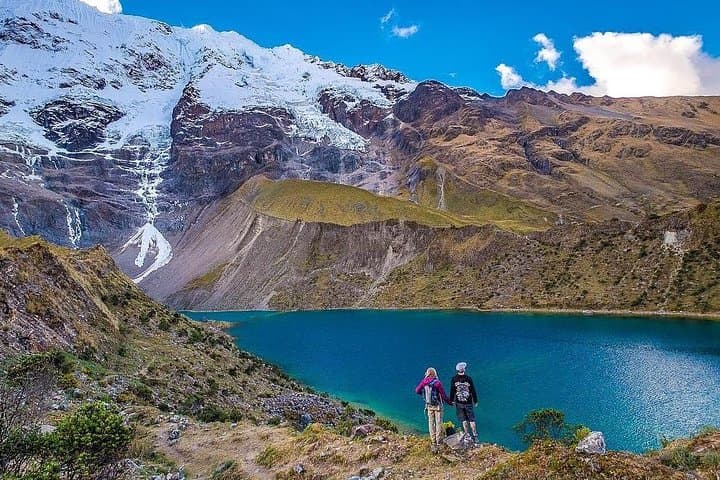
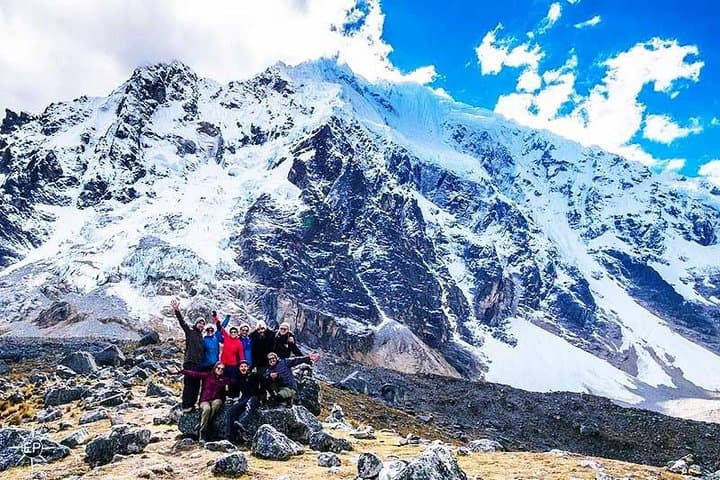
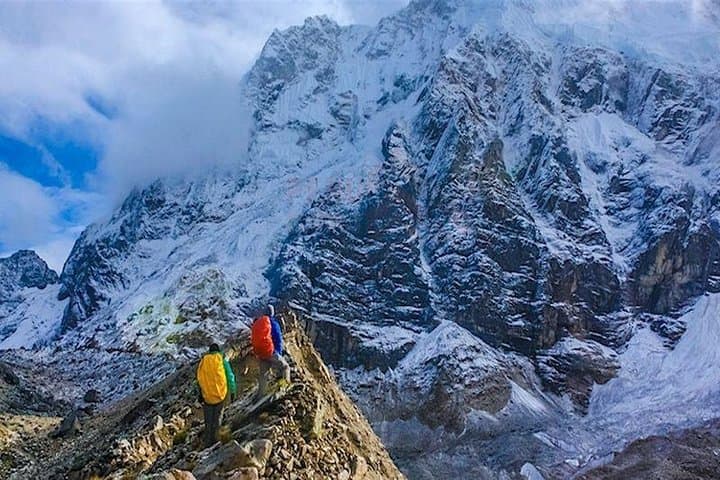
Dawn arrives cold and thin at Soraypampa, and the first light scrapes across Salkantay’s snowy flank like a slow blade. You shoulder a pack, inhale the glacier-scented air, and start the climb: switchbacks, wind, and a sky that feels impossibly close. By the time you crest the Salkantay Pass (about 4,650 m) the ridge has a voice—rock and ice pointing you toward the jungle below.
Dawn arrives cold and thin at Soraypampa, and the first light scrapes across Salkantay’s snowy flank like a slow blade. You shoulder a pack, inhale the glacier-scented air, and start the climb: switchbacks, wind, and a sky that feels impossibly close. By the time you crest the Salkantay Pass (about 4,650 m) the ridge has a voice—rock and ice pointing you toward the jungle below.
Geologically the route moves from Andean puna to the ceja de selva — a sharp change driven by glacial carving and rapid elevation loss. Culturally this is Andean country: locals still refer to Salkantay as an Apu, an ancestral mountain spirit, and villages along the way practice small-scale agriculture and coffee cultivation introduced during colonial eras but grown into local tradition.
Expect five days of varied terrain: rocky high passes, gravel descents, jungle tracks and river valleys. Typical daily distances range 12–22 km with altitude swings that demand respect; maximum altitudes hit near 4,650 m. Campsites are basic but serviced on organized treks; hot springs at Santa Teresa are a likely reward after a long day.
Practicalities: acclimatize in Cusco for 24–48 hours before departure, carry layered insulation and waterproofs, and budget time for slow ascents at altitude. Reserve your Machu Picchu and Huayna Picchu tickets in advance; trains from Aguas Calientes connect the finish to Ollantaytambo and Cusco. Hydrate steadily, eat early, start hikes at first light, and travel with a guide or reputable outfitter if unfamiliar with high-altitude trekking.