THE ADVENTURE COLLECTIVE® · Independent discovery and booking for outdoor travel

Skip the crowded Inca Trail and tackle the Salkantay: five days of high passes, glacial views, and cloud-forest descents that end at Machu Picchu. This guide covers what to expect, how to prepare, and practical tips for a safe, rewarding trek.
Skip the crowded Inca Trail and tackle the Salkantay: five days of high passes, glacial views, and cloud-forest descents that end at Machu Picchu. This guide covers what to expect, how to prepare, and practical tips for a safe, rewarding trek.
A cold wind from the glaciated shoulders of Salkantay meets you at dawn, pushing clouds across a raw Andes skyline as your group tightens jackets and shoulders against altitude. The first day eases you into the highlands with a hike to the turquoise Humantay Lake, its water daring you to believe a color so sharp can exist at 4,000 meters.
Verified experiences and guided adventures in the surrounding area.
Operated by Amazing Andean Adventures · Cusco, Cusco Region
A cold wind from the glaciated shoulders of Salkantay meets you at dawn, pushing clouds across a raw Andes skyline as your group tightens jackets and shoulders against altitude. The first day eases you into the highlands with a hike to the turquoise Humantay Lake, its water daring you to believe a color so sharp can exist at 4,000 meters.
This route threads the Vilcabamba range instead of the packed Inca Trail, moving from puna grasslands and moraine ridgelines into humid cloud forest before spilling into the Urubamba valley. Salkantay itself rises above the route, a sacred, ice-capped peak long venerated by local Quechua communities and visible evidence of the region’s tectonic uplift and glacial sculpting. On lower slopes, coffee farms and old mule tracks hint at colonial-era trade routes that later fed trekkers and explorers.
Expect gritty, changeable weather and trails that alternate between rocky high passes, horse-packed tracks, and river-side jungle paths. The itinerary includes long uphill days (one 8-hour stretch) and a high pass that tests lungs and legs; horses and porters carry heavy gear, but self-sufficiency with layered clothing and a warm sleeping bag matters.
Practical notes: acclimatize in Cusco beforehand, drink frequently to offset altitude, and plan for muddy sections in the cloud forest. Guides provide most logistics—tents, chef, and Vistadome train back from Aguas Calientes—but bring a reliable headlamp, water purification method, and sturdy boots. Proper pacing rewards you with expansive Andean light and the quiet satisfaction of arriving at Machu Picchu by foot.
challenging.
5 days.
Good cardiovascular fitness and prior multi-day hiking experience recommended; comfortable with sustained uphill hikes and high altitude.
No special government permits are required for the Salkantay route; however train tickets and Machu Picchu entry must be arranged in advance and passport details are required.
The high pass reaches high altitude and includes sustained uphill sections; it’s strenuous but non-technical—pace yourself and monitor altitude symptoms.
Yes—horses and porters carry group gear; some operators also offer riding horses for sections, but be prepared to hike most of the route.
Typical inclusions are guide, camping gear (except personal sleeping bag), chef and meals while trekking, train from Aguas Calientes to Ollantaytambo, and one night in Aguas Calientes hostel.
The trail follows old mule tracks and secondary Inca routes in the Vilcabamba range; Salkantay has long been revered by local Quechua communities.
Stick to established campsites, avoid single-use plastics, and choose operators that manage horse loads and camp sanitation to minimize impact.
Amazing Andean Adventures operates guided outdoor trips and adventures with an emphasis on safety, stewardship, and memorable experiences.


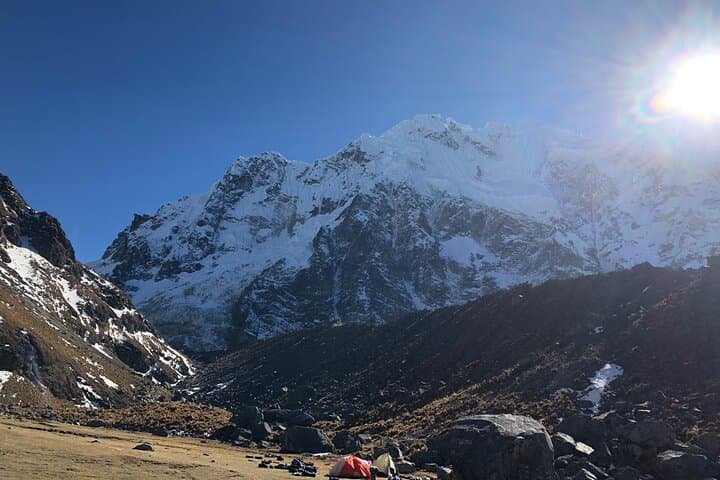

A cold wind from the glaciated shoulders of Salkantay meets you at dawn, pushing clouds across a raw Andes skyline as your group tightens jackets and shoulders against altitude. The first day eases you into the highlands with a hike to the turquoise Humantay Lake, its water daring you to believe a color so sharp can exist at 4,000 meters.
A cold wind from the glaciated shoulders of Salkantay meets you at dawn, pushing clouds across a raw Andes skyline as your group tightens jackets and shoulders against altitude. The first day eases you into the highlands with a hike to the turquoise Humantay Lake, its water daring you to believe a color so sharp can exist at 4,000 meters.
This route threads the Vilcabamba range instead of the packed Inca Trail, moving from puna grasslands and moraine ridgelines into humid cloud forest before spilling into the Urubamba valley. Salkantay itself rises above the route, a sacred, ice-capped peak long venerated by local Quechua communities and visible evidence of the region’s tectonic uplift and glacial sculpting. On lower slopes, coffee farms and old mule tracks hint at colonial-era trade routes that later fed trekkers and explorers.
Expect gritty, changeable weather and trails that alternate between rocky high passes, horse-packed tracks, and river-side jungle paths. The itinerary includes long uphill days (one 8-hour stretch) and a high pass that tests lungs and legs; horses and porters carry heavy gear, but self-sufficiency with layered clothing and a warm sleeping bag matters.
Practical notes: acclimatize in Cusco beforehand, drink frequently to offset altitude, and plan for muddy sections in the cloud forest. Guides provide most logistics—tents, chef, and Vistadome train back from Aguas Calientes—but bring a reliable headlamp, water purification method, and sturdy boots. Proper pacing rewards you with expansive Andean light and the quiet satisfaction of arriving at Machu Picchu by foot.