THE ADVENTURE COLLECTIVE® · Independent discovery and booking for outdoor travel

A five-day traverse from glacial highs to jungle lowlands, the Salkantay Trek pairs high-altitude challenge with unique nights in suspended capsules and first views of Machu Picchu from Llactapata. Expect steep passes, cloud forest biodiversity, and strong cultural connections with local communities.
A five-day traverse from glacial highs to jungle lowlands, the Salkantay Trek pairs high-altitude challenge with unique nights in suspended capsules and first views of Machu Picchu from Llactapata. Expect steep passes, cloud forest biodiversity, and strong cultural connections with local communities.
Dawn cuts a hard line across the Salkantay massif as you climb from Soraypampa — thin air, the crunch of boots on moraine, and a turquoise flash of Humantay Lagoon below. By day two the route climbs to the Salkantay Pass, where snow and sky meet and the trail drops into a humid cloud forest that seems to push back against the high peaks.
Verified experiences and guided adventures in the surrounding area.
Operated by Inca Jungle en Capsulas · Cusco, Cusco
Dawn cuts a hard line across the Salkantay massif as you climb from Soraypampa — thin air, the crunch of boots on moraine, and a turquoise flash of Humantay Lagoon below. By day two the route climbs to the Salkantay Pass, where snow and sky meet and the trail drops into a humid cloud forest that seems to push back against the high peaks.
This route threads living landscapes: the Andean highlands shaped by glacial carving and tectonic uplift, then the Qhapaq Ñan corridor where Inca runners once stitched distant settlements together. Local communities remain close partners on the trail; expect ritual offerings to the Apus and coffee farms tended by families whose knowledge turns steep slopes into productive terraces.
Geology gives the trek drama — granite ridges, glacial cirques, and the sudden shift from puna grasslands to orchids and bromeliads as you descend. Culture is tactile: coca leaf ceremonies, homestays, and small-scale coffee production in Lucmabamba.
Practically, the loop is roughly 60 km over five days with the high point near 4,600 m and sustained climbs and descents, including a long 22 km day crossing the pass. Terrain varies from rocky ascents and scree to muddy jungle trails and a final walk along the Hidroeléctrica tracks to Aguas Calientes. Bring layered clothing for cold nights and wet afternoons, plan 2–3 days in Cusco beforehand to acclimatize, and budget for steady hydration and sunscreen. Nights alternate simple camping and the unique suspended capsules — an adventurous way to sleep above the jungle while keeping the focus on the landscape and local hospitality.
challenging.
5 days.
Good cardiovascular fitness with experience on multi-day hikes and the ability to hike 6–10 hours on long days
Salkantay is longer and reaches higher altitude (≈4,600 m) with steeper, more exposed passes; it’s less technical in terms of stone steps but more demanding on stamina.
This particular itinerary includes entrance fees and a bilingual professional guide, plus meals listed in the itinerary, as noted in the tour inclusions.
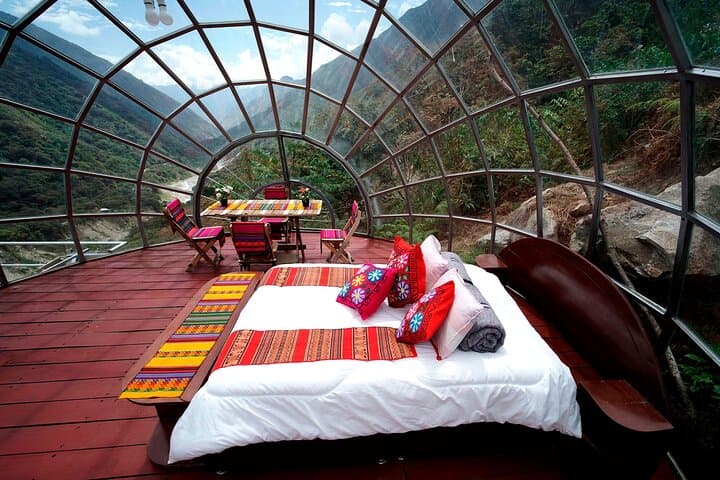
Capsules are designed for adventure lodging and are secured on mountainside platforms; they offer basic comforts but expect limited space and a focus on the novelty and views rather than luxury.
No mandatory vaccines beyond routine travel recommendations, but consult your doctor about altitude medication and bring any personal prescriptions; acclimatization is strongly advised.
The route follows sections of the Inca road network (Qhapaq Ñan) and crosses lands historically managed by Andean communities who still practice ancestral rituals honoring mountain deities (Apus).
The high puna and cloud forest are ecologically sensitive; stick to trails, avoid single-use plastics, and support community-based services to minimize impact.
Inca Jungle en Capsulas operates guided outdoor trips and adventures with an emphasis on safety, stewardship, and memorable experiences.



Dawn cuts a hard line across the Salkantay massif as you climb from Soraypampa — thin air, the crunch of boots on moraine, and a turquoise flash of Humantay Lagoon below. By day two the route climbs to the Salkantay Pass, where snow and sky meet and the trail drops into a humid cloud forest that seems to push back against the high peaks.
Dawn cuts a hard line across the Salkantay massif as you climb from Soraypampa — thin air, the crunch of boots on moraine, and a turquoise flash of Humantay Lagoon below. By day two the route climbs to the Salkantay Pass, where snow and sky meet and the trail drops into a humid cloud forest that seems to push back against the high peaks.
This route threads living landscapes: the Andean highlands shaped by glacial carving and tectonic uplift, then the Qhapaq Ñan corridor where Inca runners once stitched distant settlements together. Local communities remain close partners on the trail; expect ritual offerings to the Apus and coffee farms tended by families whose knowledge turns steep slopes into productive terraces.
Geology gives the trek drama — granite ridges, glacial cirques, and the sudden shift from puna grasslands to orchids and bromeliads as you descend. Culture is tactile: coca leaf ceremonies, homestays, and small-scale coffee production in Lucmabamba.
Practically, the loop is roughly 60 km over five days with the high point near 4,600 m and sustained climbs and descents, including a long 22 km day crossing the pass. Terrain varies from rocky ascents and scree to muddy jungle trails and a final walk along the Hidroeléctrica tracks to Aguas Calientes. Bring layered clothing for cold nights and wet afternoons, plan 2–3 days in Cusco beforehand to acclimatize, and budget for steady hydration and sunscreen. Nights alternate simple camping and the unique suspended capsules — an adventurous way to sleep above the jungle while keeping the focus on the landscape and local hospitality.