THE ADVENTURE COLLECTIVE® · Independent discovery and booking for outdoor travel

A rugged four-day trek from the high puna to the humid foothills, the Salkantay route climbs a 4,630 m pass and finishes with Machu Picchu. Expect long days, cold nights under camp tarps, and a final morning at the citadel before your train home.
A rugged four-day trek from the high puna to the humid foothills, the Salkantay route climbs a 4,630 m pass and finishes with Machu Picchu. Expect long days, cold nights under camp tarps, and a final morning at the citadel before your train home.
You wake before dawn in Cusco, bundled against thin, cold air, and ride west as mountain shadows peel back to reveal a jagged skyline. The trail climbs from high puna into wind-scoured passland, then eases through cloud forest where rivers dare you closer with every step. By sunrise at the pass the Salkantay massif—a snow-capped spine at roughly 4,630 m—dominates the horizon and the wind feels like a living thing.
Verified experiences and guided adventures in the surrounding area.
Operated by OkiDoki Travel · Cusco, Cusco
You wake before dawn in Cusco, bundled against thin, cold air, and ride west as mountain shadows peel back to reveal a jagged skyline. The trail climbs from high puna into wind-scoured passland, then eases through cloud forest where rivers dare you closer with every step. By sunrise at the pass the Salkantay massif—a snow-capped spine at roughly 4,630 m—dominates the horizon and the wind feels like a living thing.
This route follows peaks and valleys that predate the Inca road network; Salkantay itself was considered an apu, or sacred mountain. Geologically the range is volcanic and glaciated, with steep moraines above 4,000 m dropping to lush, biodiverse foothills where orchids and coffee hang heavy. Culturally the trek threads Andean villages, traditional agricultural terraces, and river corridors that once fed trade routes into the Sacred Valley.
Expect four days of varied terrain: steep ascents and loose scree to the pass, long descents across quebradas, and humid jungle tracks into Aguas Calientes. Distances per day range from about 12–22 km with day two the hardest—up to 9 hours and sustained altitude near 4,600 m. Nights are camping at designated sites until the last night in Aguas Calientes, then an early approach to Machu Picchu and a return by train.
Practical guidance: acclimatize in Cusco for 1–2 days, bring layered insulating clothing for cold nights, carry a reliable rain shell and water treatment, and prebook your Machu Picchu ticket and return train. Travel with a licensed guide, respect campsite rules, and plan slower paces on the high pass so the mountains don’t rush you.
challenging.
4 days (daily hiking 5–9 hours).
Fit hikers comfortable with long days at altitude; prior multi-day trekking experience recommended.
No technical climbing skills are required, but previous experience with day hikes at high elevation helps; acclimatization days in Cusco are strongly recommended.
This itinerary includes a guided visit to Machu Picchu and a hosted return by train option—confirm exactly which tickets are included when you book and reserve train seats early.
Night temperatures at high campsites can drop below 0°C (32°F), especially at the pass; bring a rated sleeping bag and warm clothing layers.
Yes, but weather varies: the dry season (June–August) has the most stable trekking conditions while December–March is rainy and muddy, affecting trail difficulty.
Salkantay was revered by pre-Columbian communities as an apu, a sacred mountain; many modern routes run parallel to ancient trade paths that fed the Sacred Valley.
Stick to established campsites, avoid open fires, and use licensed operators who follow local waste-management practices to reduce erosion and preserve fragile high-altitude ecosystems.
OkiDoki Travel operates guided outdoor trips and adventures with an emphasis on safety, stewardship, and memorable experiences.


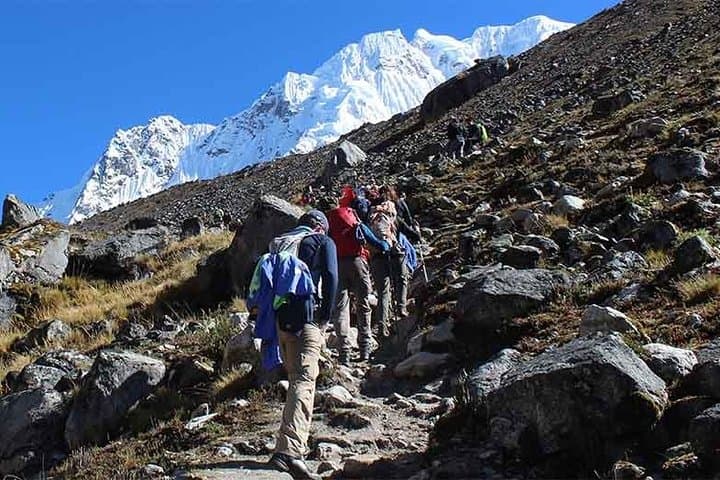
You wake before dawn in Cusco, bundled against thin, cold air, and ride west as mountain shadows peel back to reveal a jagged skyline. The trail climbs from high puna into wind-scoured passland, then eases through cloud forest where rivers dare you closer with every step. By sunrise at the pass the Salkantay massif—a snow-capped spine at roughly 4,630 m—dominates the horizon and the wind feels like a living thing.
You wake before dawn in Cusco, bundled against thin, cold air, and ride west as mountain shadows peel back to reveal a jagged skyline. The trail climbs from high puna into wind-scoured passland, then eases through cloud forest where rivers dare you closer with every step. By sunrise at the pass the Salkantay massif—a snow-capped spine at roughly 4,630 m—dominates the horizon and the wind feels like a living thing.
This route follows peaks and valleys that predate the Inca road network; Salkantay itself was considered an apu, or sacred mountain. Geologically the range is volcanic and glaciated, with steep moraines above 4,000 m dropping to lush, biodiverse foothills where orchids and coffee hang heavy. Culturally the trek threads Andean villages, traditional agricultural terraces, and river corridors that once fed trade routes into the Sacred Valley.
Expect four days of varied terrain: steep ascents and loose scree to the pass, long descents across quebradas, and humid jungle tracks into Aguas Calientes. Distances per day range from about 12–22 km with day two the hardest—up to 9 hours and sustained altitude near 4,600 m. Nights are camping at designated sites until the last night in Aguas Calientes, then an early approach to Machu Picchu and a return by train.
Practical guidance: acclimatize in Cusco for 1–2 days, bring layered insulating clothing for cold nights, carry a reliable rain shell and water treatment, and prebook your Machu Picchu ticket and return train. Travel with a licensed guide, respect campsite rules, and plan slower paces on the high pass so the mountains don’t rush you.