THE ADVENTURE COLLECTIVE® · Independent discovery and booking for outdoor travel

Walk Salem’s cobbles and mansions with a licensed guide who traces 400 years of architecture and mercantile history in 90–120 minutes. Expect close looks at Georgian, Federal, First Period, and later styles along a coastal, pedestrian route.
Walk Salem’s cobbles and mansions with a licensed guide who traces 400 years of architecture and mercantile history in 90–120 minutes. Expect close looks at Georgian, Federal, First Period, and later styles along a coastal, pedestrian route.
A salty breeze from Salem Harbor threads through the cobbled square as the group gathers beside Old Town Hall’s three staircases — the guide’s voice steady against gull calls and the distant creak of wharfs. The city unfolds in layers: low, dark First Period frames, brick Georgian symmetry, airy Federal facades, and sudden modern edges where Brutalist concrete meets nineteenth‑century ornament.
Verified experiences and guided adventures in the surrounding area.
Operated by Witch City Walking Tours · Salem, Massachusetts
A salty breeze from Salem Harbor threads through the cobbled square as the group gathers beside Old Town Hall’s three staircases — the guide’s voice steady against gull calls and the distant creak of wharfs. The city unfolds in layers: low, dark First Period frames, brick Georgian symmetry, airy Federal facades, and sudden modern edges where Brutalist concrete meets nineteenth‑century ornament.
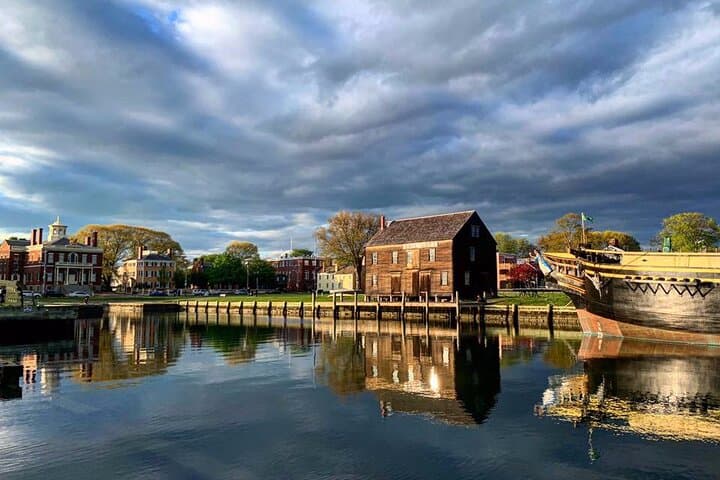
Salem’s streets tell a mercantile story. In the 18th century the town rose on the spice and shipping trades; West Indian and global commerce funded grand homes and civic ambition. You’ll stand near Derby Wharf where shipyards once stretched, learn how Salem Common evolved from marsh to manicured promenade, and hear about the great fire that reshaped downtown. The geology is coastal glacial outwash — compacted sands and ledge that directed early roadways and wharf placement — while the culture blends Puritan austerity, merchant showmanship, and contemporary tourism.
Expect 90–120 minutes on mostly flat, sometimes uneven brick sidewalks and narrow alleys. Tours run rain or shine; groups may reach 40. Guides are licensed and focus on exteriors — no building or cemetery entry — and emphasize architectural details: rooflines, window patterns, and additions that show how houses grew with prosperity.
Practical notes: wear sturdy, comfortable shoes and a light waterproof layer; bring water and any mobility aids you need (wheelchairs are possible but watch for uneven paving). Arrive early to find the meeting side of Old Town Hall; there are no public restrooms on the route. The experience is equal parts civic history and close‑up architecture — ideal for curious walkers who want context with their views.
easy.
1.5–2 hours.
Suitable for most visitors who can stand and walk for up to two hours; take care on uneven ground.
Meet on the side of Old Town Hall with the three staircases; the guide will be there at the scheduled start time.
Wheelchairs and scooters are welcome, but Salem’s brick sidewalks and narrow areas can be challenging; operators note guests assume responsibility.
Tours run rain or shine and are not canceled for weather; bring waterproof layers and expect the full itinerary unless conditions become hazardous.
No — there are no public restrooms along the route, so plan accordingly before the tour begins.
Salem’s 18th‑century prosperity from global trade financed many surviving mansions; the city later rebuilt and diversified after a major 19th‑century fire.
Historic preservation rules protect facades and streetscapes; visitors should stick to paths, avoid touching fragile woodwork, and minimize litter to help preserve the district.
Witch City Walking Tours operates guided outdoor trips and adventures with an emphasis on safety, stewardship, and memorable experiences.
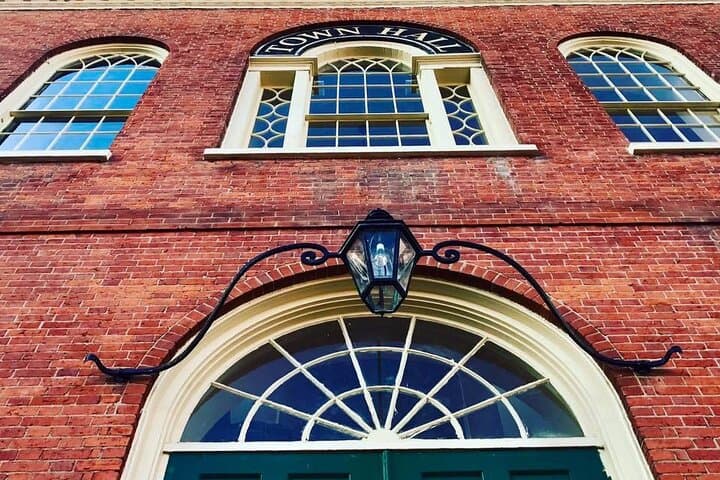
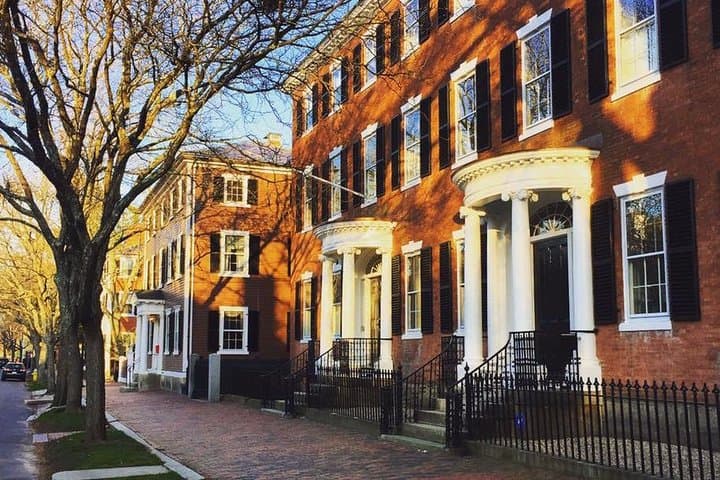
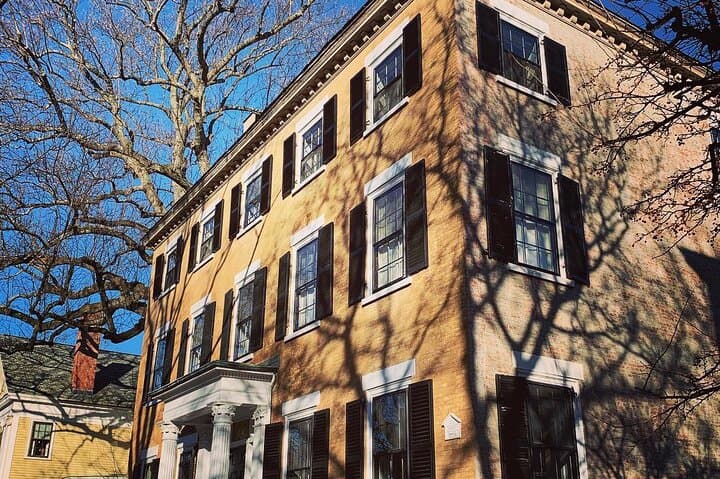
A salty breeze from Salem Harbor threads through the cobbled square as the group gathers beside Old Town Hall’s three staircases — the guide’s voice steady against gull calls and the distant creak of wharfs. The city unfolds in layers: low, dark First Period frames, brick Georgian symmetry, airy Federal facades, and sudden modern edges where Brutalist concrete meets nineteenth‑century ornament.
A salty breeze from Salem Harbor threads through the cobbled square as the group gathers beside Old Town Hall’s three staircases — the guide’s voice steady against gull calls and the distant creak of wharfs. The city unfolds in layers: low, dark First Period frames, brick Georgian symmetry, airy Federal facades, and sudden modern edges where Brutalist concrete meets nineteenth‑century ornament.
Salem’s streets tell a mercantile story. In the 18th century the town rose on the spice and shipping trades; West Indian and global commerce funded grand homes and civic ambition. You’ll stand near Derby Wharf where shipyards once stretched, learn how Salem Common evolved from marsh to manicured promenade, and hear about the great fire that reshaped downtown. The geology is coastal glacial outwash — compacted sands and ledge that directed early roadways and wharf placement — while the culture blends Puritan austerity, merchant showmanship, and contemporary tourism.
Expect 90–120 minutes on mostly flat, sometimes uneven brick sidewalks and narrow alleys. Tours run rain or shine; groups may reach 40. Guides are licensed and focus on exteriors — no building or cemetery entry — and emphasize architectural details: rooflines, window patterns, and additions that show how houses grew with prosperity.
Practical notes: wear sturdy, comfortable shoes and a light waterproof layer; bring water and any mobility aids you need (wheelchairs are possible but watch for uneven paving). Arrive early to find the meeting side of Old Town Hall; there are no public restrooms on the route. The experience is equal parts civic history and close‑up architecture — ideal for curious walkers who want context with their views.