THE ADVENTURE COLLECTIVE® · Independent discovery and booking for outdoor travel

Watch the sun collapse into the white expanse of Salar de Uyuni, then stay as the high Andean sky splinters into stars. This five‑hour sunset and stargazing tour from Uyuni blends dramatic mirror photography with accessible night‑sky viewing.
Watch the sun collapse into the white expanse of Salar de Uyuni, then stay as the high Andean sky splinters into stars. This five‑hour sunset and stargazing tour from Uyuni blends dramatic mirror photography with accessible night‑sky viewing.
Late afternoon on the Salar de Uyuni, the sun tilts low and the white crust begins to hold the sky like a shallow, otherworldly mirror. Travelers step from the vehicle onto a surface that sometimes reflects clouds perfectly and sometimes crinkles underfoot, while the high‑Andean wind sharpens the air and the first cold fingers of night arrive.
Verified experiences and guided adventures in the surrounding area.
Operated by Mapamundi Go · Uyuni, Potosí
Late afternoon on the Salar de Uyuni, the sun tilts low and the white crust begins to hold the sky like a shallow, otherworldly mirror. Travelers step from the vehicle onto a surface that sometimes reflects clouds perfectly and sometimes crinkles underfoot, while the high‑Andean wind sharpens the air and the first cold fingers of night arrive.
The salt flats are the remnant of prehistoric Lake Minchin and later Lake Tauca; centuries of evaporation left a barren, blinding plain of salt crystals atop a shallow saltwater table. Local Aymara and Quechua communities have long used the flats for salt extraction and, today, for carefully guided tourism that supports regional economies.
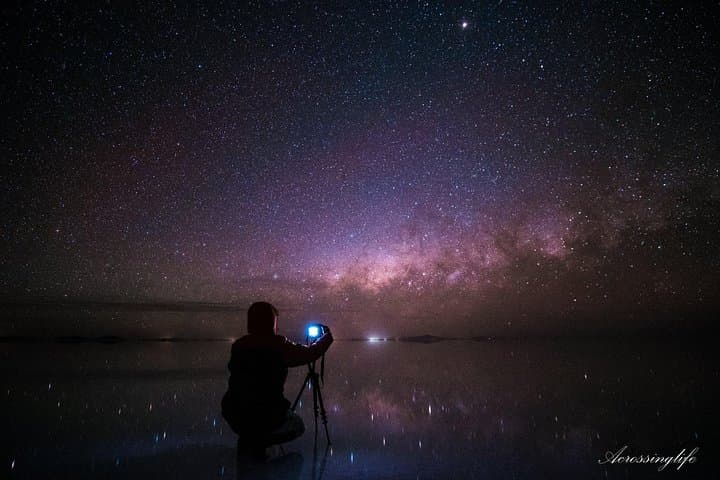
On this five‑hour outing—departing Uyuni mid‑afternoon and returning after stargazing—guests watch the light shift across hexagonal salt pans, photograph the famous reflective shots, and then scan an immense southern sky. Geologic clarity at 3,600–3,700 m gives stars unusual brightness; constellations, the Milky Way, and remote satellites appear with hard edges.
Practical notes: the tour is accessible for most fitness levels but takes place at high altitude—allow for light breathlessness and bring water. Dress in warm layers; temperatures drop fast after sunset. A tripod and wide‑angle lens are essential for low‑light photos. Follow guide directions to protect fragile crust and avoid walking on wet mirror sections when instructed.
Expect clear, crisp air for stargazing in dry months, possible mirror effects after rains, and culturally aware guides who balance photo stops with safety. This is straightforward, photogenic, and unforgettable when timed for sunset and nightfall.
easy.
5 hours.
Suitable for most fitness levels but expect mild breathlessness at high altitude; basic mobility required.
The tour departs Uyuni in the late afternoon and is approximately 5 hours round trip—enough time for sunset photos and stargazing before returning to town.
Yes—Salar de Uyuni sits around 3,600–3,700 m. Most people handle it, but drink water, rest if needed, and avoid intense exertion; inform the operator of health issues before booking.
Mirror conditions depend on recent rain—after light rain the flats can form a thin film that creates dramatic reflections; dry months offer clear, textured salt vistas and excellent stargazing.
Guides typically help with composition and locations but do not usually provide camera gear; bring your own tripod and batteries for best results.
The salt flats are the dry floor of ancient lakes; communities in the region have harvested salt for generations and rail heritage (the nearby Train Cemetery) marks Uyuni's boom era.
The flats are ecologically fragile—stay on guided routes, pack out all waste, and avoid contaminating the salt crust or water surfaces.
Mapamundi Go operates guided outdoor trips and adventures with an emphasis on safety, stewardship, and memorable experiences.
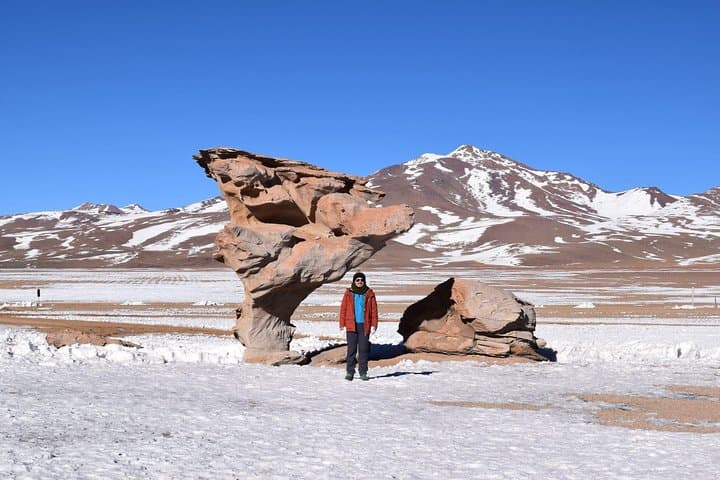
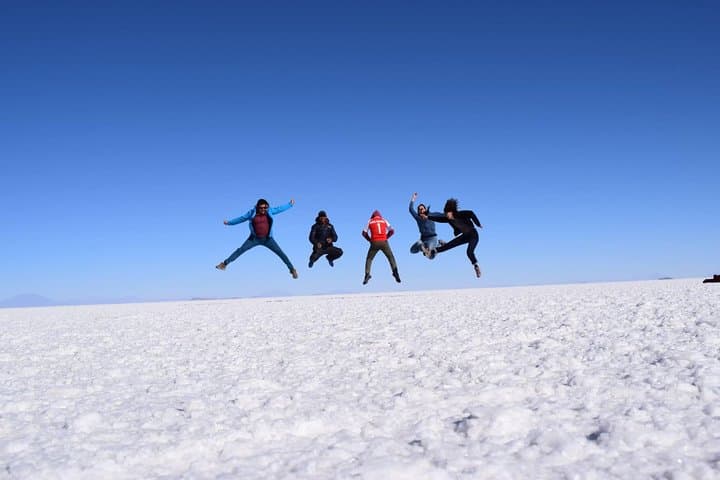
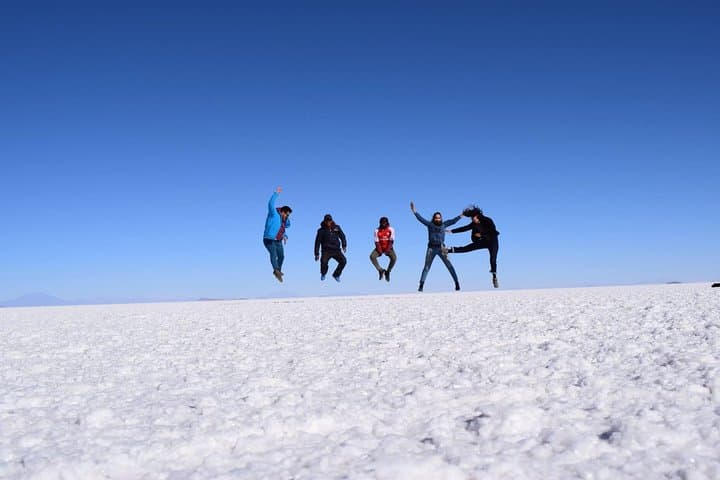
Late afternoon on the Salar de Uyuni, the sun tilts low and the white crust begins to hold the sky like a shallow, otherworldly mirror. Travelers step from the vehicle onto a surface that sometimes reflects clouds perfectly and sometimes crinkles underfoot, while the high‑Andean wind sharpens the air and the first cold fingers of night arrive.
Late afternoon on the Salar de Uyuni, the sun tilts low and the white crust begins to hold the sky like a shallow, otherworldly mirror. Travelers step from the vehicle onto a surface that sometimes reflects clouds perfectly and sometimes crinkles underfoot, while the high‑Andean wind sharpens the air and the first cold fingers of night arrive.
The salt flats are the remnant of prehistoric Lake Minchin and later Lake Tauca; centuries of evaporation left a barren, blinding plain of salt crystals atop a shallow saltwater table. Local Aymara and Quechua communities have long used the flats for salt extraction and, today, for carefully guided tourism that supports regional economies.
On this five‑hour outing—departing Uyuni mid‑afternoon and returning after stargazing—guests watch the light shift across hexagonal salt pans, photograph the famous reflective shots, and then scan an immense southern sky. Geologic clarity at 3,600–3,700 m gives stars unusual brightness; constellations, the Milky Way, and remote satellites appear with hard edges.
Practical notes: the tour is accessible for most fitness levels but takes place at high altitude—allow for light breathlessness and bring water. Dress in warm layers; temperatures drop fast after sunset. A tripod and wide‑angle lens are essential for low‑light photos. Follow guide directions to protect fragile crust and avoid walking on wet mirror sections when instructed.
Expect clear, crisp air for stargazing in dry months, possible mirror effects after rains, and culturally aware guides who balance photo stops with safety. This is straightforward, photogenic, and unforgettable when timed for sunset and nightfall.