THE ADVENTURE COLLECTIVE® · Independent discovery and booking for outdoor travel

Experience the world’s largest salt flat on a full-day tour from Uyuni, finishing with sunset and iconic perspective photos on Isla Incahuasi. This practical guide covers what you’ll see, how to prepare for the altitude and sun, and tips for getting the best images.
Experience the world’s largest salt flat on a full-day tour from Uyuni, finishing with sunset and iconic perspective photos on Isla Incahuasi. This practical guide covers what you’ll see, how to prepare for the altitude and sun, and tips for getting the best images.
You step out of Uyuni's thin-air town into a bright, flat world where the horizon refuses to bend. The salt plain stretches white and hard; sunlight hits like a cold spotlight and the landscape dares you to walk to the edge of perception. Vehicles crunch across the crust, and distant cacti on Isla Incahuasi stand like weathered guides.
Verified experiences and guided adventures in the surrounding area.
Operated by Mapamundi Go · Uyuni, Potosí Department
You step out of Uyuni's thin-air town into a bright, flat world where the horizon refuses to bend. The salt plain stretches white and hard; sunlight hits like a cold spotlight and the landscape dares you to walk to the edge of perception. Vehicles crunch across the crust, and distant cacti on Isla Incahuasi stand like weathered guides.
The Salar de Uyuni formed on a prehistoric lakebed; beneath the salt layer lie lithium-rich brines and salt strata that record millions of years of Andean uplift and climate shifts. The area mixes Aymara and Quechua cultural threads—salt harvesting and artisanal crafts from Colchani are local livelihoods that predate tourism. Railroad relics at the Train Cemetery speak to Uyuni’s 19th–20th century role as a mineral and transport hub.
Expect a day of short stops: the Train Cemetery, salt-processing hamlets, salt mounds, 'eyes' where brine collects, Isla Incahuasi’s giant cacti, and a sunset that flattens perspective for iconic optical-illusion photos. The ground is mostly flat salt crust, with brief rocky sections on the island. Altitude hovers around 3,600–3,700 m, so pace yourself.
Practical: bring high-SPF sun protection, layers for wind and rapid cooling after sunset, plenty of water, and small cash for crafts. Wear closed shoes that can handle salt and dust. Cameras and a small tripod reward careful composition; guides will time the sunset and help set up scale shots. Tours are long but physically easy; the real challenge is the altitude and sharp sun—prepare for both, and the Salar will repay you with one of the planet’s clearest, most otherworldly skies.
easy.
8–10 hours.
Suitable for most fitness levels; expect long periods in a vehicle and short walks on uneven salt and rocky island terrain. Be prepared for high elevation.
Most full-day tours run about 8–10 hours, typically departing mid-morning and returning around 7–9pm after sunset photos.
This itinerary is not recommended for travelers with serious cardiovascular conditions due to the high elevation (≈3,600–3,700 m). Consult a doctor before booking.
The wet season (roughly November–March, peaking Jan–Mar) creates the reflective surface; early morning and late afternoon give the best light.
Basic restroom stops occur at villages like Colchani and at Isla Incahuasi; lunch is usually included and served at a simple local restaurant or field setup.
The salar sits on a former Pleistocene lakebed; indigenous communities have harvested salt for centuries and Uyuni later became a mining and rail hub.
The delicate salt crust and nearby wetlands are vulnerable to vehicle traffic and lithium extraction—stick to designated tracks, avoid leaving waste, and support local businesses.
Mapamundi Go operates guided outdoor trips and adventures with an emphasis on safety, stewardship, and memorable experiences.


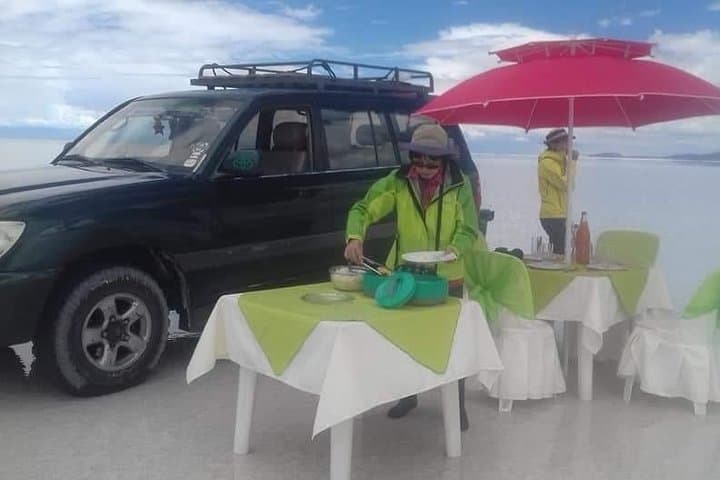
You step out of Uyuni's thin-air town into a bright, flat world where the horizon refuses to bend. The salt plain stretches white and hard; sunlight hits like a cold spotlight and the landscape dares you to walk to the edge of perception. Vehicles crunch across the crust, and distant cacti on Isla Incahuasi stand like weathered guides.
You step out of Uyuni's thin-air town into a bright, flat world where the horizon refuses to bend. The salt plain stretches white and hard; sunlight hits like a cold spotlight and the landscape dares you to walk to the edge of perception. Vehicles crunch across the crust, and distant cacti on Isla Incahuasi stand like weathered guides.
The Salar de Uyuni formed on a prehistoric lakebed; beneath the salt layer lie lithium-rich brines and salt strata that record millions of years of Andean uplift and climate shifts. The area mixes Aymara and Quechua cultural threads—salt harvesting and artisanal crafts from Colchani are local livelihoods that predate tourism. Railroad relics at the Train Cemetery speak to Uyuni’s 19th–20th century role as a mineral and transport hub.
Expect a day of short stops: the Train Cemetery, salt-processing hamlets, salt mounds, 'eyes' where brine collects, Isla Incahuasi’s giant cacti, and a sunset that flattens perspective for iconic optical-illusion photos. The ground is mostly flat salt crust, with brief rocky sections on the island. Altitude hovers around 3,600–3,700 m, so pace yourself.
Practical: bring high-SPF sun protection, layers for wind and rapid cooling after sunset, plenty of water, and small cash for crafts. Wear closed shoes that can handle salt and dust. Cameras and a small tripod reward careful composition; guides will time the sunset and help set up scale shots. Tours are long but physically easy; the real challenge is the altitude and sharp sun—prepare for both, and the Salar will repay you with one of the planet’s clearest, most otherworldly skies.