THE ADVENTURE COLLECTIVE® · Independent discovery and booking for outdoor travel

Cross the world's largest salt flat on a one-day guided loop from Uyuni. Visit the Train Cemetery, Colchani salt works, Isla Incahuasi and timed sunset views—perfect for wide-screen landscape photos and a primer on Andean desert geology.
Cross the world's largest salt flat on a one-day guided loop from Uyuni. Visit the Train Cemetery, Colchani salt works, Isla Incahuasi and timed sunset views—perfect for wide-screen landscape photos and a primer on Andean desert geology.
A pale, endless horizon opens like a challenge the moment the vehicle breaks from Uyuni’s dust—the salt flats flare white and the sun seems to dare you to look away.
Verified experiences and guided adventures in the surrounding area.
Operated by Mapamundi Go · Uyuni, Potosí
A pale, endless horizon opens like a challenge the moment the vehicle breaks from Uyuni’s dust—the salt flats flare white and the sun seems to dare you to look away.
This full-day circuit pushes across hardened salt crust, passes a rusting train cemetery that speaks to Bolivia’s mining past, and climbs onto Isla Incahuasi where giant cacti puncture the sky. Geologically the Salar is the remnant of prehistoric lakes; beneath your boots lies a layered history of lithium-rich evaporites and prehistoric shoreline terraces. Culturally, the region is Aymara and Quechua country—salt harvesting in Colchani is still a small-scale, hands-on craft and local vendors sell salt-carved souvenirs.
Expect long drives between short walks: flat, reflective plains, scattered gypsum “eyes,” and the optical-illusion photo stops that the landscape practically invites. The salt can be blinding; at altitude (over 3,600 m) the air is thin and weather can flip from wind-lashed sun to brisk cloud in minutes. Guides tend to set an itinerary that includes the Train Cemetery, Colchani, Salt Mounds, the White Beach museum, lunch, Incahuasi, and a sunset return to Uyuni.
Practical edge: hydrate and pace yourself—altitude matters more than distance. Wear closed shoes for salt crust and cactus spines on Incahuasi, and bring sun protection and windproof layers. Plan for limited facilities in the field and expect shared-vehicle timing; private options are usually available on request.
easy.
8–9 hours (full day).
Suitable for most fitness levels; requires ability to board vehicles, walk short uneven sections, and withstand altitude.
The core day runs about 8–9 hours from mid-morning to early evening, typically starting in Uyuni and returning after sunset; exact times vary by operator.
The route is generally low-impact but the high altitude may pose risks; consult a doctor for pregnancy or health concerns and check operator age policies.
Small cash for local crafts, sunscreen, water, and a daypack for short hikes on Incahuasi; facilities are limited at stops.
Yes—guides usually help stage perspective shots on stable salt crust; avoid walking onto thin or flooded areas and follow guide directions.
The Salar occupies an ancient basin formed by prehistoric lakes; the nearby train cemetery reflects early 20th-century mining and rail development.
The Salar is ecologically sensitive and subject to lithium extraction pressures; choose operators that minimize vehicle tracks and respect local salt-harvesting practices.
Mapamundi Go operates guided outdoor trips and adventures with an emphasis on safety, stewardship, and memorable experiences.
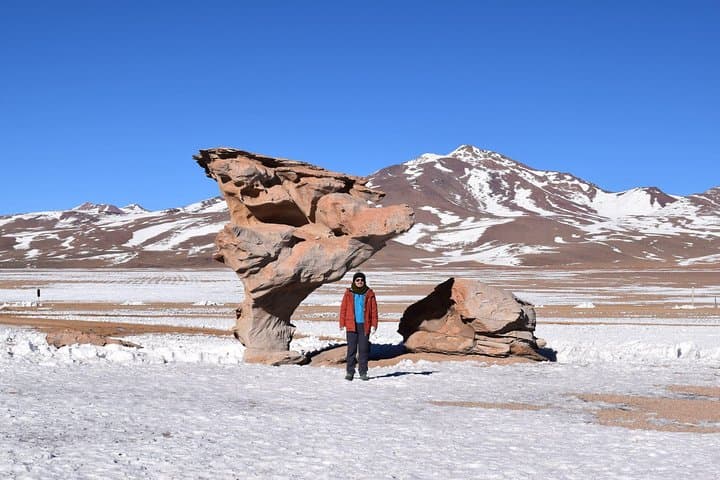
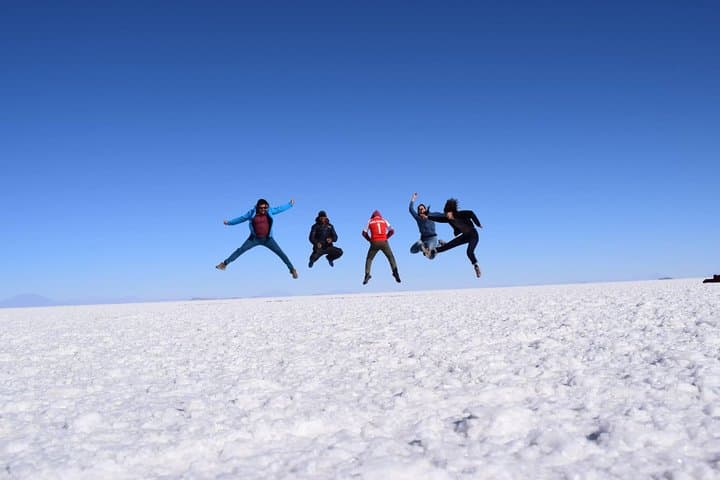
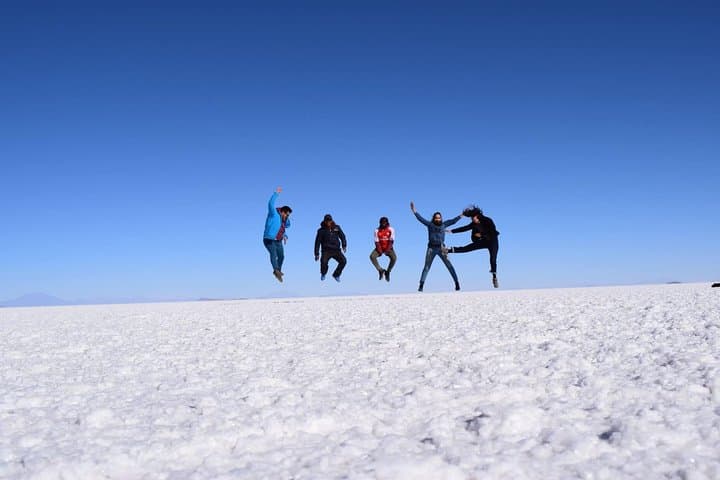

A pale, endless horizon opens like a challenge the moment the vehicle breaks from Uyuni’s dust—the salt flats flare white and the sun seems to dare you to look away.
A pale, endless horizon opens like a challenge the moment the vehicle breaks from Uyuni’s dust—the salt flats flare white and the sun seems to dare you to look away.
This full-day circuit pushes across hardened salt crust, passes a rusting train cemetery that speaks to Bolivia’s mining past, and climbs onto Isla Incahuasi where giant cacti puncture the sky. Geologically the Salar is the remnant of prehistoric lakes; beneath your boots lies a layered history of lithium-rich evaporites and prehistoric shoreline terraces. Culturally, the region is Aymara and Quechua country—salt harvesting in Colchani is still a small-scale, hands-on craft and local vendors sell salt-carved souvenirs.
Expect long drives between short walks: flat, reflective plains, scattered gypsum “eyes,” and the optical-illusion photo stops that the landscape practically invites. The salt can be blinding; at altitude (over 3,600 m) the air is thin and weather can flip from wind-lashed sun to brisk cloud in minutes. Guides tend to set an itinerary that includes the Train Cemetery, Colchani, Salt Mounds, the White Beach museum, lunch, Incahuasi, and a sunset return to Uyuni.
Practical edge: hydrate and pace yourself—altitude matters more than distance. Wear closed shoes for salt crust and cactus spines on Incahuasi, and bring sun protection and windproof layers. Plan for limited facilities in the field and expect shared-vehicle timing; private options are usually available on request.