THE ADVENTURE COLLECTIVE® · Independent discovery and booking for outdoor travel

Cross an impossible white plain, watch geysers steam at sunrise and spot flamingos on high-altitude lagoons. This 3-day Salar de Uyuni tour blends geology, culture, and stark beauty with practical tips for high-altitude travel.
Cross an impossible white plain, watch geysers steam at sunrise and spot flamingos on high-altitude lagoons. This 3-day Salar de Uyuni tour blends geology, culture, and stark beauty with practical tips for high-altitude travel.
A cold wind lifts salt dust into the low morning sun as your 4x4 slides onto a white plane so vast the horizon refuses edges. On day one the landscape opens into geometric salt polygons that reflect the sky when the surface is wet, and on dry days crunch underfoot like old sugar. You’ll pause at the train cemetery, comb through Colchani’s salt handicrafts, and climb Incahuasi’s cactus island for 360° views over the salt sea.
Verified experiences and guided adventures in the surrounding area.
Operated by Mapamundi Go · Uyuni, Potosí Department
A cold wind lifts salt dust into the low morning sun as your 4x4 slides onto a white plane so vast the horizon refuses edges. On day one the landscape opens into geometric salt polygons that reflect the sky when the surface is wet, and on dry days crunch underfoot like old sugar. You’ll pause at the train cemetery, comb through Colchani’s salt handicrafts, and climb Incahuasi’s cactus island for 360° views over the salt sea.
This place is a remnant of prehistoric lakes (Lake Minchin/Tauca) — a geological bowl of evaporites at roughly 3,650–3,700 meters elevation. Over millennia the salt crust thickened, preserving fossils, volcanic pumice, and the remains of early mining towns. Indigenous Aymara and Quechua communities still live on the margins, selling artisanal saltwork and maintaining highland grazing traditions.
Practical guidance: expect long drives (several hours between sights) and basic shared lodging in hostels or refugios; private rooms can be requested for a supplement. Altitude is the real variable — pace yourself, hydrate, and avoid heavy exertion the first day. Pack warm, windproof layers plus sun protection: UV is intense at altitude and reflected across the flats. Bring cash for small purchases in Colchani and a camera with polarizing filter for the mirror effect.
By dawn on day three you’ll watch geysers steam and flamingos feed in rosy lagoons against volcano silhouettes. The route is straightforward but fragile — stick to established tracks, respect local guides, and you’ll leave with images that flatten every notion of scale.
moderate.
3 days.
Suitable for travelers in average fitness; long vehicle transfers require tolerance for sitting and basic walking at high altitude
No technical fitness is required; you should be comfortable with several hours in a vehicle and short hikes at high altitude.
The mirror effect appears during the rainy season (December–March) after brief storms when a thin layer of water covers the salt surface.
Standard itinerary uses shared hostels and refugios; private rooms and bathrooms are often available for an additional fee if requested in advance.
Altitude can slow you down: guides typically schedule easier activities on day one and recommend rest, hydration, and light meals to minimize symptoms.
The salt flat formed from evaporated prehistoric lakes and has been harvested for salt and minerals for centuries; local communities continue traditional saltcraft.
Salar de Uyuni is ecologically fragile; vehicles should stick to designated routes and visitors should avoid removing salt or disturbing wildlife to protect the landscape and local livelihoods.
Mapamundi Go operates guided outdoor trips and adventures with an emphasis on safety, stewardship, and memorable experiences.
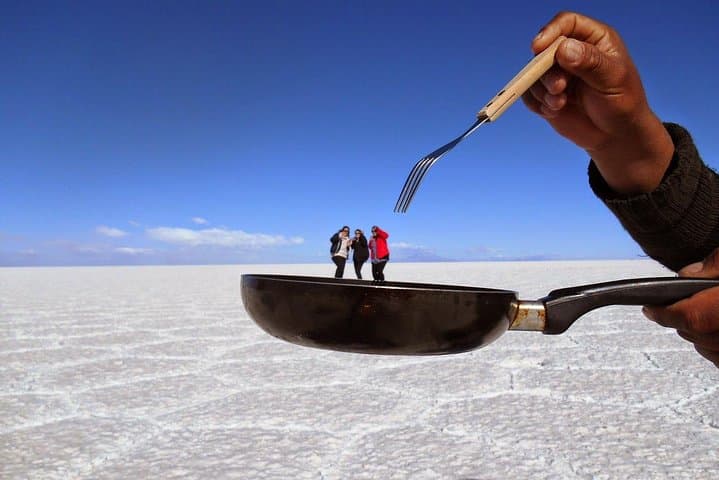
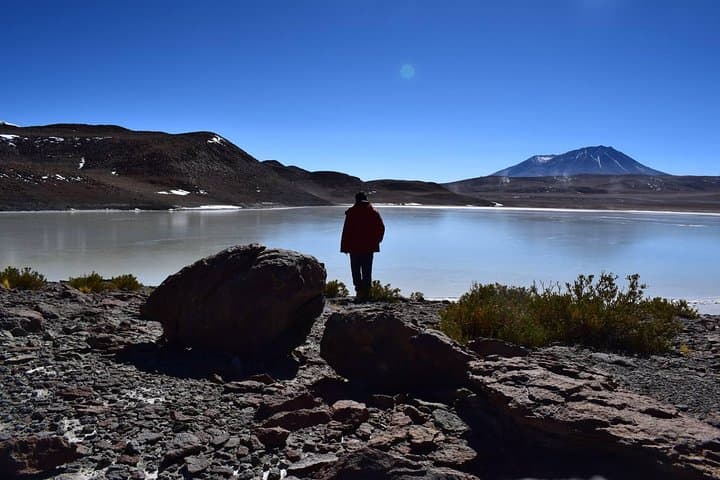
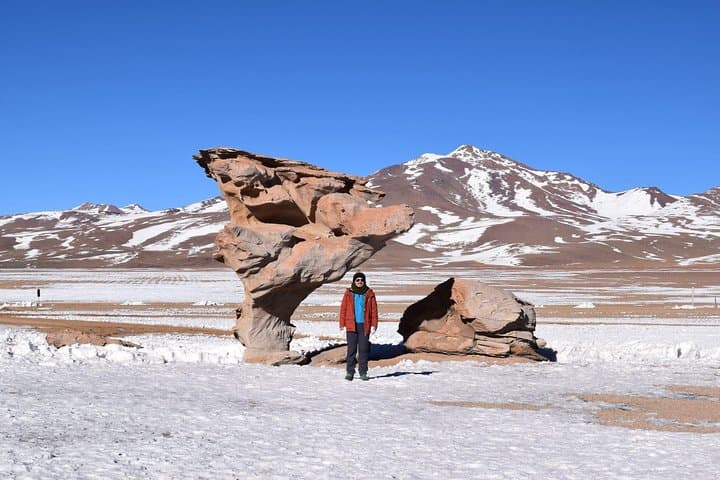
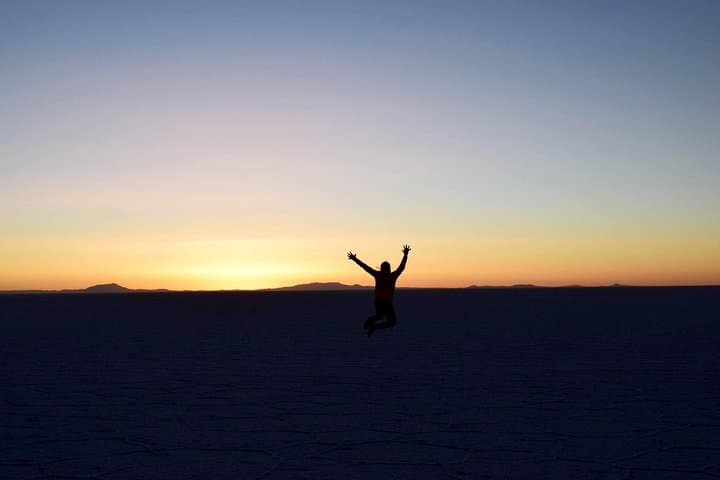
A cold wind lifts salt dust into the low morning sun as your 4x4 slides onto a white plane so vast the horizon refuses edges. On day one the landscape opens into geometric salt polygons that reflect the sky when the surface is wet, and on dry days crunch underfoot like old sugar. You’ll pause at the train cemetery, comb through Colchani’s salt handicrafts, and climb Incahuasi’s cactus island for 360° views over the salt sea.
A cold wind lifts salt dust into the low morning sun as your 4x4 slides onto a white plane so vast the horizon refuses edges. On day one the landscape opens into geometric salt polygons that reflect the sky when the surface is wet, and on dry days crunch underfoot like old sugar. You’ll pause at the train cemetery, comb through Colchani’s salt handicrafts, and climb Incahuasi’s cactus island for 360° views over the salt sea.
This place is a remnant of prehistoric lakes (Lake Minchin/Tauca) — a geological bowl of evaporites at roughly 3,650–3,700 meters elevation. Over millennia the salt crust thickened, preserving fossils, volcanic pumice, and the remains of early mining towns. Indigenous Aymara and Quechua communities still live on the margins, selling artisanal saltwork and maintaining highland grazing traditions.
Practical guidance: expect long drives (several hours between sights) and basic shared lodging in hostels or refugios; private rooms can be requested for a supplement. Altitude is the real variable — pace yourself, hydrate, and avoid heavy exertion the first day. Pack warm, windproof layers plus sun protection: UV is intense at altitude and reflected across the flats. Bring cash for small purchases in Colchani and a camera with polarizing filter for the mirror effect.
By dawn on day three you’ll watch geysers steam and flamingos feed in rosy lagoons against volcano silhouettes. The route is straightforward but fragile — stick to established tracks, respect local guides, and you’ll leave with images that flatten every notion of scale.