THE ADVENTURE COLLECTIVE® · Independent discovery and booking for outdoor travel

Walk the lava fields and coastal trails of Sakurajima with a local guide and learn how the Great Taisho eruption reshaped the island. This one-hour program blends museum exhibits with a short outdoor route and dramatic sea views.
Walk the lava fields and coastal trails of Sakurajima with a local guide and learn how the Great Taisho eruption reshaped the island. This one-hour program blends museum exhibits with a short outdoor route and dramatic sea views.
You step out of the visitor center into a wind that tastes faintly of sulfur, the black backbone of old lava rolling toward Kinko Bay like a halted river. The guide moves with steady pace, pointing out pumice fragments and gas-etched rock while waves hiss where molten tongues once met sea.
Verified experiences and guided adventures in the surrounding area.
Operated by Volcano Life Journey · Kagoshima, Kagoshima Prefecture
You step out of the visitor center into a wind that tastes faintly of sulfur, the black backbone of old lava rolling toward Kinko Bay like a halted river. The guide moves with steady pace, pointing out pumice fragments and gas-etched rock while waves hiss where molten tongues once met sea.
Sakurajima is an active stratovolcano that dominates Kagoshima Bay; its most dramatic modern reshaping came in the Great Taisho eruption of 1914 when flows filled parts of the shore and changed the island’s outline. Geologically the island is part of the Aira caldera complex—frequent small eruptions keep monitoring stations busy and give visitors a front-row seat to an earth that still rearranges itself.
Culturally, Sakurajima is woven into local life: farmers plant hardy crops in ash-rich soils, and on clear days you can spot Kagoshima’s skyline across the water. The visitor center provides concise exhibits on eruption history and safety before the walk leads onto a lava field and a short coastal trail with direct views of where old flows meet the sea.
Practical guidance: this one-hour guided walk is physically easy but surfaces are uneven—sturdy footwear matters. Follow your guide, keep to marked paths, and expect wind, sudden sun, and fine ash at times. Morning light and lower winds generally deliver the best views; avoid days with active ash advisories. Bring water, a light windproof layer, and a camera with a lens cloth—the island rewards close inspection and the memory of a landscape that still moves.
easy.
1 hour.
Suitable for most fitness levels; short walking on uneven ground requires basic mobility.
The program lasts about one hour, combining time in the visitor center with a short guided stroll across lava fields and a coastal section.
Yes—guides follow local volcanic-monitoring guidance and stay on designated trails; tours are canceled when agencies issue advisories.
Regular ferries run from Kagoshima Port to Sakurajima; the visitor center and tour meeting points are a short walk from the port terminal.
The walk is classed as easy but involves uneven terrain; it's suitable for most ages who can walk short distances unaided.
Sakurajima’s 1914 Great Taisho eruption produced large lava flows that reshaped the shoreline and connected the island to the Osumi Peninsula; the region has been monitored continuously since.
Stay on marked paths to protect fragile lichen and newly weathering rock; local operators emphasize minimal impact and follow JMA advisories to reduce visitor risk.
Volcano Life Journey operates guided outdoor trips and adventures with an emphasis on safety, stewardship, and memorable experiences.
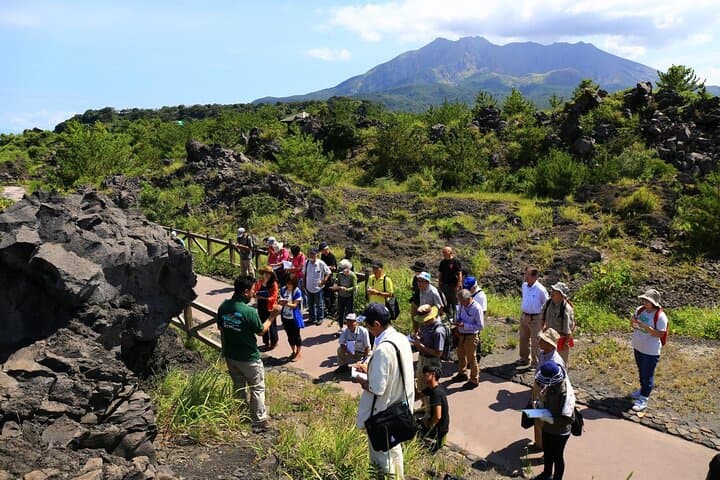
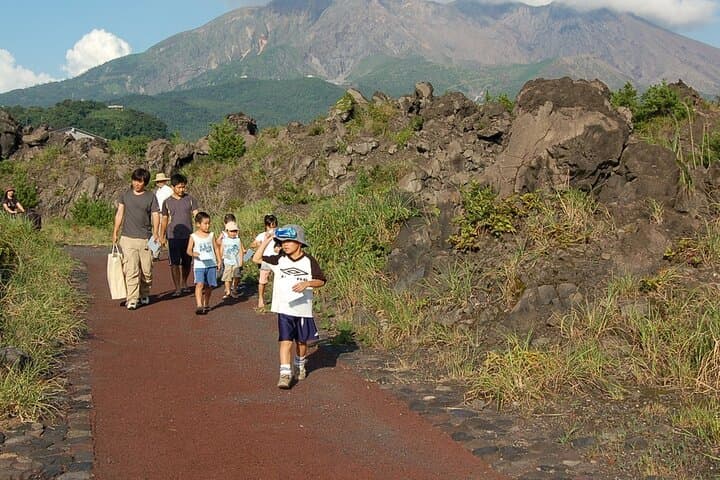
You step out of the visitor center into a wind that tastes faintly of sulfur, the black backbone of old lava rolling toward Kinko Bay like a halted river. The guide moves with steady pace, pointing out pumice fragments and gas-etched rock while waves hiss where molten tongues once met sea.
You step out of the visitor center into a wind that tastes faintly of sulfur, the black backbone of old lava rolling toward Kinko Bay like a halted river. The guide moves with steady pace, pointing out pumice fragments and gas-etched rock while waves hiss where molten tongues once met sea.
Sakurajima is an active stratovolcano that dominates Kagoshima Bay; its most dramatic modern reshaping came in the Great Taisho eruption of 1914 when flows filled parts of the shore and changed the island’s outline. Geologically the island is part of the Aira caldera complex—frequent small eruptions keep monitoring stations busy and give visitors a front-row seat to an earth that still rearranges itself.
Culturally, Sakurajima is woven into local life: farmers plant hardy crops in ash-rich soils, and on clear days you can spot Kagoshima’s skyline across the water. The visitor center provides concise exhibits on eruption history and safety before the walk leads onto a lava field and a short coastal trail with direct views of where old flows meet the sea.
Practical guidance: this one-hour guided walk is physically easy but surfaces are uneven—sturdy footwear matters. Follow your guide, keep to marked paths, and expect wind, sudden sun, and fine ash at times. Morning light and lower winds generally deliver the best views; avoid days with active ash advisories. Bring water, a light windproof layer, and a camera with a lens cloth—the island rewards close inspection and the memory of a landscape that still moves.