THE ADVENTURE COLLECTIVE® · Independent discovery and booking for outdoor travel

Explore Sakurajima on a focused half-day walk that combines raw lava fields, a hot-spring footbath, and an observatory near the crater. Learn the island’s 1914 eruption history and how residents live with an active volcano.
Explore Sakurajima on a focused half-day walk that combines raw lava fields, a hot-spring footbath, and an observatory near the crater. Learn the island’s 1914 eruption history and how residents live with an active volcano.
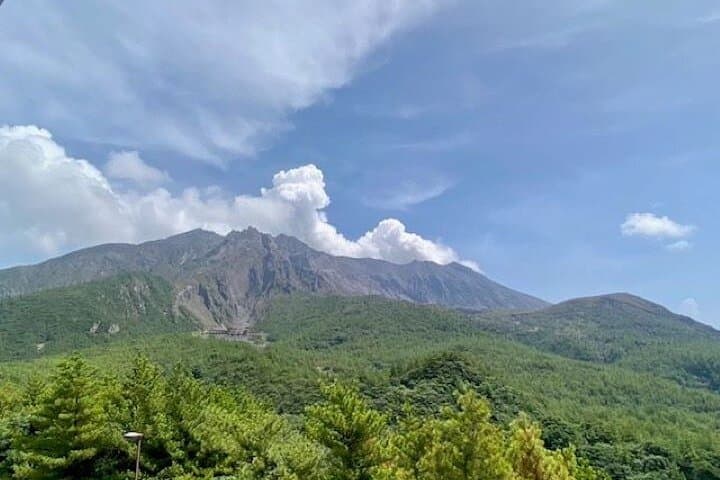
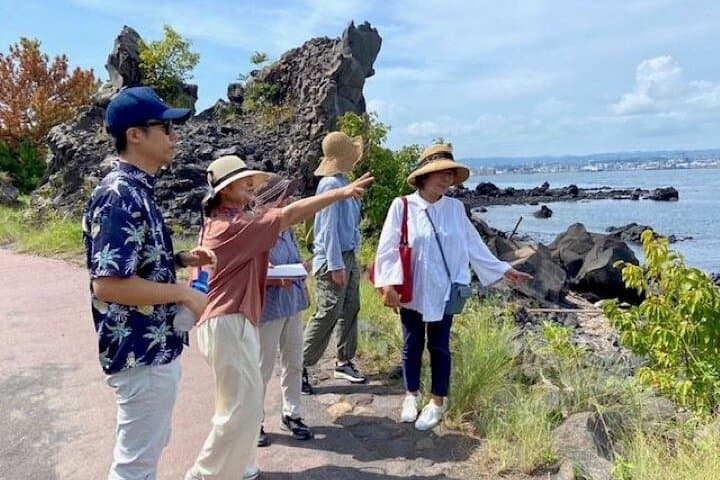
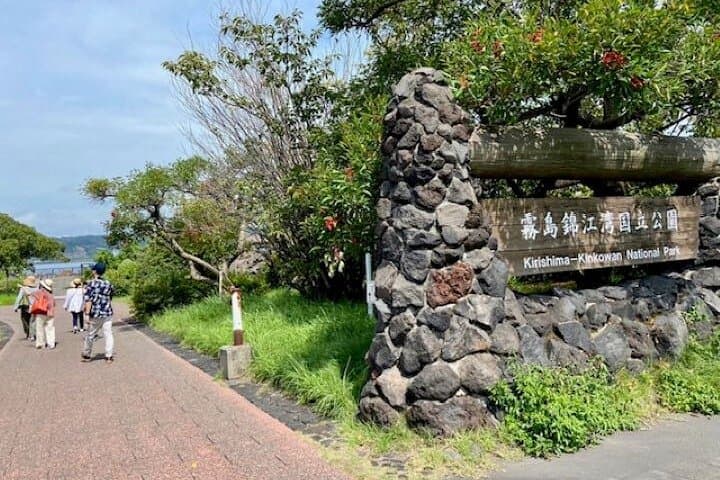
The sulfur-scented wind cuts across black fields as the guide leads the group from the visitor center toward raw, jagged lava laid down by Sakurajima’s great 1914 eruption. Walking here feels close to geologic time: one step on cooled pahoehoe, another over scoriaceous ridges, with Kinko Bay rimmed in the distance.
Verified experiences and guided adventures in the surrounding area.
Operated by Kagoshima Wonderful Walk · Kagoshima, Kagoshima Prefecture
The sulfur-scented wind cuts across black fields as the guide leads the group from the visitor center toward raw, jagged lava laid down by Sakurajima’s great 1914 eruption. Walking here feels close to geologic time: one step on cooled pahoehoe, another over scoriaceous ridges, with Kinko Bay rimmed in the distance.
Sakurajima was once a separate island until the Taisho eruption connected nearby Karasujima to its flank. The tour pairs that history with local culture—farmers who plant citrus adapted to ash soils, and communal hot-spring habits like the Nagisa Park footbath where steam still pulls warmth from the ground. The island’s geology is straightforward: andesitic to basaltic flows and frequent ash showers that shape roads and livelihoods.
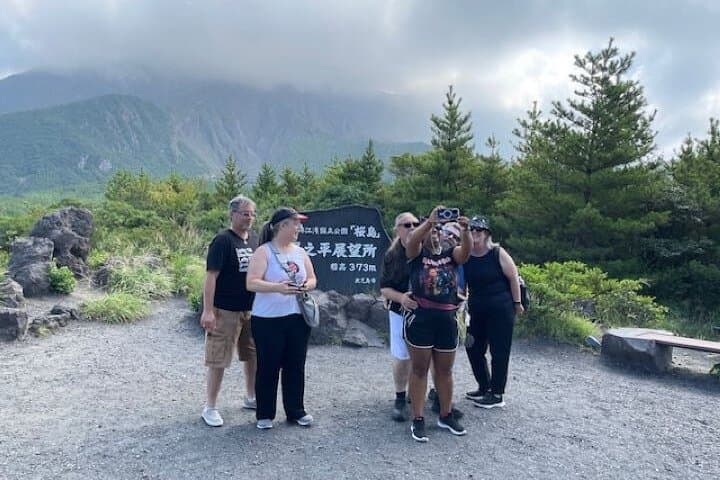
Expect short interpretive stops at the visitor center, a soak-in-footbath break, and a bus climb to an observatory near the crater. The guide will explain ash mitigation, the village layout, and how residents live with regular eruptions; viewing platforms give dramatic panoramas of lava fields daring you to imagine the blast that reshaped the coastline.
Practical edge: this is an easy, mostly flat half-day outing but surfaces are uneven and can be dusty. Good footwear, sun protection, and a light rain layer cover most conditions. Plan to arrive via ferry from Kagoshima city, leave valuables secured against ash, and check eruption advisory updates the morning of your tour. For travelers wanting a compact, interpretive intro to living with an active volcano, this half-day walk delivers geology, culture, and strong viewpoints in three hours.
easy.
3 hours.
Suitable for travelers in general good health who can walk short distances on uneven ground
Regular ferries run from Kagoshima Port to Sakurajima; the visitor center and meeting points are a short walk from the ferry terminal.
Guides monitor official advisories; tours may be altered or canceled if ash or explosive activity is elevated—check before you go.
Infants and small children can join and use strollers in flat areas, but some viewpoints require stairs or bus transport to reach.
Yes—Nagisa Park’s footbath is on the itinerary and is a brief, included stop to experience the thermal side of the island.
The 1914 Taisho eruption connected nearby Karasujima to Sakurajima and dramatically altered the coastline and local settlements.
Volcanic ash and fragile vegetation recover slowly; stick to paths, avoid disturbing farmland, and follow local guidance to reduce human impact.
Kagoshima Wonderful Walk operates guided outdoor trips and adventures with an emphasis on safety, stewardship, and memorable experiences.
The sulfur-scented wind cuts across black fields as the guide leads the group from the visitor center toward raw, jagged lava laid down by Sakurajima’s great 1914 eruption. Walking here feels close to geologic time: one step on cooled pahoehoe, another over scoriaceous ridges, with Kinko Bay rimmed in the distance.
The sulfur-scented wind cuts across black fields as the guide leads the group from the visitor center toward raw, jagged lava laid down by Sakurajima’s great 1914 eruption. Walking here feels close to geologic time: one step on cooled pahoehoe, another over scoriaceous ridges, with Kinko Bay rimmed in the distance.
Sakurajima was once a separate island until the Taisho eruption connected nearby Karasujima to its flank. The tour pairs that history with local culture—farmers who plant citrus adapted to ash soils, and communal hot-spring habits like the Nagisa Park footbath where steam still pulls warmth from the ground. The island’s geology is straightforward: andesitic to basaltic flows and frequent ash showers that shape roads and livelihoods.
Expect short interpretive stops at the visitor center, a soak-in-footbath break, and a bus climb to an observatory near the crater. The guide will explain ash mitigation, the village layout, and how residents live with regular eruptions; viewing platforms give dramatic panoramas of lava fields daring you to imagine the blast that reshaped the coastline.
Practical edge: this is an easy, mostly flat half-day outing but surfaces are uneven and can be dusty. Good footwear, sun protection, and a light rain layer cover most conditions. Plan to arrive via ferry from Kagoshima city, leave valuables secured against ash, and check eruption advisory updates the morning of your tour. For travelers wanting a compact, interpretive intro to living with an active volcano, this half-day walk delivers geology, culture, and strong viewpoints in three hours.