THE ADVENTURE COLLECTIVE® · Independent discovery and booking for outdoor travel

Cross untouched Andean water on a full-day catamaran trip from Puerto Varas to Bariloche — a 12-hour voyage through volcano-framed lakes, rainforest inlets and border crossings. Here’s how to prepare and what you’ll see.
Cross untouched Andean water on a full-day catamaran trip from Puerto Varas to Bariloche — a 12-hour voyage through volcano-framed lakes, rainforest inlets and border crossings. Here’s how to prepare and what you’ll see.
The catamaran slips away from Puerto Varas under a chill sky; mountains unroll along the horizon like slow-moving walls. On deck, the air smells of pine and cold water, and the first volcano — Osorno — raises a perfect cone through a scatter of clouds. For the next 12 hours you cross an archipelago of freshwater, river passages and forested shorelines that stitch Chile and Argentina together by route and memory.
Verified experiences and guided adventures in the surrounding area.
Operated by Ruta Chile · Puerto Varas, Los Lagos Region
The catamaran slips away from Puerto Varas under a chill sky; mountains unroll along the horizon like slow-moving walls. On deck, the air smells of pine and cold water, and the first volcano — Osorno — raises a perfect cone through a scatter of clouds. For the next 12 hours you cross an archipelago of freshwater, river passages and forested shorelines that stitch Chile and Argentina together by route and memory.
This is a corridor shaped by ice and fire. Glaciers carved the basins of Nahuel Huapi and Todos los Santos during the last ice age; later, successive eruptions of Osorno and Tronador left sharp ridgelines and jags like Puntiagudo. Indigenous Mapuche and Pehuenche peoples moved through these valleys for millennia, and the 19th-century push to connect lakes for trade and settlement transformed these waterways into the routes visitors now follow.
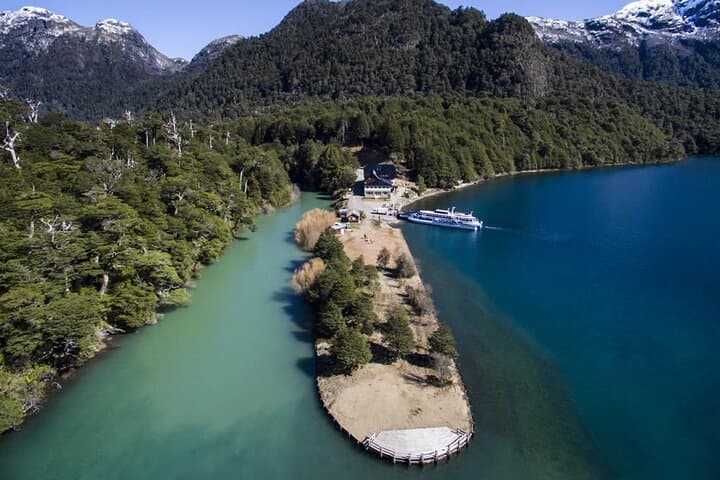
Geology and culture converge at small stops: Puerto Blest and Peulla sit beneath steep rainforest slopes where ciprés de las Guaitecas and coihue trees keep the soil damp and the trails green. Argentine Bariloche, with its alpine stone houses and chocolate shops, answers Puerto Varas’ German-influenced wooden architecture — both towns bear the imprint of European settlers who arrived here in the late 1800s and reshaped the lakeshore economy.
Practical guide:
Expect long stretches on the boat interrupted by brief, scenic walks. The route begins at 07:30 in Puerto Varas and finishes around 20:00 in Bariloche. You’ll need your passport for the Río Frías crossing; border control is handled en route, but have originals ready. Dress in layers: mornings on deck can be sharp and windy, afternoons pleasantly warm if the sun breaks.
Bring motion-sickness remedies if you’re prone — the catamaran is stable, but river narrows and swell can make the cabin feel lively. There are restroom facilities aboard and at main stops, but food options are limited: the included lunch is hearty but bring snacks and water for the day. Cell coverage is intermittent; treat the trip as an opportunity to disconnect.
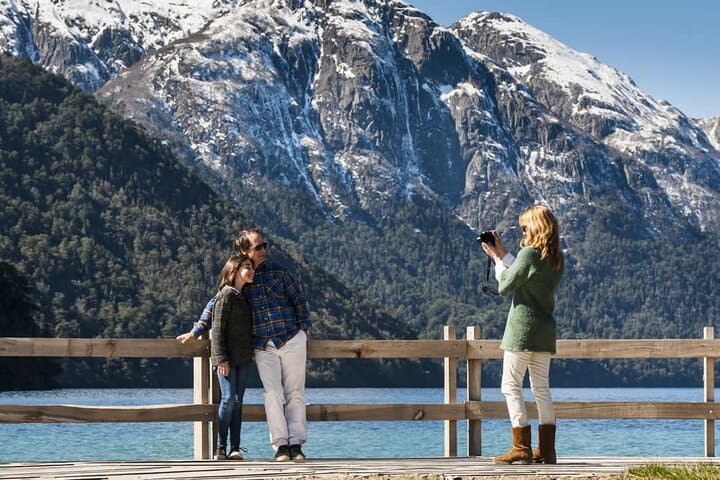
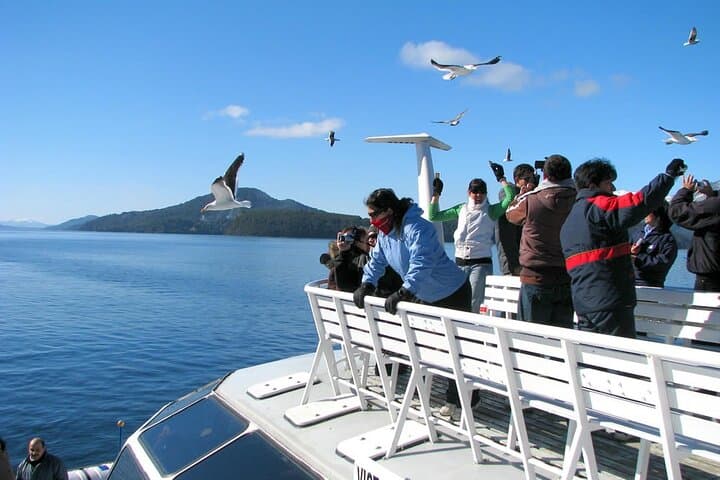
Timing matters for photos and wildlife. Early light over Nahuel Huapi gives the volcanoes depth; late afternoon softens the lake surface into glass. Be ready for short nature walks in Peulla or Blest — firm-soled shoes and a waterproof shell make those 20–40 minute excursions comfortable. Finally, be mindful of park rules: the lakes are within protected areas, so stay on trails, pack out waste, and avoid feeding wildlife to preserve this fragile, cross-border landscape.
easy.
12 hours.
Low-moderate; you should be able to sit for long periods and manage short 20–40 minute shoreline walks.
Yes — you cross the Chile–Argentina border via Río Frías; carry your passport and any required visas or entry forms.
A lunch stop in Puerto Blest or Peulla is typically included; bring snacks and water for between meals.
The tour is described as physically easy, but it includes boat boarding and short shore walks; infants must sit on laps and some landings have uneven ground.
Coverage is intermittent inside Pérez Rosales National Park and on some lakes — expect dead zones and plan accordingly.
If prone to motion sickness, take preventative medication before departure and sit midship where motion is least felt.
Storage space aboard is limited; travel light or confirm luggage arrangements with the operator ahead of time.
The lake corridor has long been used by Mapuche and Pehuenche peoples; 19th-century European settlers later established the towns and routes that became today’s tourist connections.
Much of the route crosses protected parkland; follow park rules, avoid disturbing wildlife and pack out all trash to minimize visitor impact.
Ruta Chile operates guided outdoor trips and adventures with an emphasis on safety, stewardship, and memorable experiences.
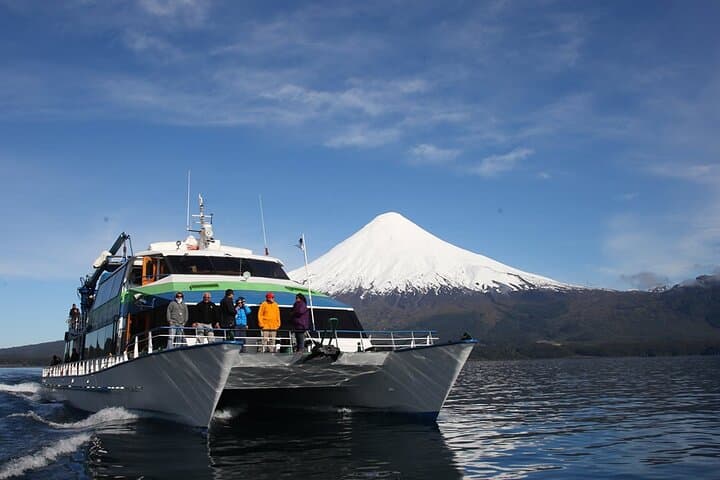
The catamaran slips away from Puerto Varas under a chill sky; mountains unroll along the horizon like slow-moving walls. On deck, the air smells of pine and cold water, and the first volcano — Osorno — raises a perfect cone through a scatter of clouds. For the next 12 hours you cross an archipelago of freshwater, river passages and forested shorelines that stitch Chile and Argentina together by route and memory.
The catamaran slips away from Puerto Varas under a chill sky; mountains unroll along the horizon like slow-moving walls. On deck, the air smells of pine and cold water, and the first volcano — Osorno — raises a perfect cone through a scatter of clouds. For the next 12 hours you cross an archipelago of freshwater, river passages and forested shorelines that stitch Chile and Argentina together by route and memory.
This is a corridor shaped by ice and fire. Glaciers carved the basins of Nahuel Huapi and Todos los Santos during the last ice age; later, successive eruptions of Osorno and Tronador left sharp ridgelines and jags like Puntiagudo. Indigenous Mapuche and Pehuenche peoples moved through these valleys for millennia, and the 19th-century push to connect lakes for trade and settlement transformed these waterways into the routes visitors now follow.
Geology and culture converge at small stops: Puerto Blest and Peulla sit beneath steep rainforest slopes where ciprés de las Guaitecas and coihue trees keep the soil damp and the trails green. Argentine Bariloche, with its alpine stone houses and chocolate shops, answers Puerto Varas’ German-influenced wooden architecture — both towns bear the imprint of European settlers who arrived here in the late 1800s and reshaped the lakeshore economy.
Practical guide:
Expect long stretches on the boat interrupted by brief, scenic walks. The route begins at 07:30 in Puerto Varas and finishes around 20:00 in Bariloche. You’ll need your passport for the Río Frías crossing; border control is handled en route, but have originals ready. Dress in layers: mornings on deck can be sharp and windy, afternoons pleasantly warm if the sun breaks.
Bring motion-sickness remedies if you’re prone — the catamaran is stable, but river narrows and swell can make the cabin feel lively. There are restroom facilities aboard and at main stops, but food options are limited: the included lunch is hearty but bring snacks and water for the day. Cell coverage is intermittent; treat the trip as an opportunity to disconnect.
Timing matters for photos and wildlife. Early light over Nahuel Huapi gives the volcanoes depth; late afternoon softens the lake surface into glass. Be ready for short nature walks in Peulla or Blest — firm-soled shoes and a waterproof shell make those 20–40 minute excursions comfortable. Finally, be mindful of park rules: the lakes are within protected areas, so stay on trails, pack out waste, and avoid feeding wildlife to preserve this fragile, cross-border landscape.