THE ADVENTURE COLLECTIVE® · Independent discovery and booking for outdoor travel

Cross Last Hope Sound from Puerto Natales on a full‑day boat trip to Balmaceda and Serrano glaciers in Bernardo O'Higgins National Park. Expect close glacier views, seabird colonies, coastal forests and a short lakeside walk to a Serrano viewpoint.
Cross Last Hope Sound from Puerto Natales on a full‑day boat trip to Balmaceda and Serrano glaciers in Bernardo O'Higgins National Park. Expect close glacier views, seabird colonies, coastal forests and a short lakeside walk to a Serrano viewpoint.
The morning air off Puerto Natales bites with salt and ice; passengers step onto a low-slung tourist boat and the town slides astern as Last Hope Sound opens like a cold highway toward the Southern Patagonian Ice Field.
Verified experiences and guided adventures in the surrounding area.
Operated by RipioTurismo · Puerto Natales, Magallanes y la Antártica Chilena
The morning air off Puerto Natales bites with salt and ice; passengers step onto a low-slung tourist boat and the town slides astern as Last Hope Sound opens like a cold highway toward the Southern Patagonian Ice Field.
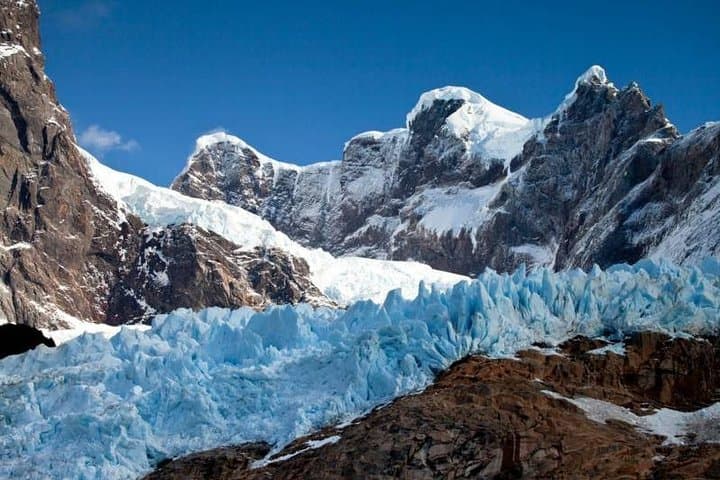
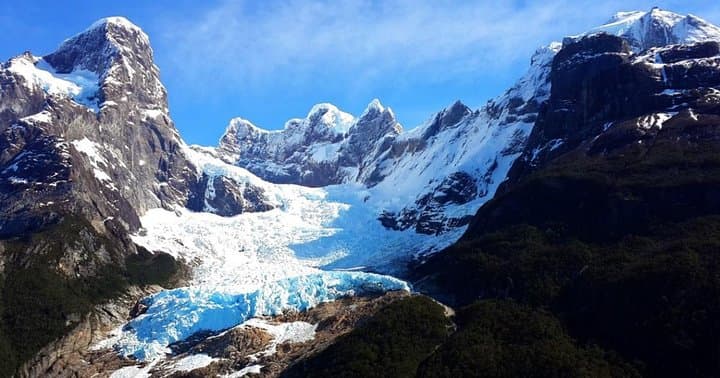
The route threads past the rusted silhouette of the old Puerto Bories freezer, across fjord waters that reflect serrated mountains. Geology here is raw: glaciers feed into deep fjords carved by millennia of ice, and the Balmaceda and Serrano tongues are visible only by water, their blue faces cleaving into the sea. Cultural traces—small estancia houses, timber piers and the canelo and lenga forests—edge the shore, reminders of the region’s sheep-farming past and indigenous Kawésqar heritage.
Wildlife punctuates the voyage: imperial shags cluster on islets, and sea lions lounge on rocky outcrops while kelp beds shift beneath the surface, daring you to look closer. The visit includes a short dock and a half-hour walk beside a lake to a viewing platform for Serrano, where the glacier’s calving and meltwater streams shape the landscape.
Practical tip: this is an all-day outing—bring layered waterproof clothing, sun protection and motion-sickness remedies. Expect limited facilities at the dock and variable winds; operators often provide a bilingual guide and park entry is included. The trip is suitable for most fitness levels but requires comfortable shoes for the short shore walk and a readiness for long periods outdoors. Photographers should carry spare batteries—the cold drains them fast.
easy.
8–10 hours.
Suitable for most fitness levels; requires standing on deck for long periods and a short, moderate lakeside walk.
The full outing runs about 8–10 hours and departs in the morning from the Puerto Natales pier; exact pickup and departure times are provided at booking.
Yes—operators list the trip as suitable for all fitness levels, though long exposure on deck and the shore walk should be considered for those with mobility limits.
You can observe calving from a safe distance; operators do not approach active glacier fronts closely for safety and conservation reasons, but views from the fjord and the Serrano viewpoint are excellent.
Entrance to Bernardo O'Higgins National Park and a professional guide are included in the tour price; confirm details when booking if selecting optional pickup services.
The route runs into Bernardo O'Higgins National Park, one of Chile’s largest protected areas, fed by the Southern Patagonian Ice Field—an ice mass that shaped the current fjord and mountain landscape.
Operators follow park regulations to minimize disturbance to wildlife and shorelines; visitors should pack out all waste and avoid approaching marine mammals or bird colonies.
RipioTurismo operates guided outdoor trips and adventures with an emphasis on safety, stewardship, and memorable experiences.
The morning air off Puerto Natales bites with salt and ice; passengers step onto a low-slung tourist boat and the town slides astern as Last Hope Sound opens like a cold highway toward the Southern Patagonian Ice Field.
The morning air off Puerto Natales bites with salt and ice; passengers step onto a low-slung tourist boat and the town slides astern as Last Hope Sound opens like a cold highway toward the Southern Patagonian Ice Field.
The route threads past the rusted silhouette of the old Puerto Bories freezer, across fjord waters that reflect serrated mountains. Geology here is raw: glaciers feed into deep fjords carved by millennia of ice, and the Balmaceda and Serrano tongues are visible only by water, their blue faces cleaving into the sea. Cultural traces—small estancia houses, timber piers and the canelo and lenga forests—edge the shore, reminders of the region’s sheep-farming past and indigenous Kawésqar heritage.
Wildlife punctuates the voyage: imperial shags cluster on islets, and sea lions lounge on rocky outcrops while kelp beds shift beneath the surface, daring you to look closer. The visit includes a short dock and a half-hour walk beside a lake to a viewing platform for Serrano, where the glacier’s calving and meltwater streams shape the landscape.
Practical tip: this is an all-day outing—bring layered waterproof clothing, sun protection and motion-sickness remedies. Expect limited facilities at the dock and variable winds; operators often provide a bilingual guide and park entry is included. The trip is suitable for most fitness levels but requires comfortable shoes for the short shore walk and a readiness for long periods outdoors. Photographers should carry spare batteries—the cold drains them fast.