THE ADVENTURE COLLECTIVE® · Independent discovery and booking for outdoor travel

Board a classic schooner at Pier 66 for a two-hour harbor sail that puts the Seattle skyline, Space Needle, and distant Mount Rainier in cinematic perspective. Family-friendly, with restrooms onboard and sunset departures when the light is best.
Board a classic schooner at Pier 66 for a two-hour harbor sail that puts the Seattle skyline, Space Needle, and distant Mount Rainier in cinematic perspective. Family-friendly, with restrooms onboard and sunset departures when the light is best.
The gangway creaks and the city loosens its grip — glass towers slide past, then the Space Needle tilts into view like a waypoint. You step out from the Bell Harbor Marina plaza onto the deck of a classic schooner and the harbor sighs beneath you: gulls arguing, lines clacking, the salt air pushing inland. For the next two hours the Puget Sound does what it does best — it opens up, daring you to look farther.
Verified experiences and guided adventures in the surrounding area.
Operated by Seattle's Tall Ship · Seattle, Washington
The gangway creaks and the city loosens its grip — glass towers slide past, then the Space Needle tilts into view like a waypoint. You step out from the Bell Harbor Marina plaza onto the deck of a classic schooner and the harbor sighs beneath you: gulls arguing, lines clacking, the salt air pushing inland. For the next two hours the Puget Sound does what it does best — it opens up, daring you to look farther.
This is not a private yacht but an honest tall ship, the kind that puts sailing back into the equation. The route hugs Elliott Bay, giving uninterrupted skyline shots of downtown Seattle, then arcs to offer broad views of the Olympic and Cascade ranges. On a clear day Mount Rainier looms, an enormous, slow volcano that has shaped this region’s weather and, in a sense, its story.
Seattle’s maritime roots run deep. Before the boom of skyscape and startups, Indigenous Coast Salish communities navigated these same channels. Later, fisheries and shipyards turned the waterfront into a working corridor; the tall-ship tradition recalls that history while offering a modern, accessible way to experience it. Geologically, Puget Sound is a drowned glacial valley — the waterway you ride was cut by ice and then filled by the sea, which explains the long fingers of bay and the islands that appear like the knuckles of an old map.
Culture here is visible in small things: the ferry horns in the distance, commercial fishing boats tacking past, families lining the rail for postcard photos. The crew will point out landmarks, rigging quirks and local anecdotes — they blend seamanship with storytelling, the practical and the poetic.
Practical guidance: departures are from Pier 66/Bell Harbor Marina; arrive about 20 minutes early and expect to board roughly 10 minutes before cast-off. The sail runs two hours with restrooms onboard and space for strollers at the dock (strollers don’t fit on deck). Dress in layers — the harbor can be breezy even in summer — and wear non-slip shoes. If you’re prone to seasickness, choose a mid-harbor seat where motion is least pronounced and consider a short-acting patch or ginger tablets.
Photography tips: the best light comes early and late; sunset sails are especially cinematic. Bring a small tripod or steady your camera against the rail for longer exposures of the skyline.
Whether you’re after family-friendly sightseeing, a low-effort introduction to sailing, or just a different angle on Seattle, this two-hour harbor tour balances accessibility with the quiet thrill of being powered by wind and tide.
easy.
2 hours.
Suitable for all fitness levels — minimal mobility required to step aboard and move around the deck.
Meet at the Bell Harbor Marina plaza next to the Bell Harbor Marina Office behind Anthony’s Restaurant on Pier 66; staff will walk the group to the boat.
Arrive about 20 minutes before departure for check-in; boarding begins roughly 10 minutes prior to cast-off.
Yes — the schooner is equipped with an onboard restroom for guest use during the cruise.
The tour is family-friendly but boarding requires stepping from dock to gangway and then onto deck; contact the operator about specific accessibility needs before booking.
Only service animals are allowed onboard; pets are not permitted on the deck during public sails.
Cruises may be canceled for high winds or unsafe conditions; the cancellation policy typically allows a full refund if you cancel at least 24 hours before departure.
Seattle’s waterfront evolved from Indigenous canoe routes to a 20th-century shipping and shipbuilding hub; tall ships echo the city’s longstanding relationship with sea trade.
Boat operators are encouraged to follow Puget Sound stewardship practices: minimize single-use plastics on board and avoid disturbing wildlife, particularly during marine mammal sightings.
Seattle's Tall Ship operates guided outdoor trips and adventures with an emphasis on safety, stewardship, and memorable experiences.
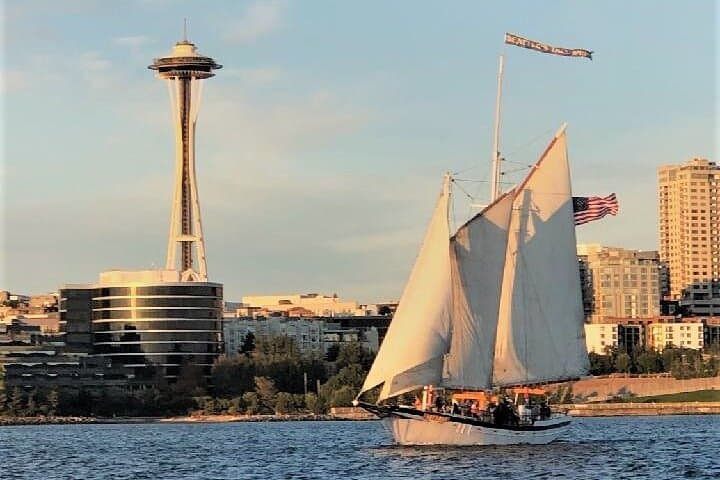

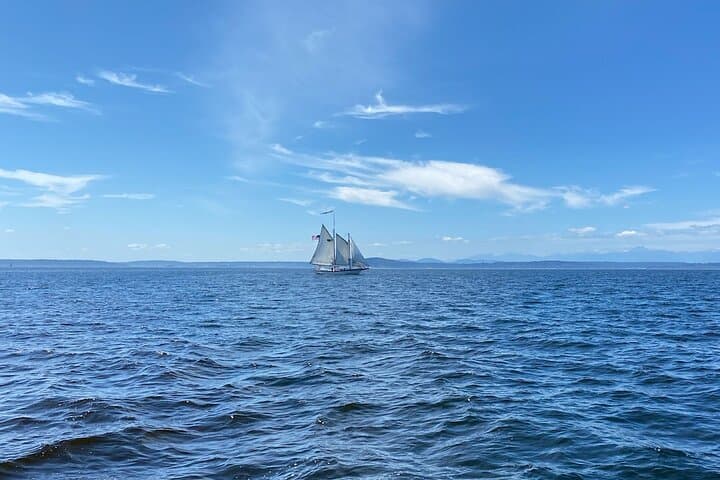
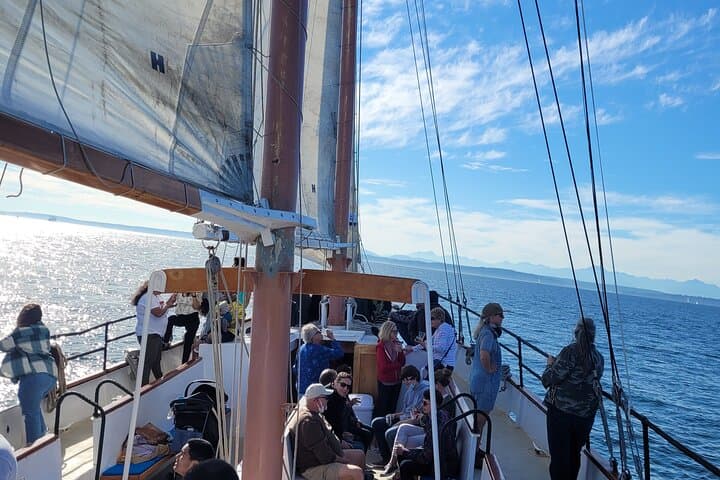
The gangway creaks and the city loosens its grip — glass towers slide past, then the Space Needle tilts into view like a waypoint. You step out from the Bell Harbor Marina plaza onto the deck of a classic schooner and the harbor sighs beneath you: gulls arguing, lines clacking, the salt air pushing inland. For the next two hours the Puget Sound does what it does best — it opens up, daring you to look farther.
The gangway creaks and the city loosens its grip — glass towers slide past, then the Space Needle tilts into view like a waypoint. You step out from the Bell Harbor Marina plaza onto the deck of a classic schooner and the harbor sighs beneath you: gulls arguing, lines clacking, the salt air pushing inland. For the next two hours the Puget Sound does what it does best — it opens up, daring you to look farther.
This is not a private yacht but an honest tall ship, the kind that puts sailing back into the equation. The route hugs Elliott Bay, giving uninterrupted skyline shots of downtown Seattle, then arcs to offer broad views of the Olympic and Cascade ranges. On a clear day Mount Rainier looms, an enormous, slow volcano that has shaped this region’s weather and, in a sense, its story.
Seattle’s maritime roots run deep. Before the boom of skyscape and startups, Indigenous Coast Salish communities navigated these same channels. Later, fisheries and shipyards turned the waterfront into a working corridor; the tall-ship tradition recalls that history while offering a modern, accessible way to experience it. Geologically, Puget Sound is a drowned glacial valley — the waterway you ride was cut by ice and then filled by the sea, which explains the long fingers of bay and the islands that appear like the knuckles of an old map.
Culture here is visible in small things: the ferry horns in the distance, commercial fishing boats tacking past, families lining the rail for postcard photos. The crew will point out landmarks, rigging quirks and local anecdotes — they blend seamanship with storytelling, the practical and the poetic.
Practical guidance: departures are from Pier 66/Bell Harbor Marina; arrive about 20 minutes early and expect to board roughly 10 minutes before cast-off. The sail runs two hours with restrooms onboard and space for strollers at the dock (strollers don’t fit on deck). Dress in layers — the harbor can be breezy even in summer — and wear non-slip shoes. If you’re prone to seasickness, choose a mid-harbor seat where motion is least pronounced and consider a short-acting patch or ginger tablets.
Photography tips: the best light comes early and late; sunset sails are especially cinematic. Bring a small tripod or steady your camera against the rail for longer exposures of the skyline.
Whether you’re after family-friendly sightseeing, a low-effort introduction to sailing, or just a different angle on Seattle, this two-hour harbor tour balances accessibility with the quiet thrill of being powered by wind and tide.