THE ADVENTURE COLLECTIVE® · Independent discovery and booking for outdoor travel

A short catamaran ride across Lago Grey brings you within sight of a 40-meter ice wall and sculpted icebergs. This guided navigation combines a coastal walk, a boat approach to the glacier, and a landing on the central island for close-up views and photography.
A short catamaran ride across Lago Grey brings you within sight of a 40-meter ice wall and sculpted icebergs. This guided navigation combines a coastal walk, a boat approach to the glacier, and a landing on the central island for close-up views and photography.
You step off the pebble spit and feel the wind rearrange your plans — not violently, but insistently. Lago Grey lays itself out in a hard, silvery light; wind-creased waves push at the hull of the Grey II while the glacier ahead keeps its cool, a 40-meter blue wall that seems to breathe very slowly. For 45 minutes the boat threads between floes and angular icebergs, each one a carved miniature continent, then lands at the island that splits the glacier so you can watch its fractures and uprisings at close range.
Verified experiences and guided adventures in the surrounding area.
Operated by Tangol · Puerto Natales, Magallanes
You step off the pebble spit and feel the wind rearrange your plans — not violently, but insistently. Lago Grey lays itself out in a hard, silvery light; wind-creased waves push at the hull of the Grey II while the glacier ahead keeps its cool, a 40-meter blue wall that seems to breathe very slowly. For 45 minutes the boat threads between floes and angular icebergs, each one a carved miniature continent, then lands at the island that splits the glacier so you can watch its fractures and uprisings at close range.
Torres del Paine is young by geological standards. The Southern Patagonian Ice Field, which feeds Grey Glacier, grinds and reforms bedrock, sending ice tongues into deep lakes. The area’s history is a mix of Gaucho routes, European explorers, and the modern push to protect this raw geometry as part of a national park created in 1959. Locals in Puerto Natales still trade stories about sudden calving events and the weather’s mood swings; it’s part folklore, part survival calculus.
The navigation is more than a photo-op; it’s a crash course in glacier mechanics. Ice appears blue for the same reason the sky does — the denser, older ice absorbs other wavelengths — and its cracks map pressures and past motion. You may hear an ominous groan when a block shears away. Guides read the water and the wind like an old map; sometimes zodiacs replace the catamaran when ice or recent calving make the pier approach unsafe.
Practicalities anchor the romance. The operator requires check-in at Hotel Lago Grey one hour before departure; expect a 30–45 minute walk across a pebble beach to the boarding point from the parking area. Bring Chilean pesos for park admission, layered waterproof clothing, and good hiking shoes for the beach approach. Travel times vary with weather — departures at 9:00, 12:00, and 15:00 — and the company may swap vessels when conditions dictate. Note the tour runs roughly three hours total with about 45 minutes of sailing near the glacier.
Safety and patience repay you: narrow your lenses for iceberg textures, keep warm while waiting on deck, and let the guides set the pace when the glacier decides to be unpredictable. In return you get an elemental encounter — wind that dares you, ice that rearranges itself on its own schedule, and a slice of Patagonia that feels both fragile and enormous.
moderate.
3–4 hours.
Moderate fitness: you should be able to walk 3 km over uneven pebble beach and stand on deck for up to an hour.
The navigation portion that approaches Grey Glacier is roughly 45 minutes, within a 3-hour total tour window.
No. Entry to Torres del Paine National Park must be paid separately in Chilean pesos.
Expect 30–45 minutes over a pebble beach; firm-footed hikers will manage it but wear good shoes.
If recent calving blocks safe approach, operators may cancel the catamaran leg and use zodiacs or reroute visits for safety.
Children are typically allowed but operators advise assessing health and mobility; specific age rules may apply at booking.
Small snacks are fine; the tour includes a Pisco Sour, but local regulations may restrict alcohol consumption on board—check with the operator.
Torres del Paine was designated a national park in 1959; early explorers and ranchers shaped the modern access routes around its lakes and glaciers.
Visitor numbers and changing ice conditions make leave-no-trace practice essential; stick to marked paths and pack out all waste to reduce impact.
Tangol operates guided outdoor trips and adventures with an emphasis on safety, stewardship, and memorable experiences.
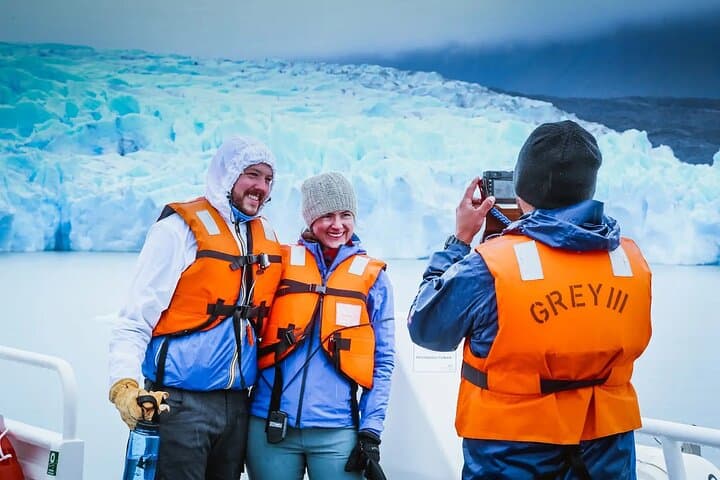
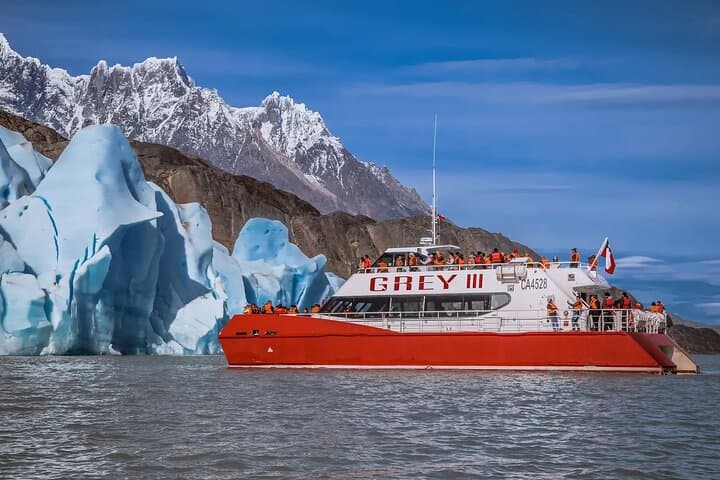
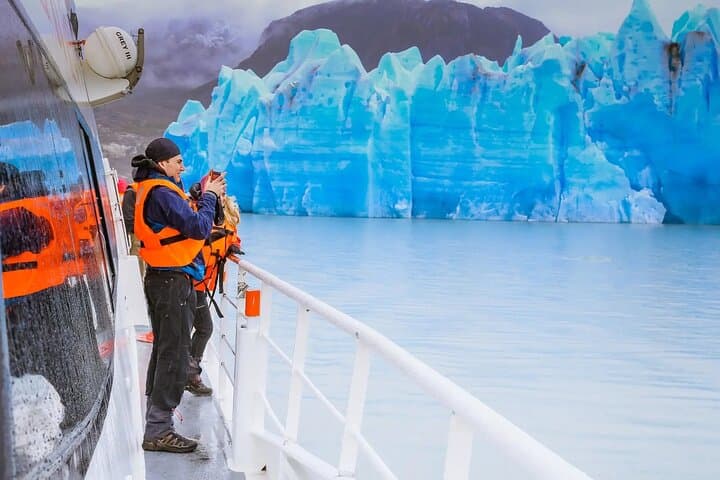
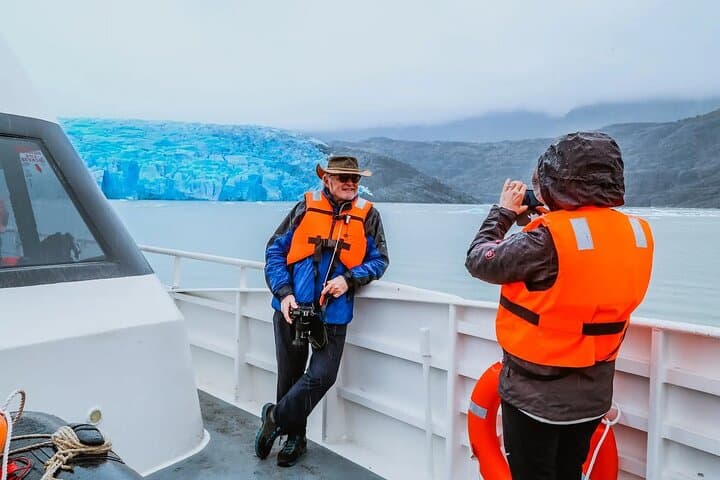
You step off the pebble spit and feel the wind rearrange your plans — not violently, but insistently. Lago Grey lays itself out in a hard, silvery light; wind-creased waves push at the hull of the Grey II while the glacier ahead keeps its cool, a 40-meter blue wall that seems to breathe very slowly. For 45 minutes the boat threads between floes and angular icebergs, each one a carved miniature continent, then lands at the island that splits the glacier so you can watch its fractures and uprisings at close range.
You step off the pebble spit and feel the wind rearrange your plans — not violently, but insistently. Lago Grey lays itself out in a hard, silvery light; wind-creased waves push at the hull of the Grey II while the glacier ahead keeps its cool, a 40-meter blue wall that seems to breathe very slowly. For 45 minutes the boat threads between floes and angular icebergs, each one a carved miniature continent, then lands at the island that splits the glacier so you can watch its fractures and uprisings at close range.
Torres del Paine is young by geological standards. The Southern Patagonian Ice Field, which feeds Grey Glacier, grinds and reforms bedrock, sending ice tongues into deep lakes. The area’s history is a mix of Gaucho routes, European explorers, and the modern push to protect this raw geometry as part of a national park created in 1959. Locals in Puerto Natales still trade stories about sudden calving events and the weather’s mood swings; it’s part folklore, part survival calculus.
The navigation is more than a photo-op; it’s a crash course in glacier mechanics. Ice appears blue for the same reason the sky does — the denser, older ice absorbs other wavelengths — and its cracks map pressures and past motion. You may hear an ominous groan when a block shears away. Guides read the water and the wind like an old map; sometimes zodiacs replace the catamaran when ice or recent calving make the pier approach unsafe.
Practicalities anchor the romance. The operator requires check-in at Hotel Lago Grey one hour before departure; expect a 30–45 minute walk across a pebble beach to the boarding point from the parking area. Bring Chilean pesos for park admission, layered waterproof clothing, and good hiking shoes for the beach approach. Travel times vary with weather — departures at 9:00, 12:00, and 15:00 — and the company may swap vessels when conditions dictate. Note the tour runs roughly three hours total with about 45 minutes of sailing near the glacier.
Safety and patience repay you: narrow your lenses for iceberg textures, keep warm while waiting on deck, and let the guides set the pace when the glacier decides to be unpredictable. In return you get an elemental encounter — wind that dares you, ice that rearranges itself on its own schedule, and a slice of Patagonia that feels both fragile and enormous.