THE ADVENTURE COLLECTIVE® · Independent discovery and booking for outdoor travel

Ride pillion through Saigon’s sharp contrasts: glossy boulevards, floating market stalls, and riverside slums. In three to four hours a female driver-led scooter tour delivers local food stops, alley walks, and a perspective on the city’s social geography.
Ride pillion through Saigon’s sharp contrasts: glossy boulevards, floating market stalls, and riverside slums. In three to four hours a female driver-led scooter tour delivers local food stops, alley walks, and a perspective on the city’s social geography.
The engine hums and the city rearranges itself: glass-fronted malls dissolve into narrow alleys, and the Saigon River slips alongside shacks that lean like old travelers. Riding pillion for three to four hours, you move through the contrasts—bright pedestrian boulevards, wet markets where fruit sellers shout, and backstreets of Districts 3 and 4 where urban life runs loud and close.
Verified experiences and guided adventures in the surrounding area.
Operated by Vietnamese Street Food Tour · Ho Chi Minh City, Ho Chi Minh
The engine hums and the city rearranges itself: glass-fronted malls dissolve into narrow alleys, and the Saigon River slips alongside shacks that lean like old travelers. Riding pillion for three to four hours, you move through the contrasts—bright pedestrian boulevards, wet markets where fruit sellers shout, and backstreets of Districts 3 and 4 where urban life runs loud and close.
Ho Chi Minh City sits on sedimentary plains of the Mekong Delta; its neighborhoods reflect colonial planning, post-war migration, and rapid economic change. On this route you’ll pass Nguyen Hue pedestrian boulevard—recently refurbished as a civic spine—and then descend into food alleys and informal riverside housing that grew where land was cheap and work abundant. Along the Saigon River you’ll see floating stalls and a patchwork of tin roofs that trace the city’s working-class history.
Expect sensory detail: a coconut seller wiping a cup, the bitter scent of dark-roasted Vietnamese coffee, and scooters threading alleys like a flowing current. The guide (or female driver) navigates traffic and local etiquette; you dismount for short walks at a wet market, a traditional coffee house, and a riverside viewpoint.
Practical guidance: wear closed-toe shoes, carry small bills for snacks and tipping, and bring sun protection or a thin rain layer depending on the season. Helmets are provided, but keep valuables secured in a crossbody bag and be ready for sudden stops and busy intersections. Start in the morning for cooler air and better light; late afternoons can be humid and busy. This is a compact, high-contrast urban run that rewards curiosity and respectful observation.
easy.
3–4 hours.
Comfortable sitting on a scooter for a few hours and walking short distances; suitable for most fitness levels.
No—you ride as a passenger (pillion). A licensed driver handles navigation and traffic while you focus on sights and photos.
Yes, helmets are provided for all passengers; you may bring your own for fit or comfort preference.
The tour is described as suitable for all fitness levels; however, very young children or infants may be uncomfortable on busy streets—check with the operator about child seating and safety.
Yes—expect local coffee, coconut juice, and a Banh Mi stop; bring cash for extra snacks or purchases at markets.
The route crosses areas shaped by French colonial grids and waves of 20th-century migration; Districts 3 and 4 historically housed workers and boat communities that supported the city’s markets and ports.
The Saigon River faces urban pollution and waste-management challenges; responsible visitors should avoid littering, support small local vendors, and ask before photographing residents.
Vietnamese Street Food Tour operates guided outdoor trips and adventures with an emphasis on safety, stewardship, and memorable experiences.
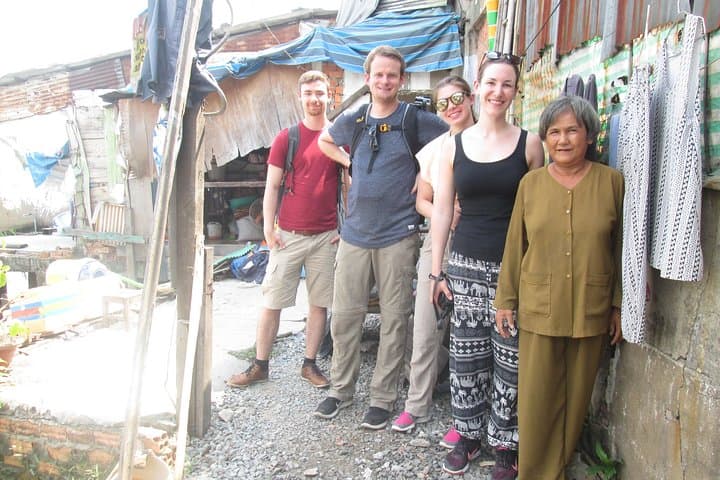
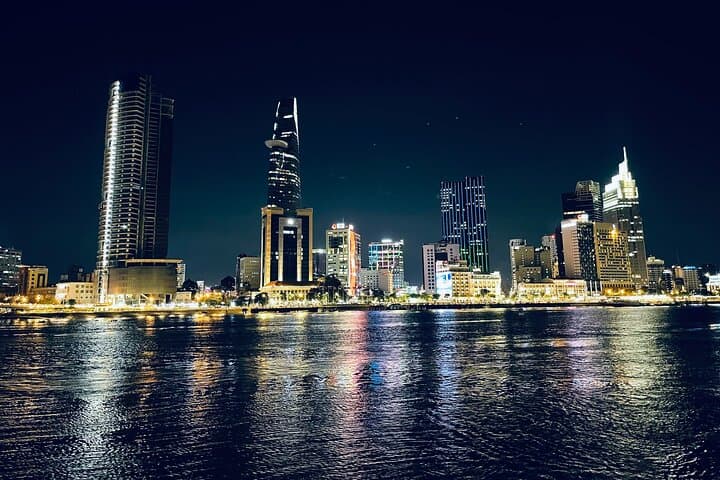
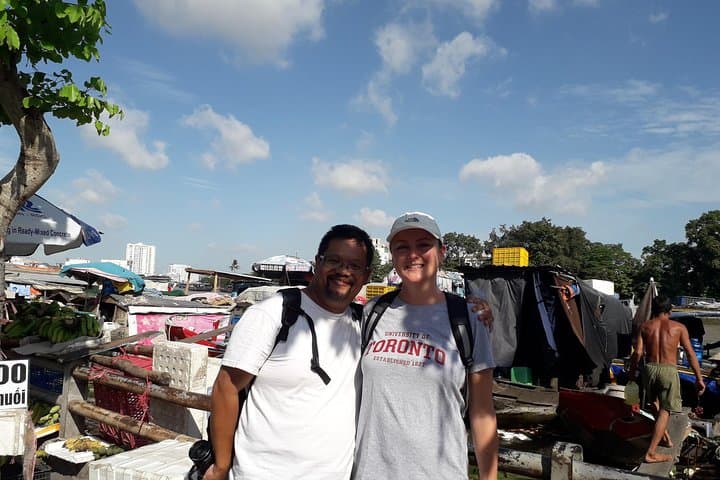
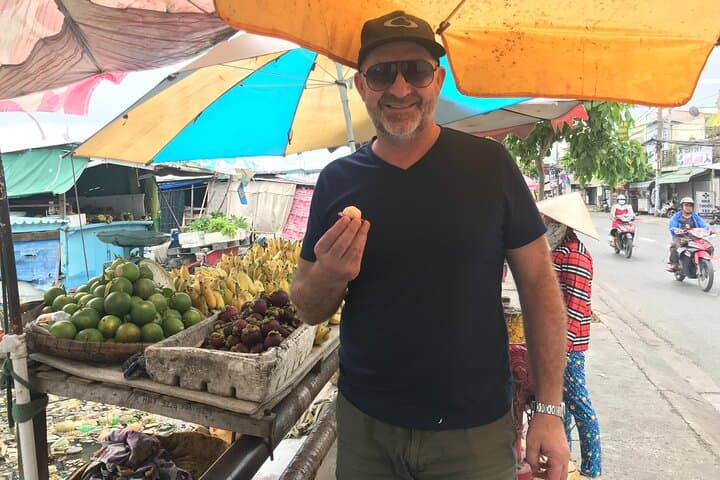
The engine hums and the city rearranges itself: glass-fronted malls dissolve into narrow alleys, and the Saigon River slips alongside shacks that lean like old travelers. Riding pillion for three to four hours, you move through the contrasts—bright pedestrian boulevards, wet markets where fruit sellers shout, and backstreets of Districts 3 and 4 where urban life runs loud and close.
The engine hums and the city rearranges itself: glass-fronted malls dissolve into narrow alleys, and the Saigon River slips alongside shacks that lean like old travelers. Riding pillion for three to four hours, you move through the contrasts—bright pedestrian boulevards, wet markets where fruit sellers shout, and backstreets of Districts 3 and 4 where urban life runs loud and close.
Ho Chi Minh City sits on sedimentary plains of the Mekong Delta; its neighborhoods reflect colonial planning, post-war migration, and rapid economic change. On this route you’ll pass Nguyen Hue pedestrian boulevard—recently refurbished as a civic spine—and then descend into food alleys and informal riverside housing that grew where land was cheap and work abundant. Along the Saigon River you’ll see floating stalls and a patchwork of tin roofs that trace the city’s working-class history.
Expect sensory detail: a coconut seller wiping a cup, the bitter scent of dark-roasted Vietnamese coffee, and scooters threading alleys like a flowing current. The guide (or female driver) navigates traffic and local etiquette; you dismount for short walks at a wet market, a traditional coffee house, and a riverside viewpoint.
Practical guidance: wear closed-toe shoes, carry small bills for snacks and tipping, and bring sun protection or a thin rain layer depending on the season. Helmets are provided, but keep valuables secured in a crossbody bag and be ready for sudden stops and busy intersections. Start in the morning for cooler air and better light; late afternoons can be humid and busy. This is a compact, high-contrast urban run that rewards curiosity and respectful observation.