THE ADVENTURE COLLECTIVE® · Independent discovery and booking for outdoor travel

Spend a focused day moving between Saigon’s colonial landmarks and the subterranean Cu Chi Tunnels. This private tour blends architecture, wartime history, and local flavors into a single, practical itinerary.
Spend a focused day moving between Saigon’s colonial landmarks and the subterranean Cu Chi Tunnels. This private tour blends architecture, wartime history, and local flavors into a single, practical itinerary.
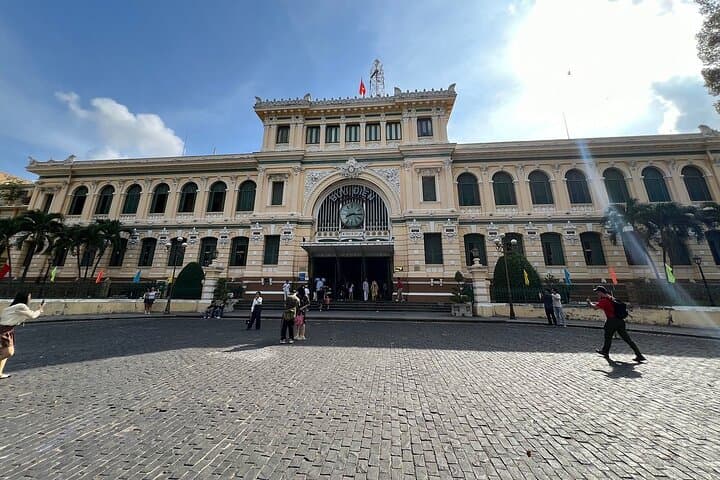
You step from a District 1 lobby into a humid Saigon morning; the city’s motorcycles swirl like a current while a guide opens a door into the past. The day flows from shaded colonial boulevards—red-brick cathedral, vaulted post office—to the heavy quiet of the Cu Chi countryside, where you crouch into a network of tunnels that once sheltered fighters and civilians.
Verified experiences and guided adventures in the surrounding area.
Operated by Authenitc Travel DA NANG · Ho Chi Minh City, Ho Chi Minh
You step from a District 1 lobby into a humid Saigon morning; the city’s motorcycles swirl like a current while a guide opens a door into the past. The day flows from shaded colonial boulevards—red-brick cathedral, vaulted post office—to the heavy quiet of the Cu Chi countryside, where you crouch into a network of tunnels that once sheltered fighters and civilians.
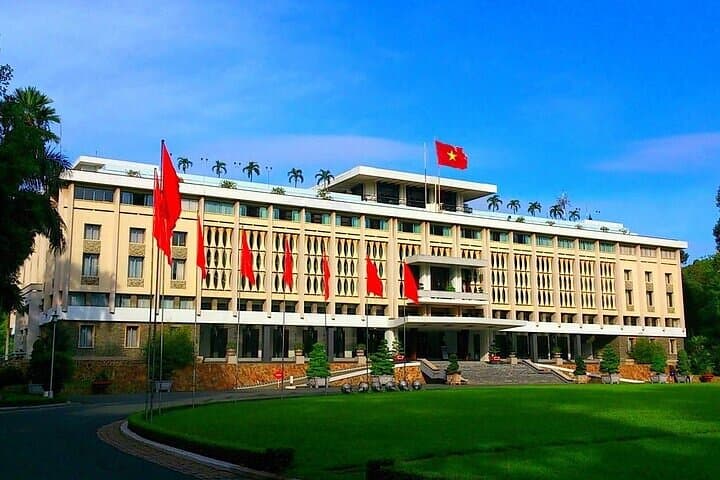
Ho Chi Minh City wears its history visibly: French 19th-century façades sit across from glass towers, while Independence Palace’s modernist lines recall a decisive moment in 1975. Geologically the region is a low-lying alluvial plain drained by tributaries of the Mekong; the soil here is soft and flat, which made tunnel excavation possible and urban expansion steady but flood-prone.
At Cu Chi you’ll encounter engineered small chambers, camouflage wells and remnants of wartime ingenuity—traps, hidden kitchens, narrow galleries that pushed survival into spatial craft. Local culture threads through both sites: roadside coffee rituals in Saigon and the rural hospitality of village lunches near Cu Chi.
Practical guidance: the full itinerary is long—expect nine to ten hours including hotel transfers. Wear closed-toe shoes for uneven earth at Cu Chi, bring sun protection, and a small refillable water bottle. The tunnels can be tight; people with limited mobility or claustrophobia should opt for the exhibition areas instead. Aim for an early start to avoid midday heat and inspect museum explanations for context before entering the tunnel reconstructions. Respect memorial spaces, follow your guide, and leave artifacts undisturbed—these places ask for quiet attention as much as curiosity.
easy.
9–10 hours.
Light walking ability is sufficient; you should be able to walk on uneven ground and crouch briefly into short tunnel sections.
Older children who can crouch and follow safety instructions generally do well; very young children or those with claustrophobia should remain in surface exhibition areas.
No—walking distances are moderate, but you should be comfortable standing for museum tours and entering short narrow tunnel sections.
Lunch, mineral water, and hotel pick-up/drop-off in District 1 are included as part of the private tour package described.
Photography is generally allowed in outdoor and many museum spaces, but obey signage and staff instructions; some exhibits are sensitive and may prohibit flash.
Ho Chi Minh City’s center preserves French colonial architecture alongside post-1975 landmarks; Cu Chi’s tunnels are an extensive wartime network used for shelter, communication and supply.
Sites encourage staying on marked paths and not touching fragile exhibits; limit single-use plastics and follow guide instructions to reduce wear on cultural resources.
Authenitc Travel DA NANG operates guided outdoor trips and adventures with an emphasis on safety, stewardship, and memorable experiences.

You step from a District 1 lobby into a humid Saigon morning; the city’s motorcycles swirl like a current while a guide opens a door into the past. The day flows from shaded colonial boulevards—red-brick cathedral, vaulted post office—to the heavy quiet of the Cu Chi countryside, where you crouch into a network of tunnels that once sheltered fighters and civilians.
You step from a District 1 lobby into a humid Saigon morning; the city’s motorcycles swirl like a current while a guide opens a door into the past. The day flows from shaded colonial boulevards—red-brick cathedral, vaulted post office—to the heavy quiet of the Cu Chi countryside, where you crouch into a network of tunnels that once sheltered fighters and civilians.
Ho Chi Minh City wears its history visibly: French 19th-century façades sit across from glass towers, while Independence Palace’s modernist lines recall a decisive moment in 1975. Geologically the region is a low-lying alluvial plain drained by tributaries of the Mekong; the soil here is soft and flat, which made tunnel excavation possible and urban expansion steady but flood-prone.
At Cu Chi you’ll encounter engineered small chambers, camouflage wells and remnants of wartime ingenuity—traps, hidden kitchens, narrow galleries that pushed survival into spatial craft. Local culture threads through both sites: roadside coffee rituals in Saigon and the rural hospitality of village lunches near Cu Chi.
Practical guidance: the full itinerary is long—expect nine to ten hours including hotel transfers. Wear closed-toe shoes for uneven earth at Cu Chi, bring sun protection, and a small refillable water bottle. The tunnels can be tight; people with limited mobility or claustrophobia should opt for the exhibition areas instead. Aim for an early start to avoid midday heat and inspect museum explanations for context before entering the tunnel reconstructions. Respect memorial spaces, follow your guide, and leave artifacts undisturbed—these places ask for quiet attention as much as curiosity.