THE ADVENTURE COLLECTIVE® · Independent discovery and booking for outdoor travel

Cross the Atlas, trace the Drâa valley and spend nights under Saharan stars on this 7–8 day trek from Marrakech. Expect long sand marches, stone hamadas, Berber bivouacs, and intimate cultural encounters.
Cross the Atlas, trace the Drâa valley and spend nights under Saharan stars on this 7–8 day trek from Marrakech. Expect long sand marches, stone hamadas, Berber bivouacs, and intimate cultural encounters.
At dawn the Atlas foothills drop away and the road opens onto the Drâa valley — a green ribbon in a raw landscape — then the dunes begin, rolling and alive under a wide sky. This multi‑day trek moves from Marrakech across Tizi-n-Tichka, through volcanic hamada and tamarisk plains, into the classic Saharan sands around M’Hamid, with nights in mobile berber bivouacs and a rhythm set by walking and camp life.
Verified experiences and guided adventures in the surrounding area.
Operated by Sunny Morocco · Marrakech, Marrakech-Safi
At dawn the Atlas foothills drop away and the road opens onto the Drâa valley — a green ribbon in a raw landscape — then the dunes begin, rolling and alive under a wide sky. This multi‑day trek moves from Marrakech across Tizi-n-Tichka, through volcanic hamada and tamarisk plains, into the classic Saharan sands around M’Hamid, with nights in mobile berber bivouacs and a rhythm set by walking and camp life.
The route follows ancient caravan corridors that linked sub-Saharan trade routes with Moroccan ksour and kasbahs; you’ll cross stone plateaus (reg), black volcanic fields, and shifting dune bodies. Geologically the region alternates between compacted gravel hamada and mobile aeolian dunes; in places wind has carved rippled ridgelines that demand deliberate footwork. Culturally, expect interactions with Berber camel teams, simple shared meals, and tent camps that harken to traditional nomadic hospitality.
Practical guidance: plan for long walking days on sand (4–7 hours typical), carry 2–3 liters of water and salt snacks, and protect skin from sun and wind. Nights drop sharply in temperature; a warm insulating layer and a good sleeping bag are essential. Terrain varies from hard-packed tracks to soft dunes — gaiters and trekking poles make sand climbs easier. Timing matters: spring and fall offer comfortable daytime temps; summer brings intense heat and winter can bring surprising cold nights. Move at a steady pace, use sunscreen liberally, and follow guides’ route choices to avoid delicate desert vegetation and archaeological sites.
challenging.
7–8 days.
Suitable for travelers with regular aerobic fitness able to walk 4–7 hours on variable terrain for consecutive days.
Daily walking varies but typically ranges 4–7 hours over dunes and stony plains; expect long, steady effort rather than technical scrambling.
Yes — nights are in desert bivouacs (mobile tent camps) with basic facilities; some programs offer a shower stop in M’Hamid mid‑journey.
The trek is guided by local teams; solo travelers are welcome but should disclose experience and any health concerns during booking.
Spring and fall provide the most comfortable daytime temperatures; summer is very hot and winter brings cold nights and occasional wind.
The trek follows parts of historical trans-Saharan caravan routes and passes villages that grew around kasbahs protecting agricultural stretches of the Drâa valley.
Stick to established tracks, avoid collecting plant material, and use biodegradable soaps; water is scarce and local teams manage supplies to minimize impact.
Sunny Morocco operates guided outdoor trips and adventures with an emphasis on safety, stewardship, and memorable experiences.
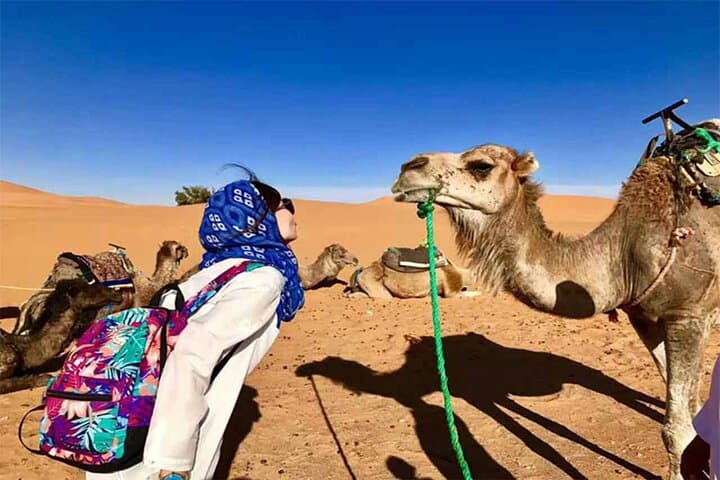
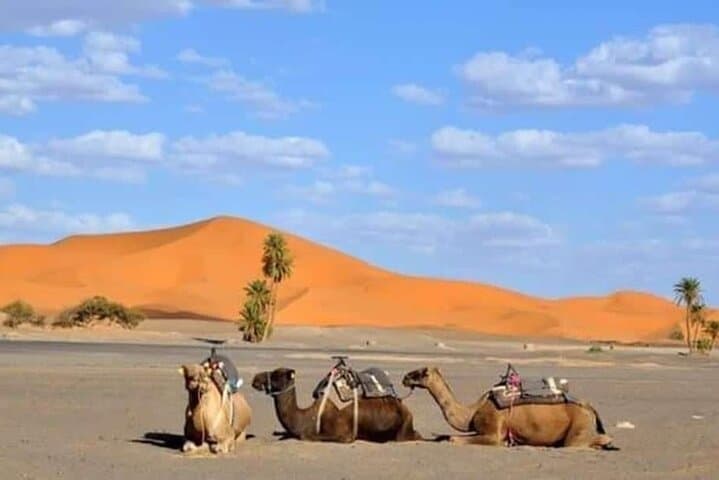
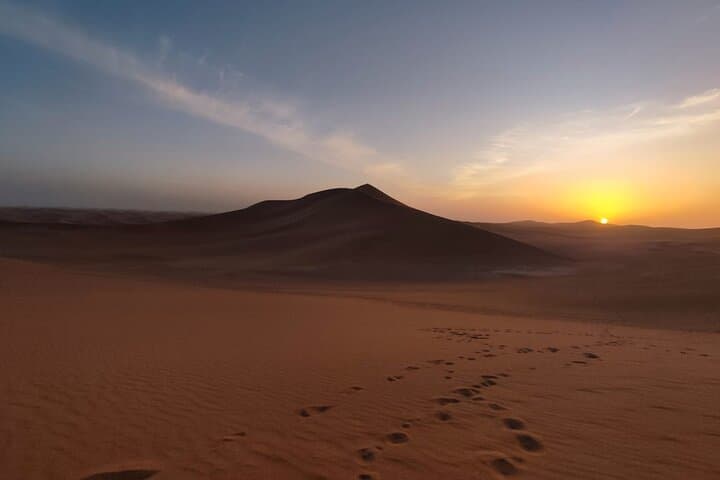
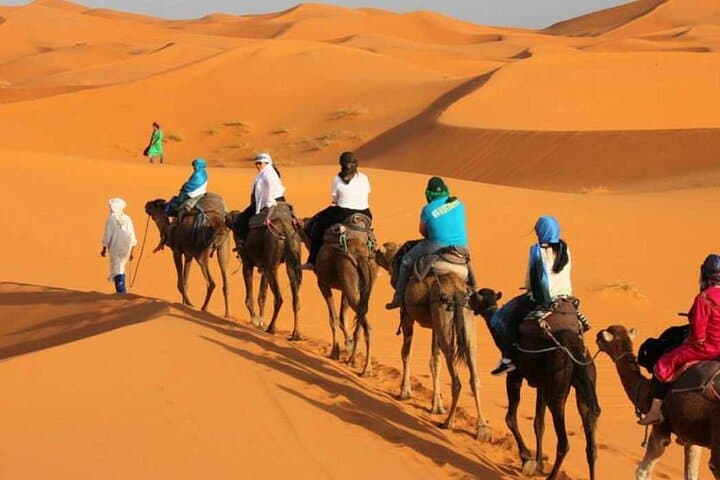
At dawn the Atlas foothills drop away and the road opens onto the Drâa valley — a green ribbon in a raw landscape — then the dunes begin, rolling and alive under a wide sky. This multi‑day trek moves from Marrakech across Tizi-n-Tichka, through volcanic hamada and tamarisk plains, into the classic Saharan sands around M’Hamid, with nights in mobile berber bivouacs and a rhythm set by walking and camp life.
At dawn the Atlas foothills drop away and the road opens onto the Drâa valley — a green ribbon in a raw landscape — then the dunes begin, rolling and alive under a wide sky. This multi‑day trek moves from Marrakech across Tizi-n-Tichka, through volcanic hamada and tamarisk plains, into the classic Saharan sands around M’Hamid, with nights in mobile berber bivouacs and a rhythm set by walking and camp life.
The route follows ancient caravan corridors that linked sub-Saharan trade routes with Moroccan ksour and kasbahs; you’ll cross stone plateaus (reg), black volcanic fields, and shifting dune bodies. Geologically the region alternates between compacted gravel hamada and mobile aeolian dunes; in places wind has carved rippled ridgelines that demand deliberate footwork. Culturally, expect interactions with Berber camel teams, simple shared meals, and tent camps that harken to traditional nomadic hospitality.
Practical guidance: plan for long walking days on sand (4–7 hours typical), carry 2–3 liters of water and salt snacks, and protect skin from sun and wind. Nights drop sharply in temperature; a warm insulating layer and a good sleeping bag are essential. Terrain varies from hard-packed tracks to soft dunes — gaiters and trekking poles make sand climbs easier. Timing matters: spring and fall offer comfortable daytime temps; summer brings intense heat and winter can bring surprising cold nights. Move at a steady pace, use sunscreen liberally, and follow guides’ route choices to avoid delicate desert vegetation and archaeological sites.