THE ADVENTURE COLLECTIVE® · Independent discovery and booking for outdoor travel

Spend two days crossing salt flats, riding dromedaries at sunrise and sleeping in a luxury tent camp near Douz. This short itinerary pairs dramatic Sahara scenery with guided cultural stops in Kairouan, Matmata and El Jem.
Spend two days crossing salt flats, riding dromedaries at sunrise and sleeping in a luxury tent camp near Douz. This short itinerary pairs dramatic Sahara scenery with guided cultural stops in Kairouan, Matmata and El Jem.
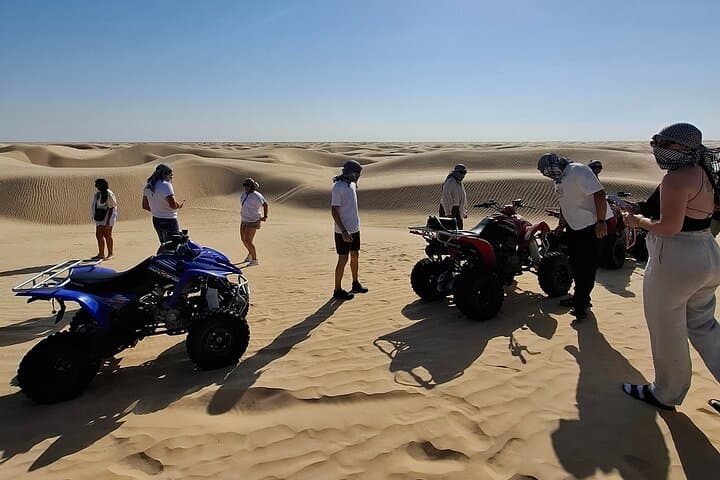
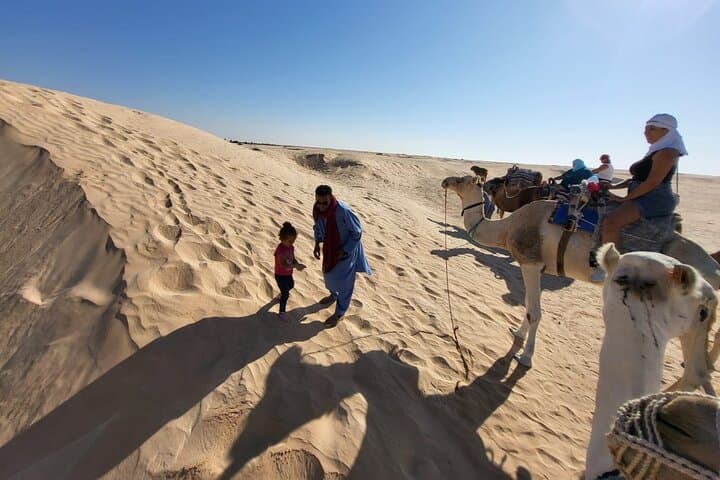
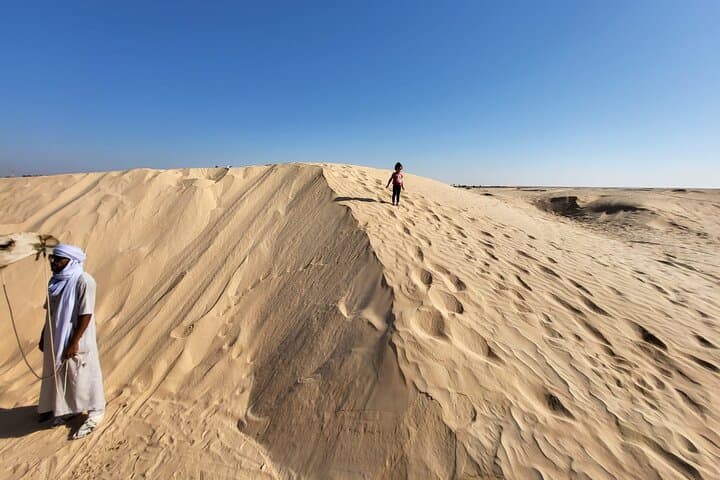
The last light spills across rippled dunes as your vehicle slows and a lone dromedary steps into the thinning gold—this is the moment the Sahara announces itself. Wind shapes the sand into quicksilver ridges; a hush falls and the camp lanterns begin to puncture the dark. You arrive at a luxury Saharian tent camp near Douz, trade the city for a night under a broad sky, and feel the desert push you toward a simpler rhythm.
Verified experiences and guided adventures in the surrounding area.
Operated by Tunisia Guided Tours · Douz, Kebili Governorate
The last light spills across rippled dunes as your vehicle slows and a lone dromedary steps into the thinning gold—this is the moment the Sahara announces itself. Wind shapes the sand into quicksilver ridges; a hush falls and the camp lanterns begin to puncture the dark. You arrive at a luxury Saharian tent camp near Douz, trade the city for a night under a broad sky, and feel the desert push you toward a simpler rhythm.
Southern Tunisia stitches together Roman ruins, salt flats and Berber life: El Jem’s amphitheater speaks to imperial ambition, Chott el Jerid plays optical tricks with mirages across its salt crust, and the troglodyte homes at Matmata reveal human adaptation to arid geology. The dunes around Douz are young, wind-sculpted sand riding over older sedimentary beds; Bedouin guides and camel caravans tie present-day travel to centuries of desert routes.
Expect two concentrated days of driving, short guided walks, a sunset dromedary ride and an overnight in a heated luxury tent with traditional Saharian food and folklore around the fire. Mornings bring a low, cold light and a chance for a sunrise camel ride; afternoons can be thermally active, so plan gear accordingly.
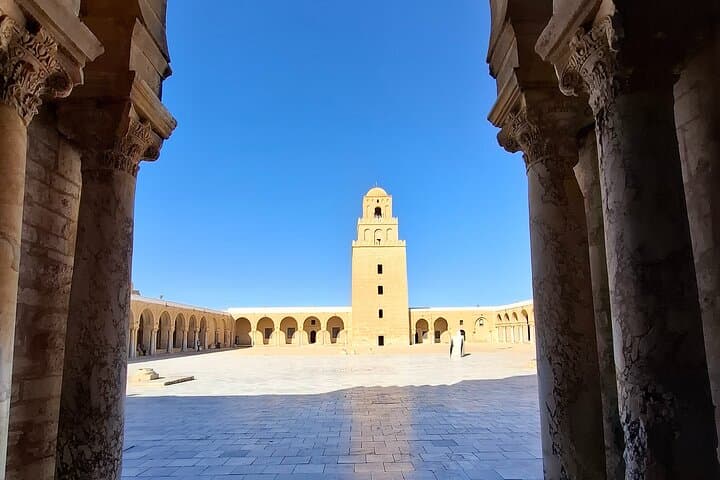
Practical: carry at least 2 liters of water per person, layered clothing for big diurnal swings, a brimmed hat and sturdy closed shoes for walking the gravel tracks. Phone signal is sporadic—download directions and confirmations before you go. Respect private spaces in Matmata and the mosque in Kairouan; ask before photographing people. With modest planning, this compact itinerary delivers a concentrated, accessible taste of Sahara landscapes and culture.
easy.
2 days.
Suitable for travelers in average fitness: involves short walks, mounting a dromedary and getting on/off vehicles.
This is an easy, vehicle-supported tour with short guided walks and camel/dromedary rides; no technical skills are required.
Tents are described as luxury Saharian tents—comfortable cots or beds, dining facilities and sometimes heating depending on season and operator.
Expect limited cell service outside major towns; camps may offer basic power (solar or generator) but don’t rely on continuous charging access.
Breakfast and dinner in the itinerary are included; specific museum or mosque admission is noted where applicable—ask operator for details before booking.
The route links Roman Tunisia (El Jem), early Islamic heritage (Kairouan) and indigenous Berber settlements like Matmata, reflecting layers of Mediterranean and Saharan history.
The Sahara is fragile: stay on vehicle tracks, minimize campfire impact, and follow guide instructions to avoid disturbing flora and wildlife.
Tunisia Guided Tours operates guided outdoor trips and adventures with an emphasis on safety, stewardship, and memorable experiences.
The last light spills across rippled dunes as your vehicle slows and a lone dromedary steps into the thinning gold—this is the moment the Sahara announces itself. Wind shapes the sand into quicksilver ridges; a hush falls and the camp lanterns begin to puncture the dark. You arrive at a luxury Saharian tent camp near Douz, trade the city for a night under a broad sky, and feel the desert push you toward a simpler rhythm.
The last light spills across rippled dunes as your vehicle slows and a lone dromedary steps into the thinning gold—this is the moment the Sahara announces itself. Wind shapes the sand into quicksilver ridges; a hush falls and the camp lanterns begin to puncture the dark. You arrive at a luxury Saharian tent camp near Douz, trade the city for a night under a broad sky, and feel the desert push you toward a simpler rhythm.
Southern Tunisia stitches together Roman ruins, salt flats and Berber life: El Jem’s amphitheater speaks to imperial ambition, Chott el Jerid plays optical tricks with mirages across its salt crust, and the troglodyte homes at Matmata reveal human adaptation to arid geology. The dunes around Douz are young, wind-sculpted sand riding over older sedimentary beds; Bedouin guides and camel caravans tie present-day travel to centuries of desert routes.
Expect two concentrated days of driving, short guided walks, a sunset dromedary ride and an overnight in a heated luxury tent with traditional Saharian food and folklore around the fire. Mornings bring a low, cold light and a chance for a sunrise camel ride; afternoons can be thermally active, so plan gear accordingly.
Practical: carry at least 2 liters of water per person, layered clothing for big diurnal swings, a brimmed hat and sturdy closed shoes for walking the gravel tracks. Phone signal is sporadic—download directions and confirmations before you go. Respect private spaces in Matmata and the mosque in Kairouan; ask before photographing people. With modest planning, this compact itinerary delivers a concentrated, accessible taste of Sahara landscapes and culture.