THE ADVENTURE COLLECTIVE® · Independent discovery and booking for outdoor travel

Travel from Fez across cedar forests and river valleys to Erg Chebbi’s rolling dunes on a curated 3-day route that pairs luxury desert camping with visits to Todra Gorges and Ait Ben Haddou. Expect long drives, an evening camel transfer, and private tented accommodation under open sky.
Travel from Fez across cedar forests and river valleys to Erg Chebbi’s rolling dunes on a curated 3-day route that pairs luxury desert camping with visits to Todra Gorges and Ait Ben Haddou. Expect long drives, an evening camel transfer, and private tented accommodation under open sky.
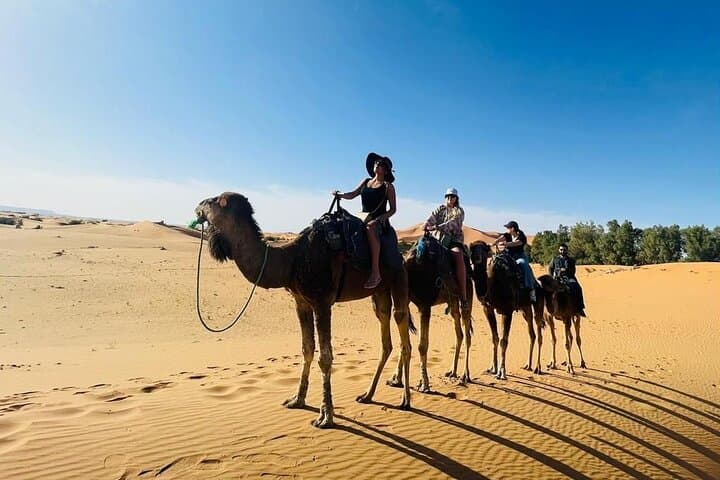
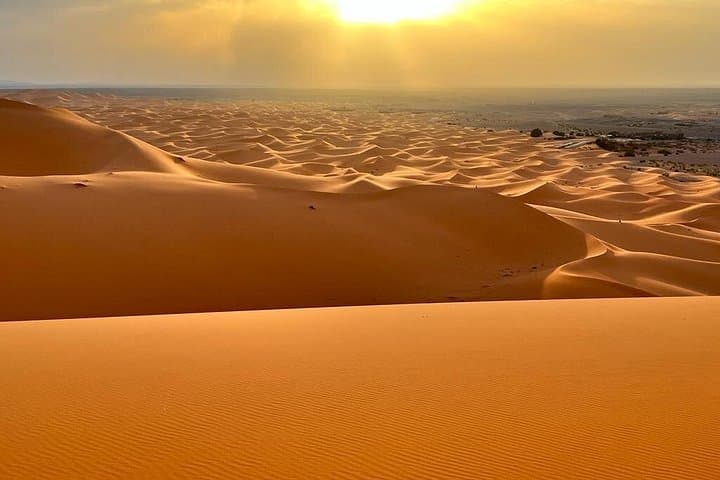
On the road out of Fez the atlas foothills appear like a changing script—cedar forests give way to carved gorges and, finally, the gold of Erg Chebbi rolling into the horizon. Travelers move from cool mountain air through palm oases to a desert that seems to breathe; camels file across the skyline while sand collects in the creases of your gear. Sunset here doesn’t just color the sand, it alters distance and sound, narrowing the world to the warm circle around the campfire.
Verified experiences and guided adventures in the surrounding area.
Operated by Samitrip · Merzouga, Drâa-Tafilalet
On the road out of Fez the atlas foothills appear like a changing script—cedar forests give way to carved gorges and, finally, the gold of Erg Chebbi rolling into the horizon. Travelers move from cool mountain air through palm oases to a desert that seems to breathe; camels file across the skyline while sand collects in the creases of your gear. Sunset here doesn’t just color the sand, it alters distance and sound, narrowing the world to the warm circle around the campfire.
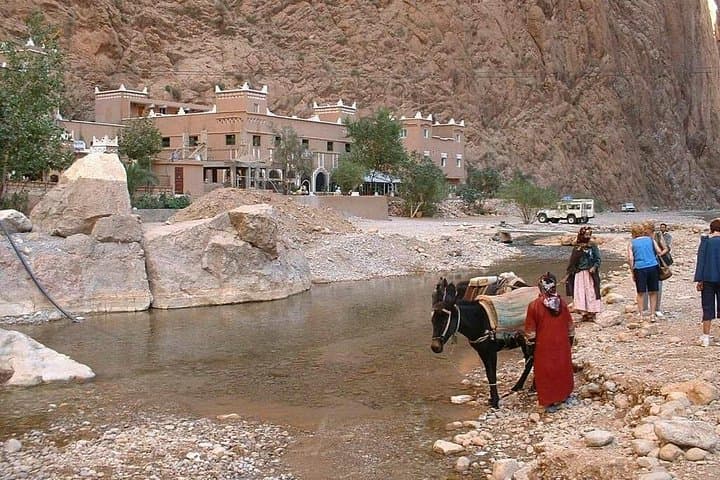
The route follows ancient caravan corridors where kasbahs once protected salt and spice caravans; Ait Ben Haddou stands as the best-preserved mud-brick example and a UNESCO marker of the region’s cinematic and trading history. Geologically the High Atlas is young rock thrust up by tectonic pressure, shedding sediments that created the Saharan basins; the erg dunes are wind-built, mobile landscapes that demand respect. Local Berber culture shapes the experience: music, mint tea rituals, and tent hospitality reflect centuries of desert adaptation.
Practically, expect long drives between sights (Fez to Merzouga is a full day), paved roads giving way to sandy tracks, and a camel transfer to a luxury tented camp with private bathroom options. Bring layered clothing for cool nights and mid-day sun protection; hydrate frequently and plan photography around sunrise and sunset when dunes sculpt the best light. Guides handle logistics and local etiquette—tip for listening at the camp, and leave no trace on fragile dune surfaces.
moderate.
3 days (approx. 12–14 hours driving total).
Suitable for travelers in average fitness; must be able to mount a camel and walk short, uneven sandy or rocky stretches.
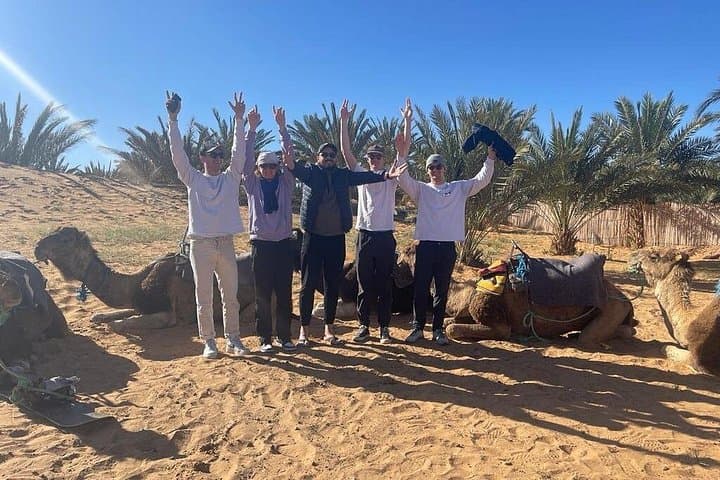
Yes—an included camel transfer typically lasts about 45–60 minutes from the kasbah to the desert camp, timed to reach the dunes for sunset.
This luxury option offers private tents, some with attached bathrooms and running water, plus communal dining and solar or generator-powered lighting.
Expect several multi-hour driving stretches; stops break the route into manageable segments but bring motion-sickness remedies if needed.
Standard travel insurance that covers medical evacuation is recommended; no special vaccinations are universally required beyond routine immunizations—check local health guidance before travel.
The route traces former trans-Saharan caravan roads; mud-brick kasbahs like Ait Ben Haddou protected trade routes and became cultural hubs and film locations.
Water scarcity and fragile dune ecosystems make low-impact travel important—use provided sanitation, avoid disturbing vegetation, and support camps using local employment and water-conserving practices.
Samitrip operates guided outdoor trips and adventures with an emphasis on safety, stewardship, and memorable experiences.
On the road out of Fez the atlas foothills appear like a changing script—cedar forests give way to carved gorges and, finally, the gold of Erg Chebbi rolling into the horizon. Travelers move from cool mountain air through palm oases to a desert that seems to breathe; camels file across the skyline while sand collects in the creases of your gear. Sunset here doesn’t just color the sand, it alters distance and sound, narrowing the world to the warm circle around the campfire.
On the road out of Fez the atlas foothills appear like a changing script—cedar forests give way to carved gorges and, finally, the gold of Erg Chebbi rolling into the horizon. Travelers move from cool mountain air through palm oases to a desert that seems to breathe; camels file across the skyline while sand collects in the creases of your gear. Sunset here doesn’t just color the sand, it alters distance and sound, narrowing the world to the warm circle around the campfire.
The route follows ancient caravan corridors where kasbahs once protected salt and spice caravans; Ait Ben Haddou stands as the best-preserved mud-brick example and a UNESCO marker of the region’s cinematic and trading history. Geologically the High Atlas is young rock thrust up by tectonic pressure, shedding sediments that created the Saharan basins; the erg dunes are wind-built, mobile landscapes that demand respect. Local Berber culture shapes the experience: music, mint tea rituals, and tent hospitality reflect centuries of desert adaptation.
Practically, expect long drives between sights (Fez to Merzouga is a full day), paved roads giving way to sandy tracks, and a camel transfer to a luxury tented camp with private bathroom options. Bring layered clothing for cool nights and mid-day sun protection; hydrate frequently and plan photography around sunrise and sunset when dunes sculpt the best light. Guides handle logistics and local etiquette—tip for listening at the camp, and leave no trace on fragile dune surfaces.