THE ADVENTURE COLLECTIVE® · Independent discovery and booking for outdoor travel

Ride camelback into the towering Erg Chebbi dunes, spend a night in a private luxury nomad tent with traditional Berber music and a campfire dinner, and return at sunrise for unforgettable light on sand. Practical, comfortable and suitable for most travelers.
Ride camelback into the towering Erg Chebbi dunes, spend a night in a private luxury nomad tent with traditional Berber music and a campfire dinner, and return at sunrise for unforgettable light on sand. Practical, comfortable and suitable for most travelers.
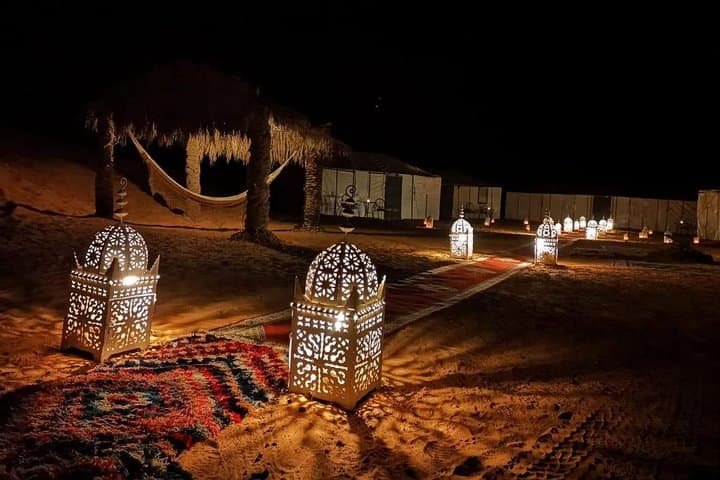
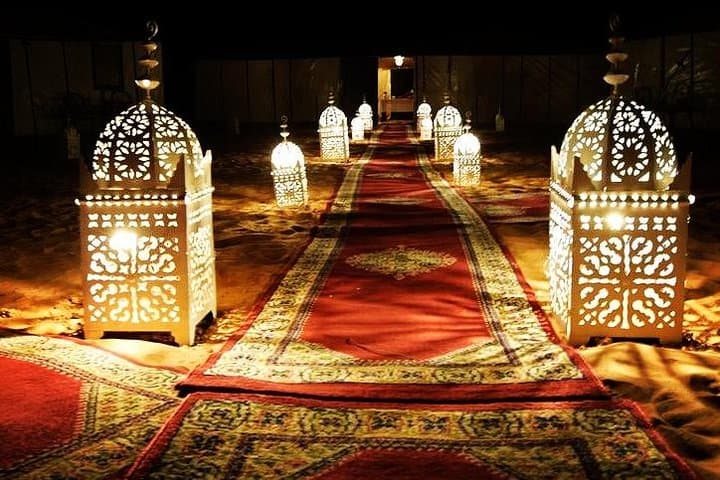
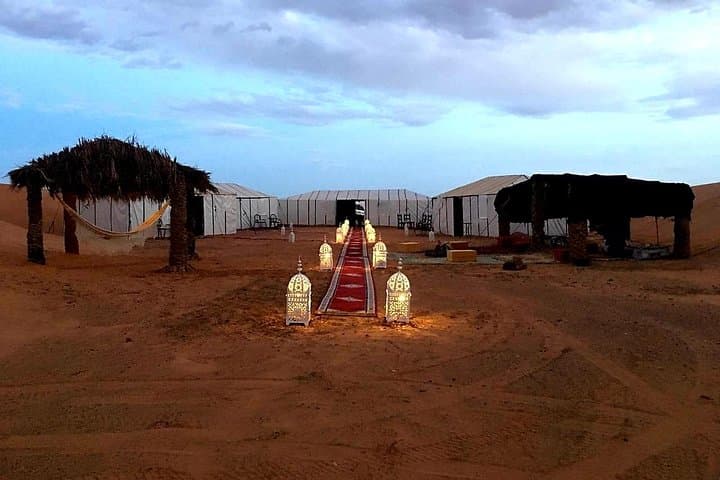
Sand folds like slow moving hills; the camel’s gait becomes the day’s metronome as the sun dips over Erg Chebbi. Travelers meet in Merzouga at dusk, mount gentle dromedaries and follow a narrow ribbon of tracks into the high dunes for a 1 hour 15 minute trek that ends in a private luxury tented camp.
Verified experiences and guided adventures in the surrounding area.
Operated by Merzouga Desert · Merzouga, Drâa-Tafilalet
Sand folds like slow moving hills; the camel’s gait becomes the day’s metronome as the sun dips over Erg Chebbi. Travelers meet in Merzouga at dusk, mount gentle dromedaries and follow a narrow ribbon of tracks into the high dunes for a 1 hour 15 minute trek that ends in a private luxury tented camp.
The landscape is geologically young—wind-sculpted quartz and silica sands driven by the Harmattan and Atlas-born winds—and the area sits along historic caravan routes that once moved salt and spices between sub-Saharan Africa and Mediterranean markets. Local Berber culture remains present in music and food: expect a communal dinner, darbuka and tbel drum rhythms, and early-morning calls to photograph the pale light sliding across the ripples.
Practicalities are straightforward. The ride is suitable for most fitness levels but requires basic mobility to mount and dismount; the camp provides dinner, breakfast and a private tent. Nights in the Sahara are cold compared with daytime, and clear skies make for excellent stargazing—plan clothing and batteries accordingly.
Plan for dust, strong sun, and limited power. Hydrate well before the ride, bring layered clothing for temperature swings, and secure electronics against blowing sand. Timing a trek to catch both sunset from a dune ridge and sunrise the next morning rewards photographers and early risers. For a comfortable stay, follow local guidance on footwear, respect the camp’s etiquette around fires and music, and leave no trace on fragile dune surfaces.
easy.
24 hours (overnight).
Suitable for travelers with basic mobility; mounting a camel and 1–2 hours of standing/walking at dunes recommended
The organized camel ride is about 1 hour 15 minutes each way: out to the camp at dusk and back after sunrise.
Dinner, private luxury (nomad-style) tent, breakfast, camel trekking and an evening with traditional Berber music are included.
The activity is marketed as suitable for most fitness levels, but it is not recommended for travelers with spinal injuries or pregnant guests; check with the operator if concerned.
Merzouga is typically reached by car or organized transfer from Errachidia or Rissani; public transport options exist but transfers are the simplest way to align with the evening departure.
Merzouga sits on routes historically used by trans-Saharan caravans; local Berber communities have long held cultural traditions showcased at camps.
The dunes are ecologically fragile—avoid trampling vegetated interdunes, minimize campfire impact, and follow leave-no-trace practices to protect scarce desert resources.
Merzouga Desert operates guided outdoor trips and adventures with an emphasis on safety, stewardship, and memorable experiences.
Sand folds like slow moving hills; the camel’s gait becomes the day’s metronome as the sun dips over Erg Chebbi. Travelers meet in Merzouga at dusk, mount gentle dromedaries and follow a narrow ribbon of tracks into the high dunes for a 1 hour 15 minute trek that ends in a private luxury tented camp.
Sand folds like slow moving hills; the camel’s gait becomes the day’s metronome as the sun dips over Erg Chebbi. Travelers meet in Merzouga at dusk, mount gentle dromedaries and follow a narrow ribbon of tracks into the high dunes for a 1 hour 15 minute trek that ends in a private luxury tented camp.
The landscape is geologically young—wind-sculpted quartz and silica sands driven by the Harmattan and Atlas-born winds—and the area sits along historic caravan routes that once moved salt and spices between sub-Saharan Africa and Mediterranean markets. Local Berber culture remains present in music and food: expect a communal dinner, darbuka and tbel drum rhythms, and early-morning calls to photograph the pale light sliding across the ripples.
Practicalities are straightforward. The ride is suitable for most fitness levels but requires basic mobility to mount and dismount; the camp provides dinner, breakfast and a private tent. Nights in the Sahara are cold compared with daytime, and clear skies make for excellent stargazing—plan clothing and batteries accordingly.
Plan for dust, strong sun, and limited power. Hydrate well before the ride, bring layered clothing for temperature swings, and secure electronics against blowing sand. Timing a trek to catch both sunset from a dune ridge and sunrise the next morning rewards photographers and early risers. For a comfortable stay, follow local guidance on footwear, respect the camp’s etiquette around fires and music, and leave no trace on fragile dune surfaces.