THE ADVENTURE COLLECTIVE® · Independent discovery and booking for outdoor travel

A week-long camel trek from the highlands to the deep Sahara, moving from Ouarzazate/M'Hamid through sweeping ergs. Sleep in bivouacs, ride between dunes, and learn local desert survival from Berber guides.
A week-long camel trek from the highlands to the deep Sahara, moving from Ouarzazate/M'Hamid through sweeping ergs. Sleep in bivouacs, ride between dunes, and learn local desert survival from Berber guides.
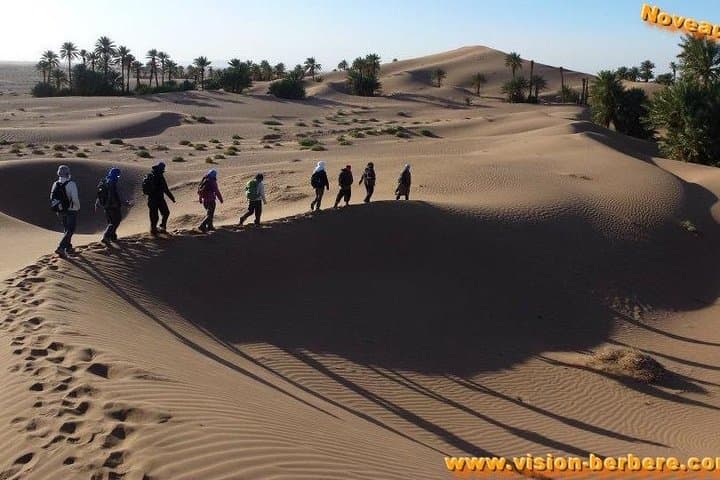
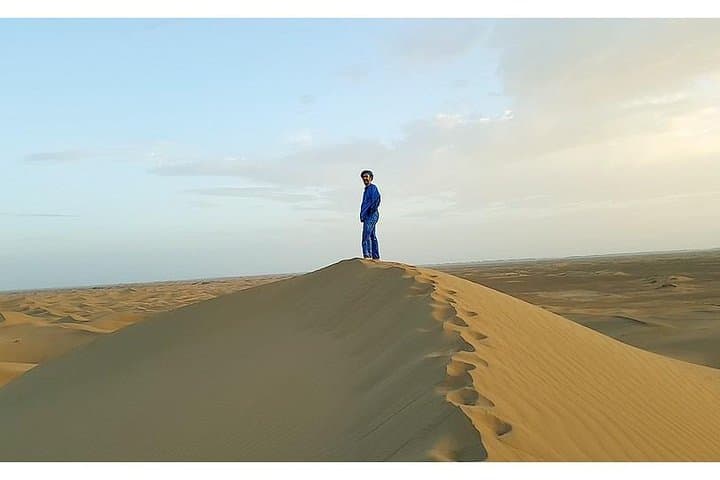
Sand shifts like a living map under slow, patient hooves. At dawn the dunes catch light in sharp ridges; by night the sky lays itself open and relentless, a scatter of stars that seems to move as you do. This seven-day camel trek moves from the outskirts of Ouarzazate into the greater Sahara around M'Hamid, trading paved roads for tracks, and cities for camps where the fire and the cook set the evening’s rhythm.
Verified experiences and guided adventures in the surrounding area.
Operated by Vision Berbere · M'Hamid El Ghizlane, Drâa-Tafilalet
Sand shifts like a living map under slow, patient hooves. At dawn the dunes catch light in sharp ridges; by night the sky lays itself open and relentless, a scatter of stars that seems to move as you do. This seven-day camel trek moves from the outskirts of Ouarzazate into the greater Sahara around M'Hamid, trading paved roads for tracks, and cities for camps where the fire and the cook set the evening’s rhythm.
The route follows ancient caravan lines carved by trade and nomadic life—eras of salt and date commerce left behind kasbahs and palm oases. Geologically these are wind‑formed ergs: broad seas of sand with dune heights that vary each season. Local culture centers on Saharan hospitality; Berber guides and camel handlers share stories over mint tea and keep the practical knowledge that makes desert travel possible.
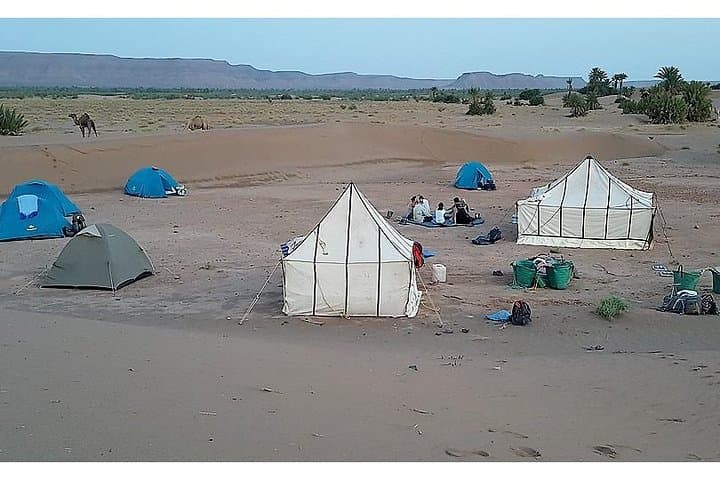
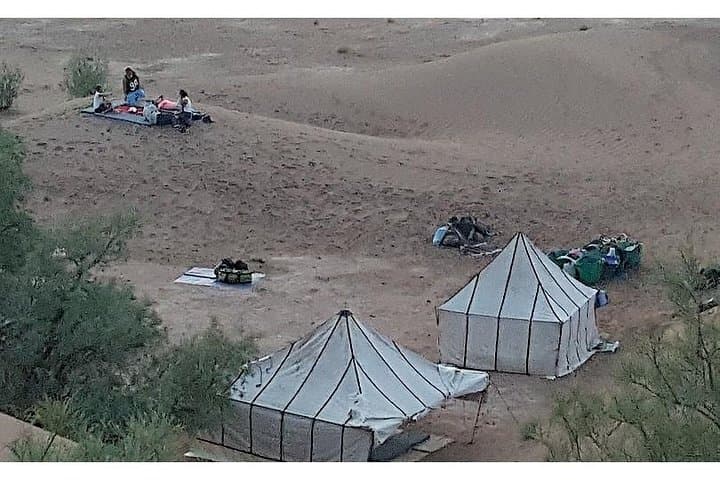
Expect 1.5–4.5 hours of walking or riding between camps most days, sleeping in tents or under the open sky, and meals prepared by a cook. Temperatures swing dramatically; the desert forces you to plan around heat and to move early and late. Bring layered clothing, sun protection, and at least 3–4 liters of water per day. Footwear should be sturdy and sand‑friendly; practice short camel rides if you’re nervous about mounting. Respect local customs—ask before photographing people—and follow Leave No Trace: the dunes recover slowly.
This trek is as much about patience as it is about scenery: the desert tests pace and gear, rewards quiet, and hands you an old landscape that still changes under your boots.
moderate.
7–8 days.
Suitable for travelers with moderate fitness—able to walk 4–6 miles several times during the trip and manage basic camping routines.
No—guides and handlers give basic instruction and camels are accustomed to trekkers; short practice rides help first-timers acclimate.
Meals listed include breakfasts, lunches, and dinners prepared by the cook; nights are in tents/bivouacs with some hotel nights at start/end depending on itinerary.
Facilities are basic in the desert: expect pit or bucket toilets at camps and limited shower options until hotel nights at Ouarzazate or Marrakech.
Itineraries typically include transfers from Ouarzazate airport; confirm pickup point at booking—Marrakech transfers may be arranged but add travel time.
This region sat on trans-Saharan trade routes; kasbahs and caravans once moved salt and dates through these passes, shaping local Berber culture.
Dune ecosystems are fragile—stick to designated paths where possible, pack out all trash, and minimize fire impact; water is scarce, so avoid wasteful use.
Vision Berbere operates guided outdoor trips and adventures with an emphasis on safety, stewardship, and memorable experiences.
Sand shifts like a living map under slow, patient hooves. At dawn the dunes catch light in sharp ridges; by night the sky lays itself open and relentless, a scatter of stars that seems to move as you do. This seven-day camel trek moves from the outskirts of Ouarzazate into the greater Sahara around M'Hamid, trading paved roads for tracks, and cities for camps where the fire and the cook set the evening’s rhythm.
Sand shifts like a living map under slow, patient hooves. At dawn the dunes catch light in sharp ridges; by night the sky lays itself open and relentless, a scatter of stars that seems to move as you do. This seven-day camel trek moves from the outskirts of Ouarzazate into the greater Sahara around M'Hamid, trading paved roads for tracks, and cities for camps where the fire and the cook set the evening’s rhythm.
The route follows ancient caravan lines carved by trade and nomadic life—eras of salt and date commerce left behind kasbahs and palm oases. Geologically these are wind‑formed ergs: broad seas of sand with dune heights that vary each season. Local culture centers on Saharan hospitality; Berber guides and camel handlers share stories over mint tea and keep the practical knowledge that makes desert travel possible.
Expect 1.5–4.5 hours of walking or riding between camps most days, sleeping in tents or under the open sky, and meals prepared by a cook. Temperatures swing dramatically; the desert forces you to plan around heat and to move early and late. Bring layered clothing, sun protection, and at least 3–4 liters of water per day. Footwear should be sturdy and sand‑friendly; practice short camel rides if you’re nervous about mounting. Respect local customs—ask before photographing people—and follow Leave No Trace: the dunes recover slowly.
This trek is as much about patience as it is about scenery: the desert tests pace and gear, rewards quiet, and hands you an old landscape that still changes under your boots.