THE ADVENTURE COLLECTIVE® · Independent discovery and booking for outdoor travel

Glide through Barcelona’s avenues on a two-hour Segway tour that ends at Gaudí’s towering La Sagrada Familia. Small groups, a short training session, and helmeted guides make this an efficient way to see the city’s architecture and parkland.
Glide through Barcelona’s avenues on a two-hour Segway tour that ends at Gaudí’s towering La Sagrada Familia. Small groups, a short training session, and helmeted guides make this an efficient way to see the city’s architecture and parkland.
You kick off on a Segway at a quiet plaza in the old town and immediately feel the city pull you forward: bike lanes hum beneath the board of the machine, avenues open like chapters, and the towers of La Sagrada Familia grow taller with every glide.
Verified experiences and guided adventures in the surrounding area.
Operated by Euro Segway Spain · Barcelona, Catalonia
You kick off on a Segway at a quiet plaza in the old town and immediately feel the city pull you forward: bike lanes hum beneath the board of the machine, avenues open like chapters, and the towers of La Sagrada Familia grow taller with every glide.
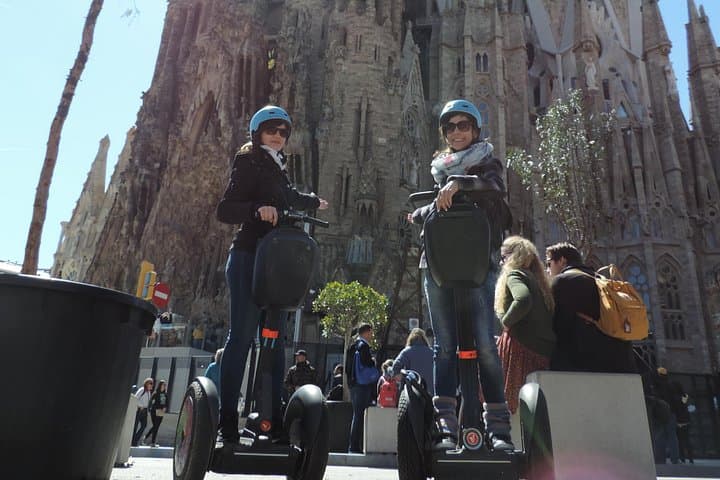
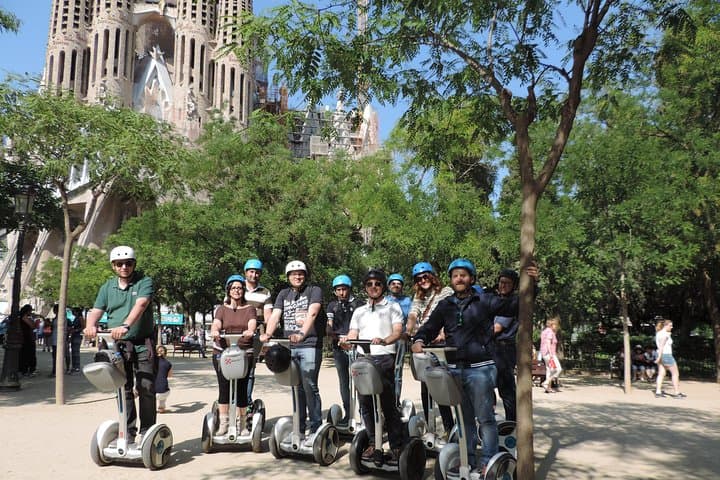
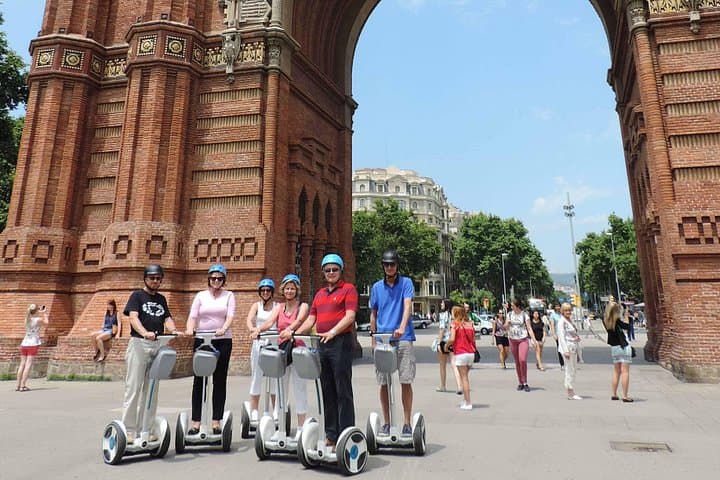
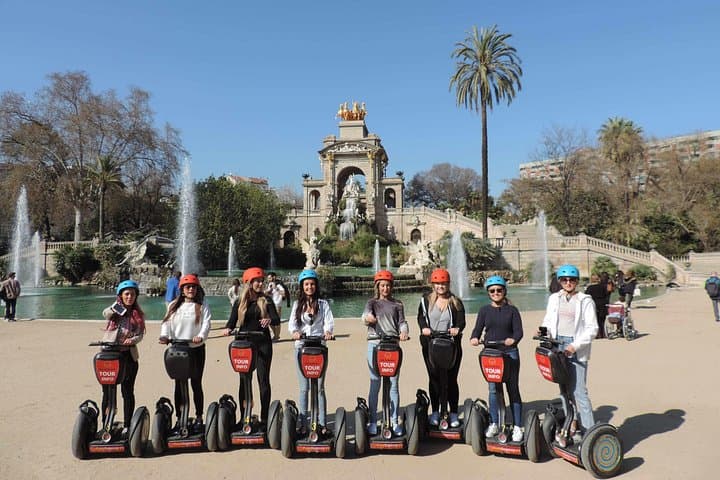
The route threads through the leafy Citadel Park — its fountain seeming to urge you onward — past the modernized old port and across the Arc de Triomf, before delivering you to Gaudí’s unfinished basilica. La Sagrada Familia, begun in 1882 and transformed by Antoni Gaudí’s organic vision, still rises in stages; its stonework is a study in geometry and light where scaffolding shares space with intricate facades.
Barcelona’s layout reflects layers of history: Roman foundations, medieval alleys in El Born, and the 19th-century Eixample grid that gives the city its wide avenues and modern bike paths. Culture here is kinetic — cafés spill onto sidewalks, street musicians punctuate plazas, and local guides explain how municipal rules shaped the network of lanes that make Segway travel practical.
Practical guidance: tours last about two hours, include helmet and a short training session, and are limited to small groups with enforced spacing. Riders must meet age and weight limits; electric bikes are provided for younger participants. Wear comfortable closed-toe shoes, bring a light jacket for coastal wind, and arrive 15 minutes early for briefing. Book in advance to secure a morning or late-afternoon slot for softer light and fewer pedestrians.
This is an efficient, low-impact way to sample Barcelona’s highlights—fast enough to cover ground, slow enough to notice the city’s details.
easy.
2 hours.
Suitable for most adults with basic balance; minimal cardiovascular strain.
Local rules set a minimum riding age of 16 and require riders to weigh between roughly 45 kg (100 lbs) and 117 kg (260 lbs); under-16s can use electric bikes on the same tour.
No—tours include a short training session so riders can feel confident before leaving the meeting point.
Yes—helmets are provided free and must be worn throughout the tour for safety and compliance with local rules.
Tours operate in light rain with raincoats provided; for severe weather the operator will offer an alternative date or full refund if canceled 24 hours in advance.
La Sagrada Familia began in 1882 and became Gaudí’s life work; construction continues today using private donations and modern techniques.
Electric Segways are low-emission transport, but riders should stick to designated bike lanes and avoid trampling green spaces to minimize impact.
Euro Segway Spain operates guided outdoor trips and adventures with an emphasis on safety, stewardship, and memorable experiences.
You kick off on a Segway at a quiet plaza in the old town and immediately feel the city pull you forward: bike lanes hum beneath the board of the machine, avenues open like chapters, and the towers of La Sagrada Familia grow taller with every glide.
You kick off on a Segway at a quiet plaza in the old town and immediately feel the city pull you forward: bike lanes hum beneath the board of the machine, avenues open like chapters, and the towers of La Sagrada Familia grow taller with every glide.
The route threads through the leafy Citadel Park — its fountain seeming to urge you onward — past the modernized old port and across the Arc de Triomf, before delivering you to Gaudí’s unfinished basilica. La Sagrada Familia, begun in 1882 and transformed by Antoni Gaudí’s organic vision, still rises in stages; its stonework is a study in geometry and light where scaffolding shares space with intricate facades.
Barcelona’s layout reflects layers of history: Roman foundations, medieval alleys in El Born, and the 19th-century Eixample grid that gives the city its wide avenues and modern bike paths. Culture here is kinetic — cafés spill onto sidewalks, street musicians punctuate plazas, and local guides explain how municipal rules shaped the network of lanes that make Segway travel practical.
Practical guidance: tours last about two hours, include helmet and a short training session, and are limited to small groups with enforced spacing. Riders must meet age and weight limits; electric bikes are provided for younger participants. Wear comfortable closed-toe shoes, bring a light jacket for coastal wind, and arrive 15 minutes early for briefing. Book in advance to secure a morning or late-afternoon slot for softer light and fewer pedestrians.
This is an efficient, low-impact way to sample Barcelona’s highlights—fast enough to cover ground, slow enough to notice the city’s details.