THE ADVENTURE COLLECTIVE® · Independent discovery and booking for outdoor travel

Explore Gaudí’s unfinished masterpiece with an official guide, then upgrade to a 2-hour sail for a seaside view of Barcelona’s skyline. Practical tips on timing, terrace access, and what to expect inside the basilica.
Explore Gaudí’s unfinished masterpiece with an official guide, then upgrade to a 2-hour sail for a seaside view of Barcelona’s skyline. Practical tips on timing, terrace access, and what to expect inside the basilica.
You step off the Eixample grid into a canyon of stone and light: Gaudí’s columns rise like an artificial forest, shafts of stained glass pour color across your path, and the basilica hums with a quiet momentum that seems to push you toward the apse.
Verified experiences and guided adventures in the surrounding area.
Operated by BarcelonaSail · Barcelona, Catalonia
You step off the Eixample grid into a canyon of stone and light: Gaudí’s columns rise like an artificial forest, shafts of stained glass pour color across your path, and the basilica hums with a quiet momentum that seems to push you toward the apse.
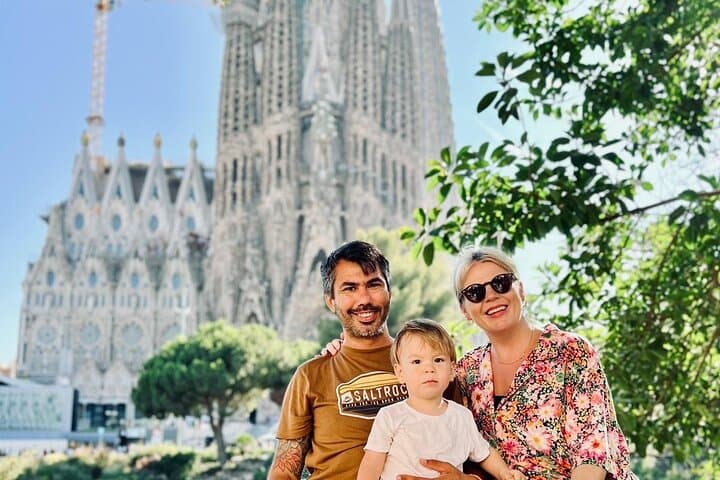
The Sagrada Familia began in 1882; Antoni Gaudí reshaped it into a hybrid of Gothic form and biomorphic engineering. Exterior façades read like slow-motion narratives in carved stone—biblical scenes rendered in porous Montjuïc stone, granite, and intricate tracery—while the interior’s branching columns and hyperbolic vaults mimic the geometry of trees and caves.
This is civic religion and Catalan craftsmanship: parts of Gaudí’s work are UNESCO-listed, and construction continues from funds generated by visitors and donations. Nearby, the city’s coastline offers a contrasting angle: optional two-hour sails depart from Passeig Joan de Borbó, giving the basilica and Barcelona’s skyline a seaside silhouette.
Practical guide: book a skip-the-line guided ticket and arrive early to avoid crowds; official guides explain symbolic programs and structural innovations. If you booked the terrace, expect narrow stairs—the provider notes six flights in some sections—so good mobility helps. The site is largely accessible but some elevated viewpoints are not wheelchair-friendly. Dress respectfully for an active house of worship and pack a small water bottle—the interior can feel warm when full.
Timing matters: pair the morning basilica visit with an afternoon sail for light that softens the stone, or reserve sunset for the sea to see the city’s profile flatten into gold.
easy.
1–2 hours (visit) + optional 2 hours (sailing).
Suitable for most fitness levels; terrace access requires moderate mobility due to stairs
The guided visit runs about 75 minutes; optional extras such as the terrace or sailing add time—plan for 1–3 hours total depending on upgrades.
Some elevated viewpoints require climbing multiple flights of stairs; the tour notes terrace access involves climbing six floors and may not be wheelchair-friendly.
Yes—sailing is offered as an optional extra; check the daily schedule before your visit since the order of activities may vary.
The basilica allows strollers and is stroller-accessible in main areas, but tight stairways to terraces and towers are unsuitable for young children and prams.
Construction began in 1882 and Gaudí took over in 1883, transforming the project with organic forms; building continues today funded largely by visitor tickets.
Ongoing construction and heavy visitation require careful preservation; follow site rules, avoid touching stonework, and support conservation through official channels.
BarcelonaSail operates guided outdoor trips and adventures with an emphasis on safety, stewardship, and memorable experiences.
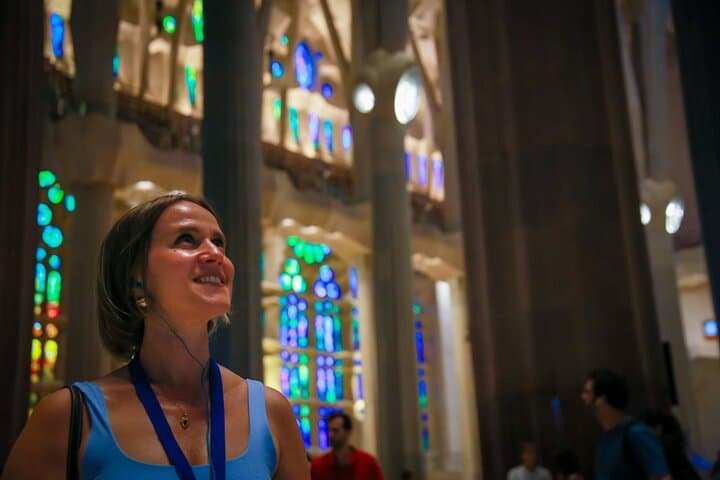

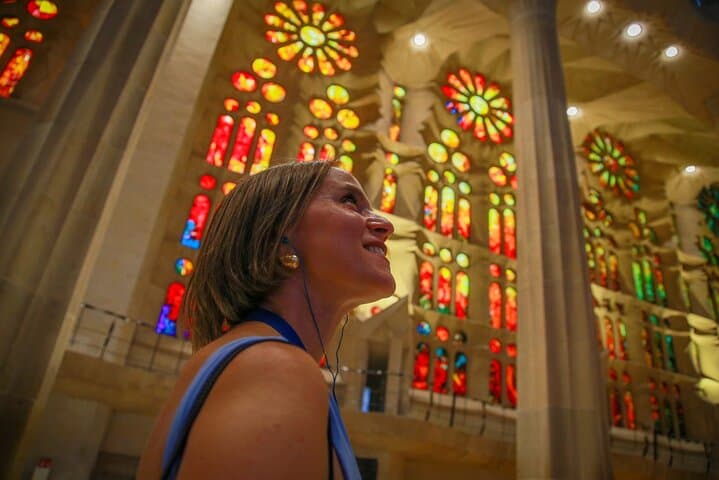
You step off the Eixample grid into a canyon of stone and light: Gaudí’s columns rise like an artificial forest, shafts of stained glass pour color across your path, and the basilica hums with a quiet momentum that seems to push you toward the apse.
You step off the Eixample grid into a canyon of stone and light: Gaudí’s columns rise like an artificial forest, shafts of stained glass pour color across your path, and the basilica hums with a quiet momentum that seems to push you toward the apse.
The Sagrada Familia began in 1882; Antoni Gaudí reshaped it into a hybrid of Gothic form and biomorphic engineering. Exterior façades read like slow-motion narratives in carved stone—biblical scenes rendered in porous Montjuïc stone, granite, and intricate tracery—while the interior’s branching columns and hyperbolic vaults mimic the geometry of trees and caves.
This is civic religion and Catalan craftsmanship: parts of Gaudí’s work are UNESCO-listed, and construction continues from funds generated by visitors and donations. Nearby, the city’s coastline offers a contrasting angle: optional two-hour sails depart from Passeig Joan de Borbó, giving the basilica and Barcelona’s skyline a seaside silhouette.
Practical guide: book a skip-the-line guided ticket and arrive early to avoid crowds; official guides explain symbolic programs and structural innovations. If you booked the terrace, expect narrow stairs—the provider notes six flights in some sections—so good mobility helps. The site is largely accessible but some elevated viewpoints are not wheelchair-friendly. Dress respectfully for an active house of worship and pack a small water bottle—the interior can feel warm when full.
Timing matters: pair the morning basilica visit with an afternoon sail for light that softens the stone, or reserve sunset for the sea to see the city’s profile flatten into gold.