THE ADVENTURE COLLECTIVE® · Independent discovery and booking for outdoor travel

Ride a traditional rickshaw through Arashiyama’s riverside and bamboo avenues, then stretch your legs on a pilgrim path past machiya houses and a quirky stone-figure temple. This three-hour insider tour balances relaxed transport with short walks and authentic local insights.
Ride a traditional rickshaw through Arashiyama’s riverside and bamboo avenues, then stretch your legs on a pilgrim path past machiya houses and a quirky stone-figure temple. This three-hour insider tour balances relaxed transport with short walks and authentic local insights.
The rickshaw glides along the riverbank as the Togetsukyo Bridge slides into view — wooden wheels whispering on stone, the current under the bridge daring you to look downstream. Bamboo shoots tilt and click overhead like a green corridor guiding the carriage north toward quieter streets and a pilgrim path climbing the lower slopes of Mt. Arashi.
Verified experiences and guided adventures in the surrounding area.
Operated by Ebisuya · Kyoto, Kyoto Prefecture
The rickshaw glides along the riverbank as the Togetsukyo Bridge slides into view — wooden wheels whispering on stone, the current under the bridge daring you to look downstream. Bamboo shoots tilt and click overhead like a green corridor guiding the carriage north toward quieter streets and a pilgrim path climbing the lower slopes of Mt. Arashi.
Arashiyama has been a leisure escape for Kyoto’s residents since the Heian era; the bridge and river shaped the neighborhood’s rhythms, while the bamboo grove grows in the volcanic soils deposited by ancient eruptions of the nearby ranges. Machiya townhouses and thatched cottages recall merchant life and a poetic tradition tied to seasonal observation.
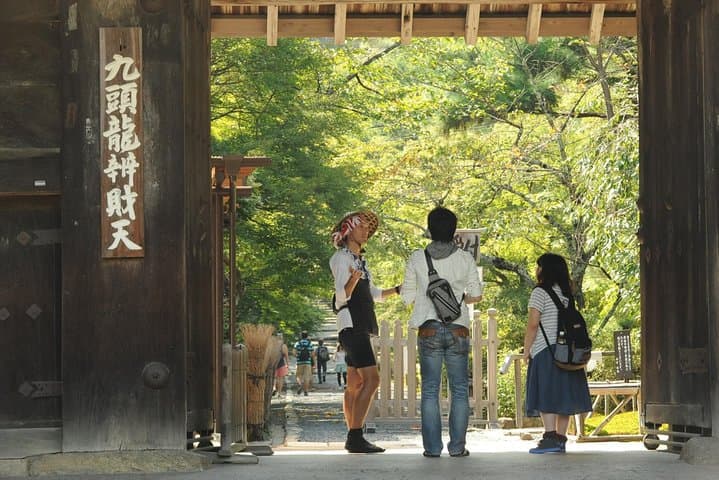
Your guide steers through contemporary and preserved corners — photo stops at the bamboo avenues, a short visit inside a restored machiya (archive hall), and a 30-minute exploration of Otagi-Nenbutsuji with its quirky stone figures. Along the way, the guide threads local stories about haiku poets and pilgrimage routes.
Practical bits: the tour runs about 3 hours and covers mostly paved streets and short slopes; you’ll disembark to walk short sections and climb a few temple steps. Wear supportive shoes, bring water, and time your visit early or late to avoid peak crowds near the grove. Photography is encouraged but respect temple rituals, stay on marked paths in the bamboo, and be prepared for narrow rickshaw seating. The experience is an easy, culture-forward way to see Arashiyama’s highlights from a historic viewpoint.
easy.
3–3.5 hours.
Suitable for most fitness levels; requires ability to walk short slopes and climb temple steps.
Yes — infants under 5 can ride free on a guardian’s lap (one child per adult). Children 6 and older must have their own paid seat.
Visits include entry to Otagi-Nenbutsuji as noted, but some sites passed by may have separate admission fees not covered by the tour.
No — several temple grounds and pilgrim paths have stairs and uneven surfaces that are not wheelchair-friendly.
Guides are fluent in English and Japanese; conversational Chinese, Korean, or Spanish may be available depending on guide assignment.
Arashiyama rose to prominence during the Heian period as an imperial retreat; Togetsukyo Bridge has been an icon of the area since medieval times and the streets still reflect merchant-era machiya architecture.
The bamboo grove is ecologically sensitive — stay on designated paths, avoid picking or leaning on bamboo, and respect quiet zones at temple sites to minimize impact.
Ebisuya operates guided outdoor trips and adventures with an emphasis on safety, stewardship, and memorable experiences.
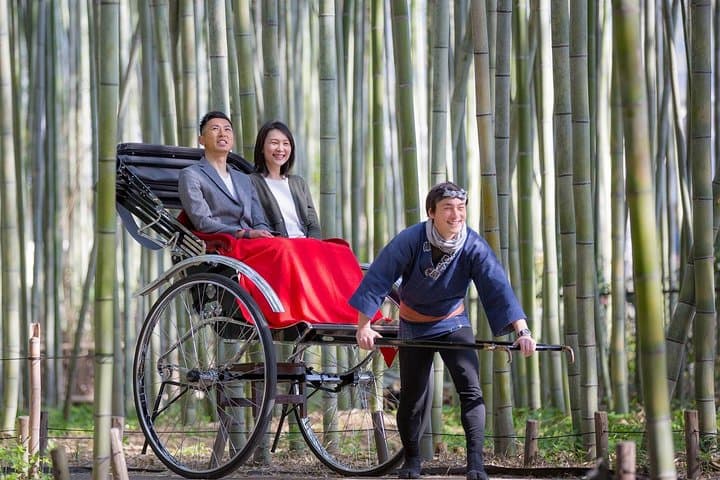
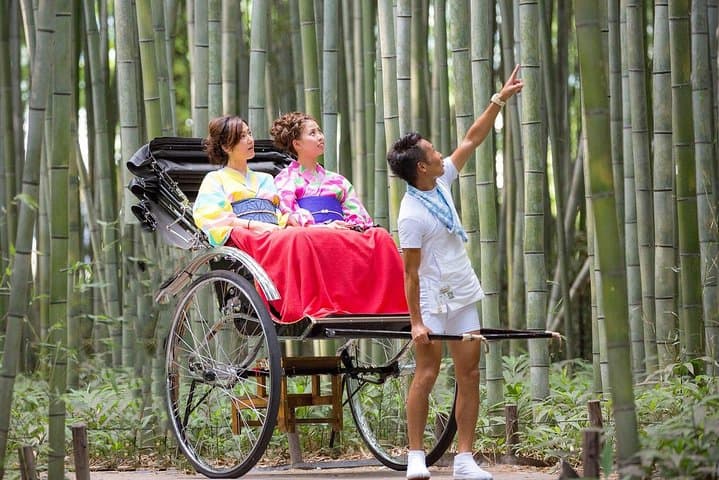
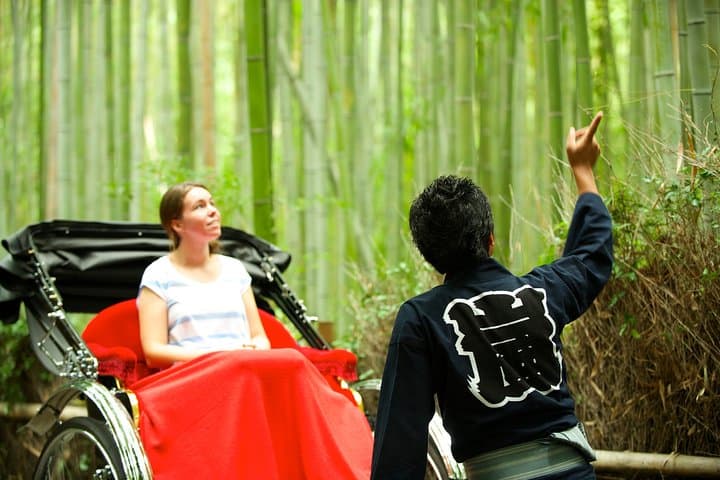
The rickshaw glides along the riverbank as the Togetsukyo Bridge slides into view — wooden wheels whispering on stone, the current under the bridge daring you to look downstream. Bamboo shoots tilt and click overhead like a green corridor guiding the carriage north toward quieter streets and a pilgrim path climbing the lower slopes of Mt. Arashi.
The rickshaw glides along the riverbank as the Togetsukyo Bridge slides into view — wooden wheels whispering on stone, the current under the bridge daring you to look downstream. Bamboo shoots tilt and click overhead like a green corridor guiding the carriage north toward quieter streets and a pilgrim path climbing the lower slopes of Mt. Arashi.
Arashiyama has been a leisure escape for Kyoto’s residents since the Heian era; the bridge and river shaped the neighborhood’s rhythms, while the bamboo grove grows in the volcanic soils deposited by ancient eruptions of the nearby ranges. Machiya townhouses and thatched cottages recall merchant life and a poetic tradition tied to seasonal observation.
Your guide steers through contemporary and preserved corners — photo stops at the bamboo avenues, a short visit inside a restored machiya (archive hall), and a 30-minute exploration of Otagi-Nenbutsuji with its quirky stone figures. Along the way, the guide threads local stories about haiku poets and pilgrimage routes.
Practical bits: the tour runs about 3 hours and covers mostly paved streets and short slopes; you’ll disembark to walk short sections and climb a few temple steps. Wear supportive shoes, bring water, and time your visit early or late to avoid peak crowds near the grove. Photography is encouraged but respect temple rituals, stay on marked paths in the bamboo, and be prepared for narrow rickshaw seating. The experience is an easy, culture-forward way to see Arashiyama’s highlights from a historic viewpoint.