THE ADVENTURE COLLECTIVE® · Independent discovery and booking for outdoor travel

Explore Menorca’s hidden coves and clear northern waters on a two-hour guided snorkeling safari. Small groups, provided gear, and a zero-impact ethic make this an easy, family-friendly way to discover Posidonia meadows and coastal caves.
Explore Menorca’s hidden coves and clear northern waters on a two-hour guided snorkeling safari. Small groups, provided gear, and a zero-impact ethic make this an easy, family-friendly way to discover Posidonia meadows and coastal caves.
The bow parts bright water as your guide steers toward cliffs that only a boat can reach. Salt spray cools the air and the shoreline drops into terraces of limestone and hidden coves; below, the sea changes from turquoise to a deep indigo where Posidonia meadows carpet the seabed.
Verified experiences and guided adventures in the surrounding area.
Operated by Blue Dive Menorca · Fornells, Balearic Islands
The bow parts bright water as your guide steers toward cliffs that only a boat can reach. Salt spray cools the air and the shoreline drops into terraces of limestone and hidden coves; below, the sea changes from turquoise to a deep indigo where Posidonia meadows carpet the seabed.
Menorca’s coasts have been shaped by geology and history — Paleogene limestones sculpted rugged headlands, while Phoenician, Roman and later British connections left small harbors and a seafaring culture that still runs the island’s rhythms. Local fishing villages like Fornells keep culinary traditions alive; expect to hear about caldereta (lobster stew) and boat-building memories as you climb aboard.
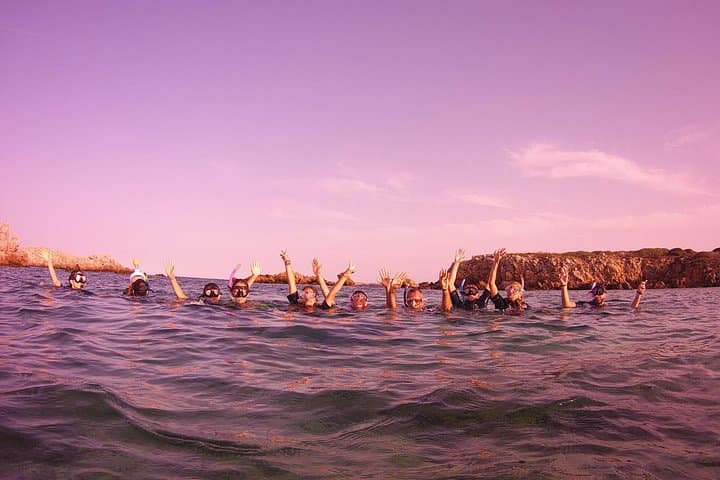
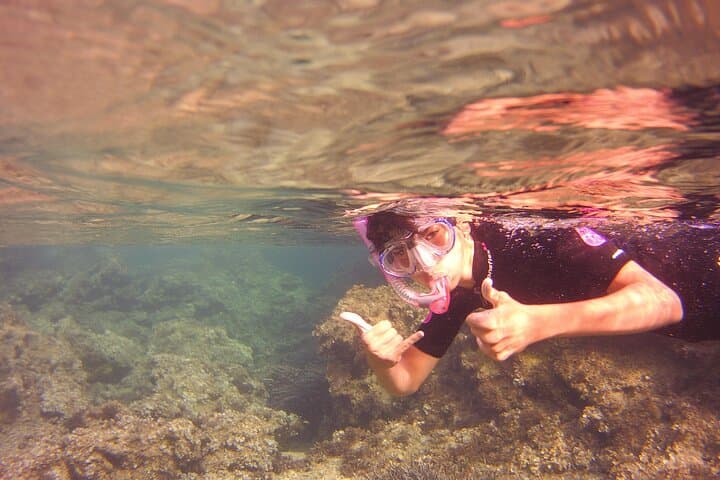
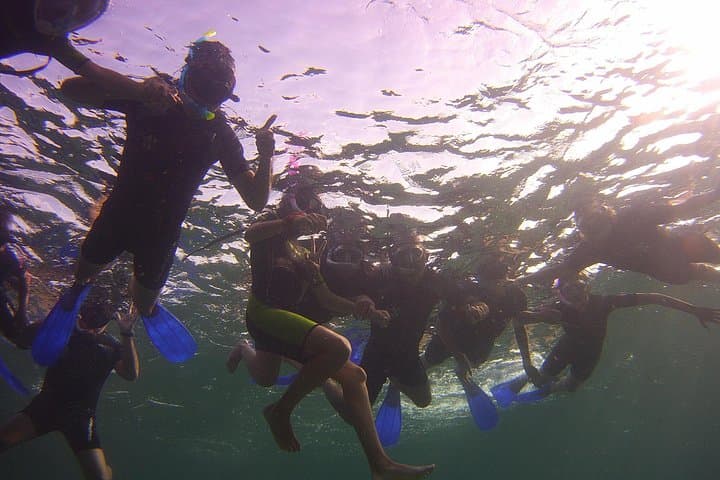
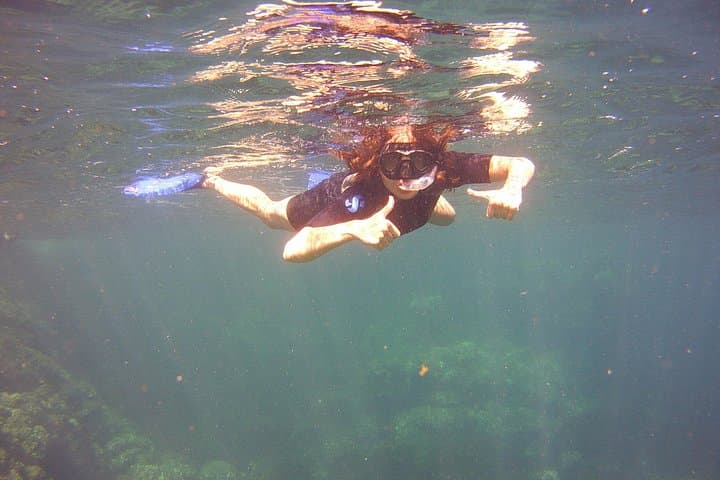
On this two-hour safari you’ll hop between snorkeling spots with a small group (up to 12) and a certified guide who provides mask, snorkel, fins and neoprene. The focus is low-impact: guides point out Posidonia meadows, explain why they matter, and show how to move gently so the habitat isn’t disturbed. You’ll see rocky reefs, patches of sand and small caves only accessible from the water.
Practical notes: this is an easy activity suitable for families and mixed-ability groups — basic swimming confidence helps. Mornings often bring the calmest seas and the clearest visibility; pack reef-safe sunscreen, water shoes, and a towel. Operators commonly provide life vests and brief instruction, but listen to the guide’s safety briefing and follow their route — currents and weather can change quickly around Menorca’s headlands.
easy.
2 hours.
Suitable for most fitness levels; participants should be comfortable in open water and able to swim short distances.
No — the trip is adapted to group ability and includes a safety briefing; basic swimming confidence is recommended.
Masks, snorkels, fins and neoprene are typically supplied by the operator; life vests are provided when needed.
Yes — the activity is family-friendly, but infants may need to sit on laps and children should be comfortable in the water.
Operators can cancel for rough seas or poor conditions; you’re usually eligible for a full refund if canceled at least 24 hours in advance.
Menorca’s harbors and coves have long drawn sailors; the island saw Phoenician, Roman and British influences that shaped local maritime traditions and fishing techniques.
Posidonia oceanica meadows are a protected habitat around Menorca; low-impact tour operators follow strict guidelines to avoid anchor damage and disturbance to marine life.
Blue Dive Menorca operates guided outdoor trips and adventures with an emphasis on safety, stewardship, and memorable experiences.
The bow parts bright water as your guide steers toward cliffs that only a boat can reach. Salt spray cools the air and the shoreline drops into terraces of limestone and hidden coves; below, the sea changes from turquoise to a deep indigo where Posidonia meadows carpet the seabed.
The bow parts bright water as your guide steers toward cliffs that only a boat can reach. Salt spray cools the air and the shoreline drops into terraces of limestone and hidden coves; below, the sea changes from turquoise to a deep indigo where Posidonia meadows carpet the seabed.
Menorca’s coasts have been shaped by geology and history — Paleogene limestones sculpted rugged headlands, while Phoenician, Roman and later British connections left small harbors and a seafaring culture that still runs the island’s rhythms. Local fishing villages like Fornells keep culinary traditions alive; expect to hear about caldereta (lobster stew) and boat-building memories as you climb aboard.
On this two-hour safari you’ll hop between snorkeling spots with a small group (up to 12) and a certified guide who provides mask, snorkel, fins and neoprene. The focus is low-impact: guides point out Posidonia meadows, explain why they matter, and show how to move gently so the habitat isn’t disturbed. You’ll see rocky reefs, patches of sand and small caves only accessible from the water.
Practical notes: this is an easy activity suitable for families and mixed-ability groups — basic swimming confidence helps. Mornings often bring the calmest seas and the clearest visibility; pack reef-safe sunscreen, water shoes, and a towel. Operators commonly provide life vests and brief instruction, but listen to the guide’s safety briefing and follow their route — currents and weather can change quickly around Menorca’s headlands.