THE ADVENTURE COLLECTIVE® · Independent discovery and booking for outdoor travel

Cross the Tagus for a half-day dolphin safari to the Sado Estuary, home to one of Europe’s resident bottlenose populations. This accessible tour from Lisbon pairs easy logistics with high chances of close dolphin encounters in shallow estuary waters.
Cross the Tagus for a half-day dolphin safari to the Sado Estuary, home to one of Europe’s resident bottlenose populations. This accessible tour from Lisbon pairs easy logistics with high chances of close dolphin encounters in shallow estuary waters.
A short drive south from Lisbon, the salt-scented air sharpens as the highway crosses the Tagus on the 25 de Abril Bridge and the city recedes. By the time the van reaches Setúbal’s working harbor, the river widens into the Sado Estuary and light fractures across shallow channels where bottlenose dolphins often forage close to shore.
Verified experiences and guided adventures in the surrounding area.
Operated by abc Travel · Setúbal, Setúbal District
A short drive south from Lisbon, the salt-scented air sharpens as the highway crosses the Tagus on the 25 de Abril Bridge and the city recedes. By the time the van reaches Setúbal’s working harbor, the river widens into the Sado Estuary and light fractures across shallow channels where bottlenose dolphins often forage close to shore.
The Sado Estuary supports one of Europe’s few resident bottlenose populations. Geologically, the estuary is a broad ria shaped by rising seas after the last ice age; its shallow mudflats and channels create food-rich feeding grounds that keep dolphins around year-round. Setúbal’s fishing roots and maritime culture are visible in the docks and fish markets—local fishermen and researchers have long collaborated on sightings and protection efforts.
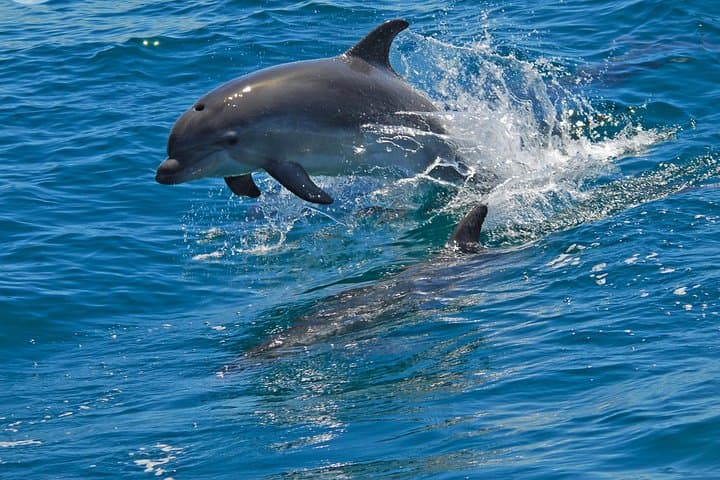
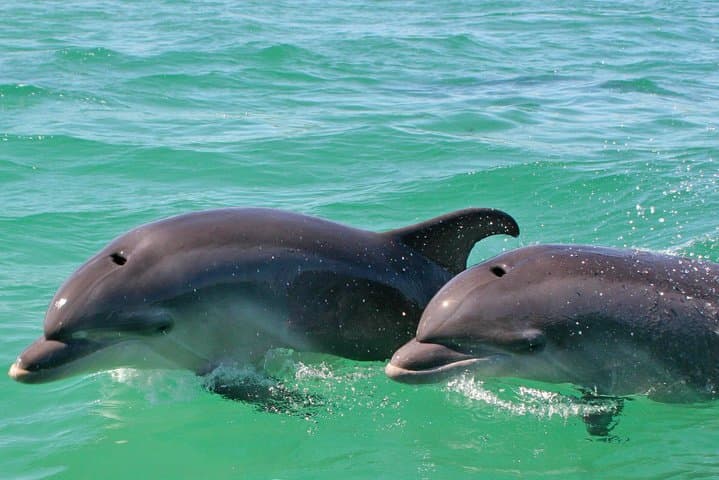
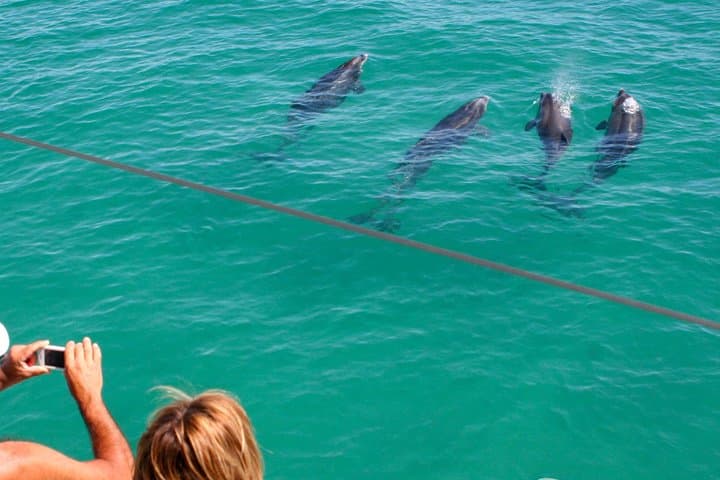
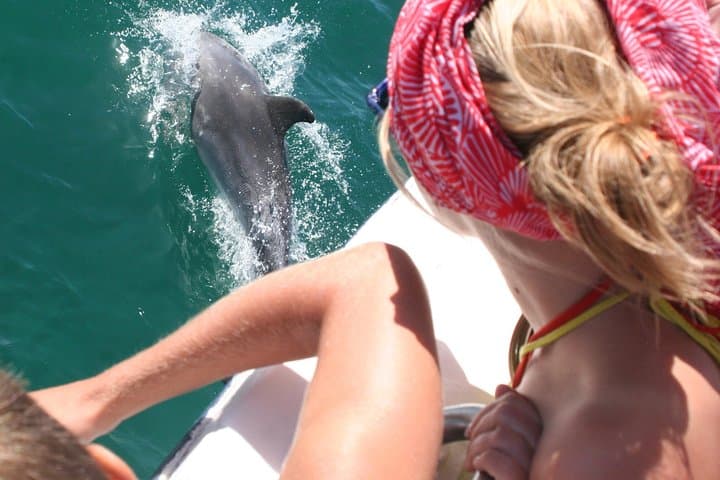
On a typical half-day tour, you’ll board in Setúbal for roughly two hours on the water searching for small pods, calves, and signature surfacing behavior. Expect moderate chop at times and close encounters where dolphins ride the bow wake or circle feeding schools.
Practical guidance: wear windproof layers, bring binoculars and a camera with a steadying strap, and consider motion-sickness prevention if you’re prone to seasickness. Most operators provide lifejackets; tours run in English, Spanish, and Portuguese and include hotel transfer from Lisbon, making logistics straightforward. Best viewing is often in calmer mornings, but dolphins can appear any time of day.
This excursion balances easy accessibility with genuine wildlife viewing—an active half-day that connects coastal culture, shallow estuary ecology, and wild dolphin behavior.
easy.
4 hours (including transport).
Suitable for most fitness levels; requires basic mobility for boarding and short walks at the harbor
The Sado Estuary hosts a resident bottlenose population, so sightings are common though never guaranteed—most tours report regular encounters during calm conditions.
Tours embark in Setúbal; most operators include hotel pickup and drop-off from Lisbon and handle the transfer by private vehicle.
Yes; lifejackets are provided and the activity is family-friendly, but children must be supervised and the operator will brief safety procedures.
Operators typically cancel in poor weather for safety; their policy allows full refunds if canceled at least 24 hours in advance or for bad weather.
Setúbal grew as a fishing and salt-harvesting hub; its estuary has long supported local livelihoods and early naturalists who recorded dolphin presences.
Local NGOs and researchers monitor the resident dolphin population; choose operators that follow responsible viewing guidelines to reduce disturbance.
abc Travel operates guided outdoor trips and adventures with an emphasis on safety, stewardship, and memorable experiences.
A short drive south from Lisbon, the salt-scented air sharpens as the highway crosses the Tagus on the 25 de Abril Bridge and the city recedes. By the time the van reaches Setúbal’s working harbor, the river widens into the Sado Estuary and light fractures across shallow channels where bottlenose dolphins often forage close to shore.
A short drive south from Lisbon, the salt-scented air sharpens as the highway crosses the Tagus on the 25 de Abril Bridge and the city recedes. By the time the van reaches Setúbal’s working harbor, the river widens into the Sado Estuary and light fractures across shallow channels where bottlenose dolphins often forage close to shore.
The Sado Estuary supports one of Europe’s few resident bottlenose populations. Geologically, the estuary is a broad ria shaped by rising seas after the last ice age; its shallow mudflats and channels create food-rich feeding grounds that keep dolphins around year-round. Setúbal’s fishing roots and maritime culture are visible in the docks and fish markets—local fishermen and researchers have long collaborated on sightings and protection efforts.
On a typical half-day tour, you’ll board in Setúbal for roughly two hours on the water searching for small pods, calves, and signature surfacing behavior. Expect moderate chop at times and close encounters where dolphins ride the bow wake or circle feeding schools.
Practical guidance: wear windproof layers, bring binoculars and a camera with a steadying strap, and consider motion-sickness prevention if you’re prone to seasickness. Most operators provide lifejackets; tours run in English, Spanish, and Portuguese and include hotel transfer from Lisbon, making logistics straightforward. Best viewing is often in calmer mornings, but dolphins can appear any time of day.
This excursion balances easy accessibility with genuine wildlife viewing—an active half-day that connects coastal culture, shallow estuary ecology, and wild dolphin behavior.