THE ADVENTURE COLLECTIVE® · Independent discovery and booking for outdoor travel

Two days of high Andes contrast: Inca terraces, salt pans and an overnight in Cusipata, followed by an early-morning trek to Vinicunca (Rainbow Mountain). Expect early starts, high elevations and vivid geological colors.
Two days of high Andes contrast: Inca terraces, salt pans and an overnight in Cusipata, followed by an early-morning trek to Vinicunca (Rainbow Mountain). Expect early starts, high elevations and vivid geological colors.
Dawn breaks before your transfer from Cusco, and the Andes are already sketching terraces into the light. The first day walks you through the Sacred Valley’s knotted ridgelines—agricultural terraces, salt pans cut into the hillside and an Inca stronghold that once watched the passes—before a quiet night at a rustic treehouse in Cusipata. The second day begins in predawn hush for the drive to the Fulawasi trailhead and a brisk ascent to Vinicunca, the striped summit called Rainbow Mountain.
Verified experiences and guided adventures in the surrounding area.
Operated by Rainbow Mountain Cusco Agency · Cusco, Cusco
Dawn breaks before your transfer from Cusco, and the Andes are already sketching terraces into the light. The first day walks you through the Sacred Valley’s knotted ridgelines—agricultural terraces, salt pans cut into the hillside and an Inca stronghold that once watched the passes—before a quiet night at a rustic treehouse in Cusipata. The second day begins in predawn hush for the drive to the Fulawasi trailhead and a brisk ascent to Vinicunca, the striped summit called Rainbow Mountain.
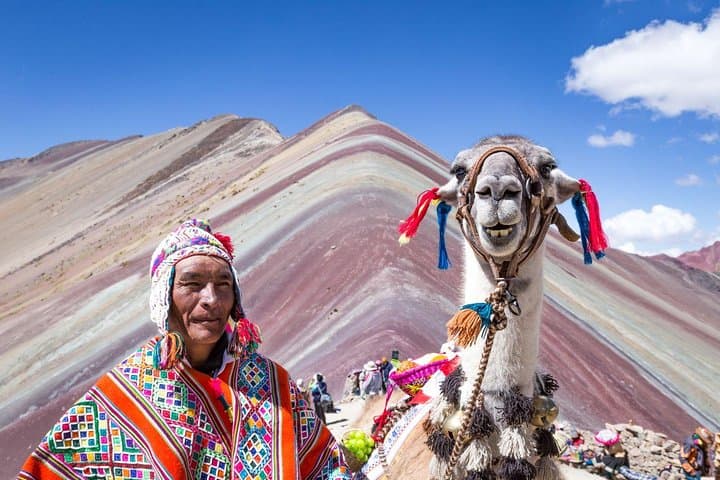
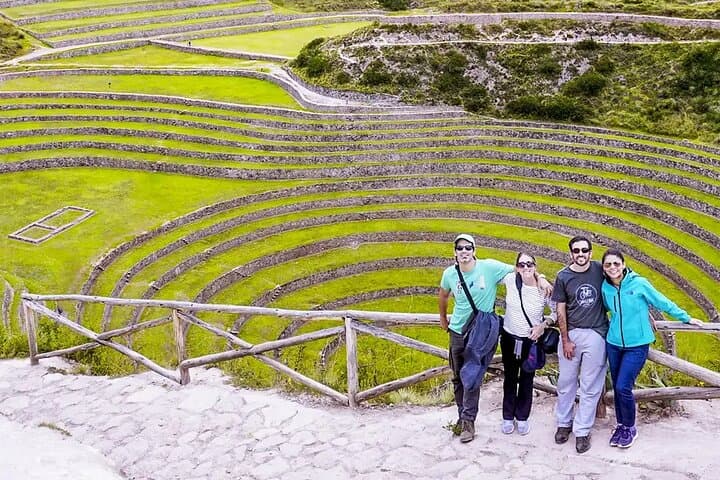
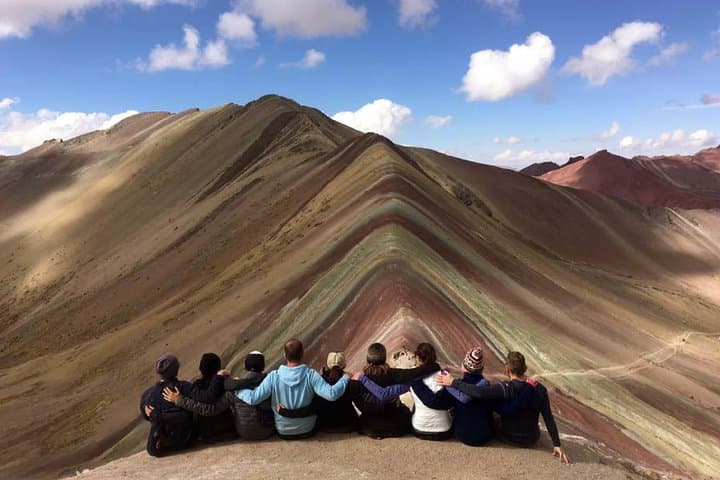
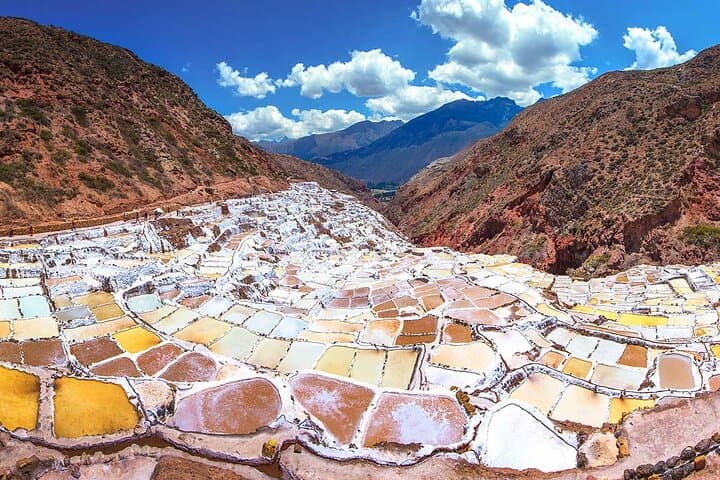
The valley’s culture is visible in stonework and markets: Pisac’s plaza still hums with Quechua vendors and woven patterns whose designs echo pre-Columbian agricultural calendars. Geologically, Vinicunca’s colors come from mineral layers—iron oxides, phyllites and clays—revealed by erosion at 5,000+ meters. Historically, terraces and salt pans near Maras trace back to pre-Inca and Inca land-use systems that shaped local ecology and economy.
Practically: expect a 2-day loop with early starts—pickup around 3:30 a.m.—an overnight in Cusipata, and a 2–4 hour trekking window at altitude. The Vinicunca hike is roughly 8–10 km round-trip with 450–600 m cumulative gain; summit sits around 5,020–5,200 m, so acclimatize first. Wear broken-in boots, layer for wind and sun, and carry water and high-calorie snacks. Altitude can surprise; move deliberately, hydrate, and use the provided emergency oxygen if needed. Aim for the dry season (May–September) for firmer trails and clearer skies. This two-day combination gives a compact, achievable window into Andean landscapes, culture and high-altitude trekking.
moderate.
2 days (approx. 48 hours).
Moderate fitness—able to walk 3–5 hours at high altitude and manage short steep sections
This specific two-day itinerary focuses on the Sacred Valley sites and a trek to Vinicunca; Machu Picchu visits require separate transport and additional time and tickets.
Expect roughly 8–10 km round-trip with 450–600 m total elevation gain; the viewpoint sits around 5,020–5,200 meters above sea level.
A moderate fitness level is sufficient—participants should be comfortable walking several hours at altitude and able to maintain a steady pace uphill.
Acclimatize in Cusco or the valley beforehand, hydrate, rest if symptoms start, and use the provided emergency oxygen if severe symptoms occur; seek medical help if needed.
The Sacred Valley was a central agricultural and administrative zone for the Inca; terraces and salt pans reflect long-standing pre-Columbian land management.
High-altitude grasslands are fragile—stick to trails, avoid littering, and support local guides who practice low-impact tourism.
Rainbow Mountain Cusco Agency operates guided outdoor trips and adventures with an emphasis on safety, stewardship, and memorable experiences.
Dawn breaks before your transfer from Cusco, and the Andes are already sketching terraces into the light. The first day walks you through the Sacred Valley’s knotted ridgelines—agricultural terraces, salt pans cut into the hillside and an Inca stronghold that once watched the passes—before a quiet night at a rustic treehouse in Cusipata. The second day begins in predawn hush for the drive to the Fulawasi trailhead and a brisk ascent to Vinicunca, the striped summit called Rainbow Mountain.
Dawn breaks before your transfer from Cusco, and the Andes are already sketching terraces into the light. The first day walks you through the Sacred Valley’s knotted ridgelines—agricultural terraces, salt pans cut into the hillside and an Inca stronghold that once watched the passes—before a quiet night at a rustic treehouse in Cusipata. The second day begins in predawn hush for the drive to the Fulawasi trailhead and a brisk ascent to Vinicunca, the striped summit called Rainbow Mountain.
The valley’s culture is visible in stonework and markets: Pisac’s plaza still hums with Quechua vendors and woven patterns whose designs echo pre-Columbian agricultural calendars. Geologically, Vinicunca’s colors come from mineral layers—iron oxides, phyllites and clays—revealed by erosion at 5,000+ meters. Historically, terraces and salt pans near Maras trace back to pre-Inca and Inca land-use systems that shaped local ecology and economy.
Practically: expect a 2-day loop with early starts—pickup around 3:30 a.m.—an overnight in Cusipata, and a 2–4 hour trekking window at altitude. The Vinicunca hike is roughly 8–10 km round-trip with 450–600 m cumulative gain; summit sits around 5,020–5,200 m, so acclimatize first. Wear broken-in boots, layer for wind and sun, and carry water and high-calorie snacks. Altitude can surprise; move deliberately, hydrate, and use the provided emergency oxygen if needed. Aim for the dry season (May–September) for firmer trails and clearer skies. This two-day combination gives a compact, achievable window into Andean landscapes, culture and high-altitude trekking.