THE ADVENTURE COLLECTIVE® · Independent discovery and booking for outdoor travel

A compact, culture-rich circuit that combines Sacred Valley ruins, local markets and the one-day Inca Trail approach to Machu Picchu. Expect train travel, guided site walks, and a short but sustained highland hike via Wiñaywayna and the Sun Gate.
A compact, culture-rich circuit that combines Sacred Valley ruins, local markets and the one-day Inca Trail approach to Machu Picchu. Expect train travel, guided site walks, and a short but sustained highland hike via Wiñaywayna and the Sun Gate.
Dawn breaks over terraced slopes as the train threads the Urubamba River canyon, steam and steel cutting through Andes air that tastes faintly of eucalyptus and earth. Travelers step off in Aguas Calientes and trade the clatter of tracks for the hush of cloud forest; the ridge above holds Machu Picchu, its stonework waiting like a question posed by the mountains.
Verified experiences and guided adventures in the surrounding area.
Operated by Guiding Machu Picchu · Aguas Calientes (Machu Picchu Pueblo), Cusco
Dawn breaks over terraced slopes as the train threads the Urubamba River canyon, steam and steel cutting through Andes air that tastes faintly of eucalyptus and earth. Travelers step off in Aguas Calientes and trade the clatter of tracks for the hush of cloud forest; the ridge above holds Machu Picchu, its stonework waiting like a question posed by the mountains.
The route follows both living Andean culture and Inca engineering—Pisac’s agricultural terraces, the fortress town of Ollantaytambo with its military trapezoids, and the short Inca Trail that climbs through Chachabamba and Wiñaywayna before delivering you to Inti Punku, the Sun Gate. Geologically the valley is carved by uplifted volcanic and sedimentary strata, then scoured by glacial and fluvial action; the result is steep, abrupt relief and microclimates that support cloud forest flora.
Local communities keep Quechua traditions visible in markets and textile workshops; churches and colonial streets in Cusco and Ollantaytambo layer Spanish history over Inca foundations. Expect guided site walks, interpretive talks on masonry and irrigation, and intervals of independent exploration.
Practical notes: acclimatize in Cusco for 24–48 hours if possible, carry rain protection year-round, and plan for steep stone stairs and uneven paths on short, sustained ascents around 300–500 m total gain on the trail sections. Trains and site entry are timed—bring printed or mobile tickets, modest cash for markets, and water for hikes. The experience balances cultural immersion with active hiking: concentrated, scenic, and undeniably Andean.
moderate.
2–3 days.
Suitable for travelers with moderate fitness; involves sustained walking on uneven trails and stair-like stonework at 2,100–2,700 m elevations
Yes—plan 24–48 hours in Cusco or the Sacred Valley before intensive hiking to help prevent altitude sickness.
The tour description lists Machu Picchu fees and train included; confirm exact inclusions on booking and carry mobile/printed tickets.
It’s a one-day, moderately strenuous hike with uneven steps and some uphill stretches—good footwear and steady pace make it accessible to most fit travelers.
Aguas Calientes has shops and restaurants; bring snacks and a refillable water bottle for the trail since options are limited while hiking between sites.
The Sacred Valley was central to Inca agriculture and statecraft—its terraces, roads, and administrative centers supported Cusco’s population and ritual economy.
Machu Picchu and the Inca Trail are managed with visitor limits and permit systems; stick to marked paths, pack out waste, and respect local regulations to reduce impact.
Guiding Machu Picchu operates guided outdoor trips and adventures with an emphasis on safety, stewardship, and memorable experiences.
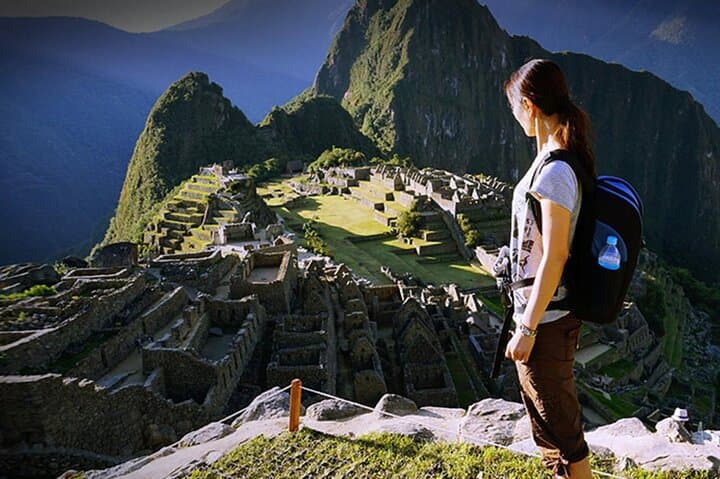


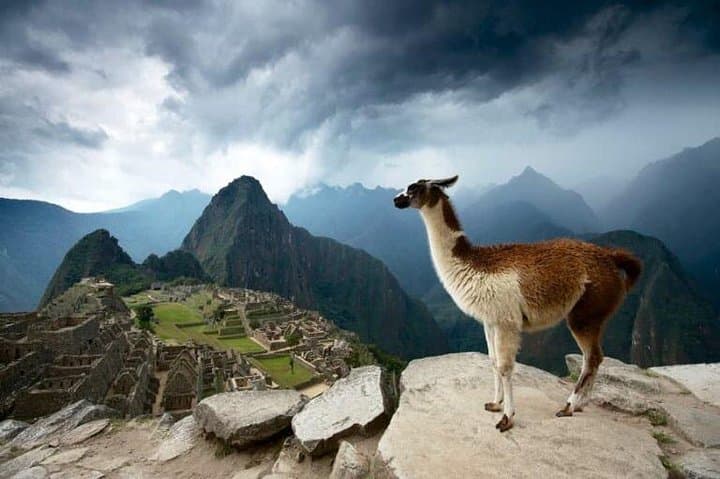
Dawn breaks over terraced slopes as the train threads the Urubamba River canyon, steam and steel cutting through Andes air that tastes faintly of eucalyptus and earth. Travelers step off in Aguas Calientes and trade the clatter of tracks for the hush of cloud forest; the ridge above holds Machu Picchu, its stonework waiting like a question posed by the mountains.
Dawn breaks over terraced slopes as the train threads the Urubamba River canyon, steam and steel cutting through Andes air that tastes faintly of eucalyptus and earth. Travelers step off in Aguas Calientes and trade the clatter of tracks for the hush of cloud forest; the ridge above holds Machu Picchu, its stonework waiting like a question posed by the mountains.
The route follows both living Andean culture and Inca engineering—Pisac’s agricultural terraces, the fortress town of Ollantaytambo with its military trapezoids, and the short Inca Trail that climbs through Chachabamba and Wiñaywayna before delivering you to Inti Punku, the Sun Gate. Geologically the valley is carved by uplifted volcanic and sedimentary strata, then scoured by glacial and fluvial action; the result is steep, abrupt relief and microclimates that support cloud forest flora.
Local communities keep Quechua traditions visible in markets and textile workshops; churches and colonial streets in Cusco and Ollantaytambo layer Spanish history over Inca foundations. Expect guided site walks, interpretive talks on masonry and irrigation, and intervals of independent exploration.
Practical notes: acclimatize in Cusco for 24–48 hours if possible, carry rain protection year-round, and plan for steep stone stairs and uneven paths on short, sustained ascents around 300–500 m total gain on the trail sections. Trains and site entry are timed—bring printed or mobile tickets, modest cash for markets, and water for hikes. The experience balances cultural immersion with active hiking: concentrated, scenic, and undeniably Andean.