THE ADVENTURE COLLECTIVE® · Independent discovery and booking for outdoor travel

A compact, private two-day tour that threads the Sacred Valley’s markets and ruins with an early-morning visit to Machu Picchu. Ideal for travelers who want a focused, guided experience with time to explore the citadel on their own.
A compact, private two-day tour that threads the Sacred Valley’s markets and ruins with an early-morning visit to Machu Picchu. Ideal for travelers who want a focused, guided experience with time to explore the citadel on their own.
You step off the train at Aguas Calientes with cool mountain air pushing at your cheeks and a river below that seems to dare you to slow down. The first day moves through Pisac’s terraces and markets, then the stones of Ollantaytambo rise like well-read pages, leading to an overnight in the small town beneath the citadel.
Verified experiences and guided adventures in the surrounding area.
Operated by Lares Trip · Aguas Calientes, Cusco Region
You step off the train at Aguas Calientes with cool mountain air pushing at your cheeks and a river below that seems to dare you to slow down. The first day moves through Pisac’s terraces and markets, then the stones of Ollantaytambo rise like well-read pages, leading to an overnight in the small town beneath the citadel.
The next morning, an early shuttle climbs the switchbacks toward Machu Picchu. The citadel unfolds in stages: agricultural terraces, a cluster of carved stones, and the Intihuatana stone that aligns with solar events. Geologically the site sits on volcanic and metamorphic rock at the edge of the Urubamba Valley; culturally it was a center of ritual, administration and agricultural experimentation for the Inca. Travelers should notice local Quechua influences in markets and family-run eateries in the Sacred Valley.
Practical guidance: allow 24–48 hours for basic altitude adjustment in Cusco before the trip, hydrate, and keep layers for big temperature swings between dawn and midday. The guided walking tour in Machu Picchu runs about two hours with additional free time for independent exploration; expect uneven stone steps and short steep sections. Bring cash for markets and optional bus fares, and reserve trains and entrance tickets well in advance—this is a high-demand route. If you want sunrise, be prepared for a 4:30–5:00 AM pick-up and limited windows into the citadel. Respect the site: follow paths, avoid drone use, and carry out all waste. With preparation, the journey from Cusco down the Sacred Valley to the citadel is efficient, immersive, and intensely rewarding.
moderate.
2 days.
Light to moderate fitness; able to walk 1–3 miles on uneven, stepped terrain and manage short steep climbs.
No—guides rate it accessible for most fitness levels, but you should be comfortable walking on uneven stone and climbing stairs for up to two hours.
Pickup is typically very early (around 4:30–5:00 AM) if you want sunrise; later options are available but fill quickly.
The itinerary includes breakfast and one dinner; lunches and some snacks are typically not included so bring cash for these.
The operator lists wheelchair accessibility, but access within Machu Picchu is limited by steep steps—check specifics with the provider before booking.
Machu Picchu was constructed in the 15th century under Inca rule and functioned as a religious and administrative center tied to the Sacred Valley’s agricultural systems.
Visitor limits and timed entry are enforced to reduce wear on terraces and trails; stick to marked paths and pack out all trash to protect this fragile highland ecosystem.
Lares Trip operates guided outdoor trips and adventures with an emphasis on safety, stewardship, and memorable experiences.


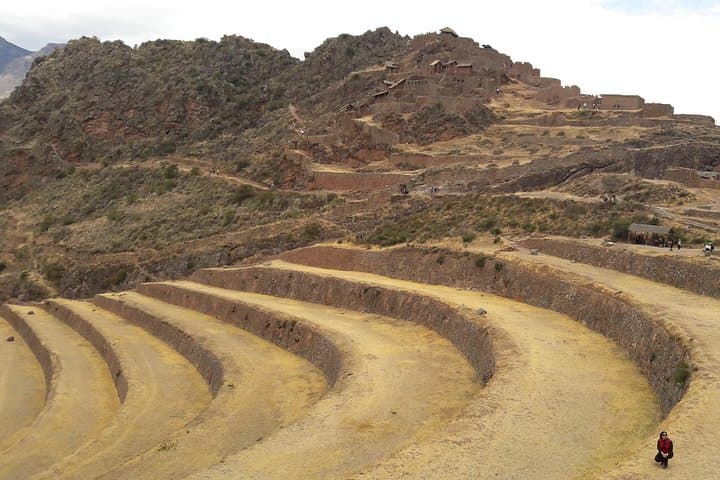
You step off the train at Aguas Calientes with cool mountain air pushing at your cheeks and a river below that seems to dare you to slow down. The first day moves through Pisac’s terraces and markets, then the stones of Ollantaytambo rise like well-read pages, leading to an overnight in the small town beneath the citadel.
You step off the train at Aguas Calientes with cool mountain air pushing at your cheeks and a river below that seems to dare you to slow down. The first day moves through Pisac’s terraces and markets, then the stones of Ollantaytambo rise like well-read pages, leading to an overnight in the small town beneath the citadel.
The next morning, an early shuttle climbs the switchbacks toward Machu Picchu. The citadel unfolds in stages: agricultural terraces, a cluster of carved stones, and the Intihuatana stone that aligns with solar events. Geologically the site sits on volcanic and metamorphic rock at the edge of the Urubamba Valley; culturally it was a center of ritual, administration and agricultural experimentation for the Inca. Travelers should notice local Quechua influences in markets and family-run eateries in the Sacred Valley.
Practical guidance: allow 24–48 hours for basic altitude adjustment in Cusco before the trip, hydrate, and keep layers for big temperature swings between dawn and midday. The guided walking tour in Machu Picchu runs about two hours with additional free time for independent exploration; expect uneven stone steps and short steep sections. Bring cash for markets and optional bus fares, and reserve trains and entrance tickets well in advance—this is a high-demand route. If you want sunrise, be prepared for a 4:30–5:00 AM pick-up and limited windows into the citadel. Respect the site: follow paths, avoid drone use, and carry out all waste. With preparation, the journey from Cusco down the Sacred Valley to the citadel is efficient, immersive, and intensely rewarding.