THE ADVENTURE COLLECTIVE® · Independent discovery and booking for outdoor travel

Watch sunrise at Angkor Wat, then walk through Ta Prohm and Bayon with a small group guide who explains centuries of Khmer history. This full-morning tour balances iconic photo moments with on-site context and practical tips for respectful visiting.
Watch sunrise at Angkor Wat, then walk through Ta Prohm and Bayon with a small group guide who explains centuries of Khmer history. This full-morning tour balances iconic photo moments with on-site context and practical tips for respectful visiting.
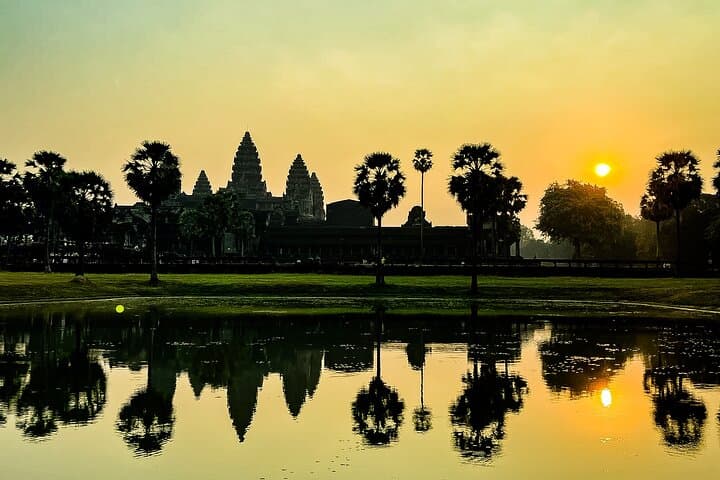
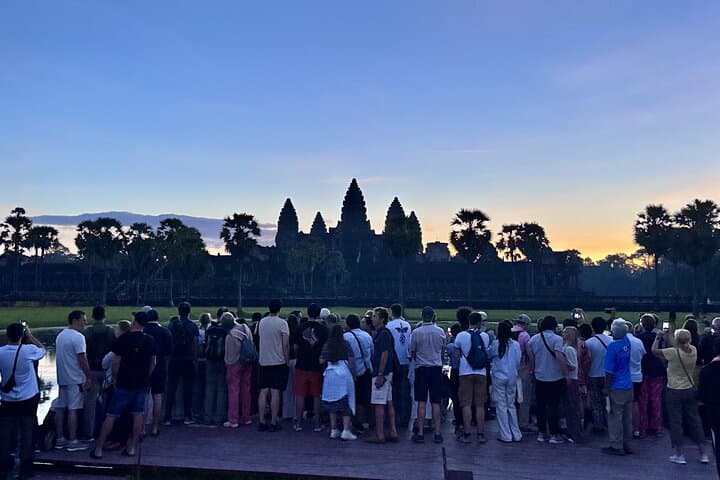
Before first light, the causeway to Angkor Wat reads like a stage under a cooling sky. The reflecting pool takes on glass; tourists and locals gather quietly, cameras ready as the first pale band of color slides up behind lotus ponds and sculpted towers. The air is cool and a little damp—an interval where the site seems to hold its breath.
Verified experiences and guided adventures in the surrounding area.
Operated by Travel to Inspire · Siem Reap, Siem Reap Province
Before first light, the causeway to Angkor Wat reads like a stage under a cooling sky. The reflecting pool takes on glass; tourists and locals gather quietly, cameras ready as the first pale band of color slides up behind lotus ponds and sculpted towers. The air is cool and a little damp—an interval where the site seems to hold its breath.
The tour moves inward, past bas-reliefs that record ancient law, war, and daily life carved into sandstone. Angkor Wat began as a 12th-century Hindu temple and evolved into a Buddhist symbol; its galleries map Khmer kingship and cosmology. Nearby Ta Prohm offers a counterpoint — roots of silk-cotton and strangler figs have crept like deliberate hands through galleries, giving the ruins a slow, plant-driven choreography. Bayon’s many carved faces keep watch over narrow halls, and the low reliefs offer candid scenes of market trade and festivals centuries old.
Practical guidance follows the viewing. Expect five to seven hours on your feet with uneven stone, occasional steep steps, and short walks between sites. Sunrise is busiest; arrive early and secure a reflective-pool vantage. Wear breathable clothing that covers shoulders and knees to respect temple dress codes, bring plenty of water, and use quiet, framed movements for photography—flash and climbing on sculptures are prohibited.
Local guides translate inscriptions into human stories and highlight conservation concerns: erosion, visitor impact, and vegetation management affect these fragile stones. A morning here is both a visual reward and a reminder that active stewardship keeps history tangible for the next group to watch the light rise.
moderate.
5–7 hours.
Light to moderate fitness; comfortable walking on uneven ground and short stair climbs is required.
No, the tour does not include the Angkor Archaeological Park pass; you must buy a ticket at the park entrance or ticket center prior to or upon arrival.
The tour begins before sunrise to reach the reflecting pool in time; hotel pickup and drop-off are typically included—confirm your pickup point when booking.
Temples have uneven stones and staircases; this itinerary is not recommended for travelers with significant mobility limitations or spinal issues.
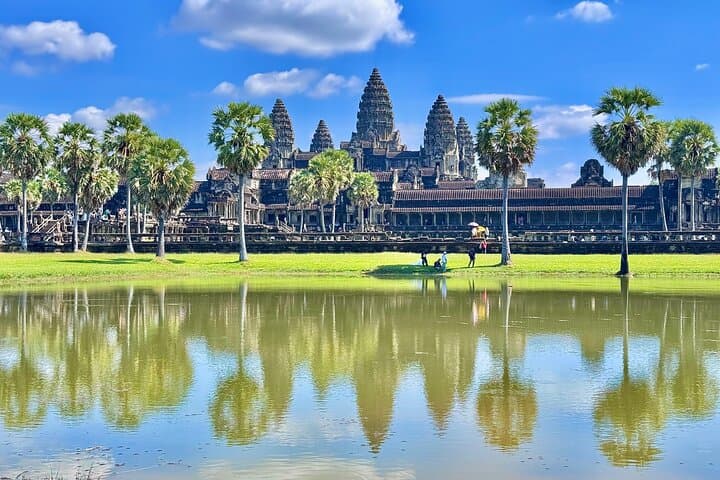
Sunrise at the central reflecting pool provides iconic shots; early morning also offers softer light and fewer crowds for Ta Prohm and Bayon.
Angkor Wat was constructed in the early 12th century under King Suryavarman II as a state temple and mausoleum, later converting from Hindu to Buddhist use.
High visitor numbers and monsoon-season runoff accelerate stone erosion; follow marked paths and avoid touching reliefs to reduce wear.
Travel to Inspire operates guided outdoor trips and adventures with an emphasis on safety, stewardship, and memorable experiences.

Before first light, the causeway to Angkor Wat reads like a stage under a cooling sky. The reflecting pool takes on glass; tourists and locals gather quietly, cameras ready as the first pale band of color slides up behind lotus ponds and sculpted towers. The air is cool and a little damp—an interval where the site seems to hold its breath.
Before first light, the causeway to Angkor Wat reads like a stage under a cooling sky. The reflecting pool takes on glass; tourists and locals gather quietly, cameras ready as the first pale band of color slides up behind lotus ponds and sculpted towers. The air is cool and a little damp—an interval where the site seems to hold its breath.
The tour moves inward, past bas-reliefs that record ancient law, war, and daily life carved into sandstone. Angkor Wat began as a 12th-century Hindu temple and evolved into a Buddhist symbol; its galleries map Khmer kingship and cosmology. Nearby Ta Prohm offers a counterpoint — roots of silk-cotton and strangler figs have crept like deliberate hands through galleries, giving the ruins a slow, plant-driven choreography. Bayon’s many carved faces keep watch over narrow halls, and the low reliefs offer candid scenes of market trade and festivals centuries old.
Practical guidance follows the viewing. Expect five to seven hours on your feet with uneven stone, occasional steep steps, and short walks between sites. Sunrise is busiest; arrive early and secure a reflective-pool vantage. Wear breathable clothing that covers shoulders and knees to respect temple dress codes, bring plenty of water, and use quiet, framed movements for photography—flash and climbing on sculptures are prohibited.
Local guides translate inscriptions into human stories and highlight conservation concerns: erosion, visitor impact, and vegetation management affect these fragile stones. A morning here is both a visual reward and a reminder that active stewardship keeps history tangible for the next group to watch the light rise.